Expert Garden Design Tips: A Green, Low-Maintenance Garden
Who better than a landscape designer to offer tips on designing a small garden? In this section, we feature well-known and successful landscape designers. They share expert tips for a well-designed and enjoyable garden.
Here are some tips from Ineke Brunekreeft, from the garden design firm of the same name in Elst. She now focuses exclusively on smaller gardens and believes it’s important to inspire people to create green gardens. Her designs have appeared in publications such as a special edition of *Groei & Bloei* and in the magazine *Tuinontwerp*.
A New Garden
You just got the keys to your new home. Maybe it’s a house with a small yard. That’s quite a luxury these days. It’s nice to step outside into your own yard. A little piece of nature right in your backyard—that’s what everyone wants, isn’t it?
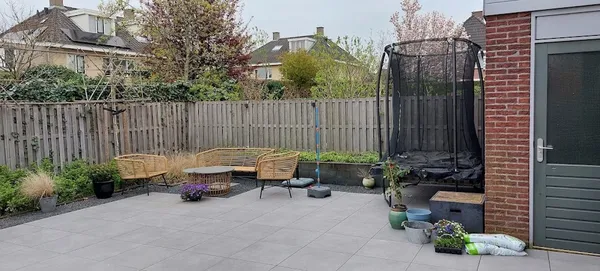
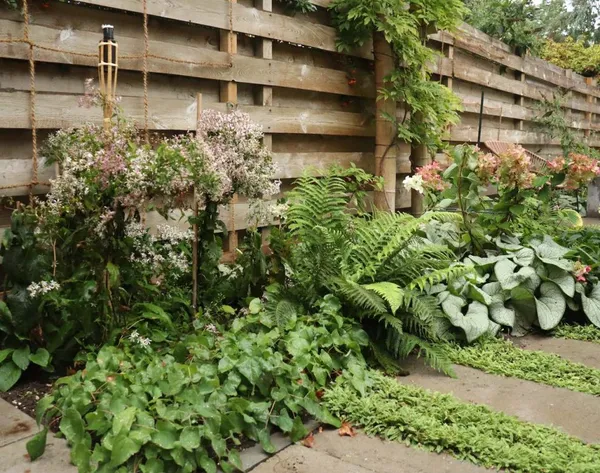
The Garden Before the Transformation
A sustainable garden?
It’s nice to have your first home with a real garden that’s 11 meters deep and 5 meters wide. But then again, how do you go about it when your budget for furnishing and decorating your new home is almost gone and you don’t have a “green thumb”? Or maybe you bought a house with a completely paved yard and you really want a green garden.
Everyone around you thinks that these days you shouldn’t completely pave your garden just because it’s so convenient and you don’t have time to garden. Because you’re supposed to be sustainable, rainwater needs to be able to soak into the ground, and there need to be flowers that provide food for bees, butterflies, and birds…! Yeah, that’s all well and good, but how exactly…?
I often encounter this problem in my work, so I thought it would be helpful to offer a few tips to first-time homeowners. I mainly design “green” gardens with plenty of plants that don’t necessarily require a lot of maintenance. A garden with a lot of hard landscaping is really no longer an option. You can help reduce heat stress with plants and beautiful trees. It’s better to plant attractive hedges with your neighbors than to just put up fences. A “closed-in” garden, surrounded by fences, doesn’t allow the wind to blow through, making it extra hot in the summer. A nice privet or beech hedge is cheaper and provides a nesting place for many birds.
The Garden Design
To start drawing a floor plan of your garden on a 1:50 scale, observe the sun’s path, make a wish list: When are you home? Do you prefer to sit in the sun or in the shade? How much time do you have to spend on a little gardening, and how much can you afford to spend?
Start by deciding where you want to sit: Do you want a small lounge area? Do you want a nice, large dining table since friends often come over for dinner? Do you want to see plenty of greenery from inside the house? … And so on—all sorts of considerations will come up that are important for turning your garden into a pleasant “living space.” Don’t make the layout too complicated, but don’t make it too boring either, and try to keep walkways clear. The ratio of paved areas to greenery should be 1/3 to 2/3.
Be sure to plant a tree in your yard to add height and provide natural shade. Make sure to get good advice on the tree’s size when it’s fully grown, or choose a tree that can be easily managed with regular pruning.
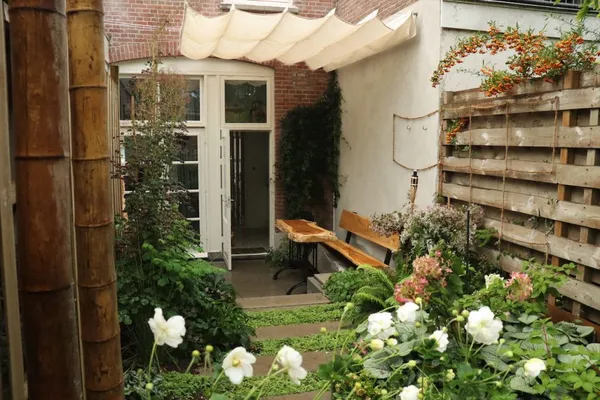
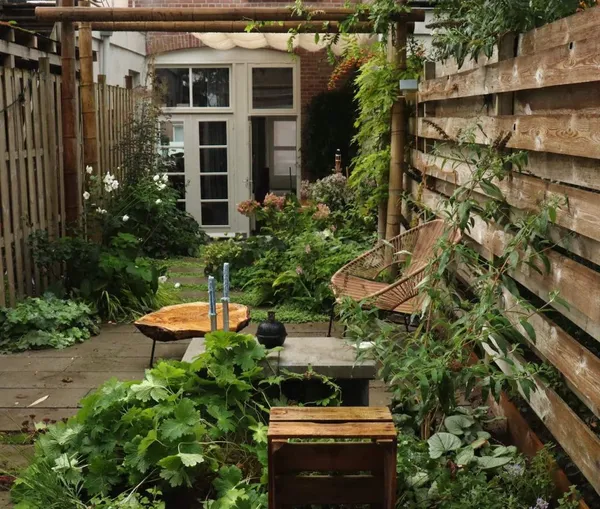
Patios or seating areas can also be covered with gravel, which allows rainwater to drain through. Be sure to choose gravel that’s easy to walk on, such as Flachkorn or shell gravel. A stepping-stone path winding through the plants adds interest to a garden and makes it seem larger. It invites you to explore the garden.
A pergola also adds height to the garden, making it feel more private. In densely populated neighborhoods, neighbors can often see right into your yard. A pergola or a tree can block that view. In a small garden, a pergola made of scaffolding tubes is much lighter and less imposing than one made of wood. I highly recommend it.
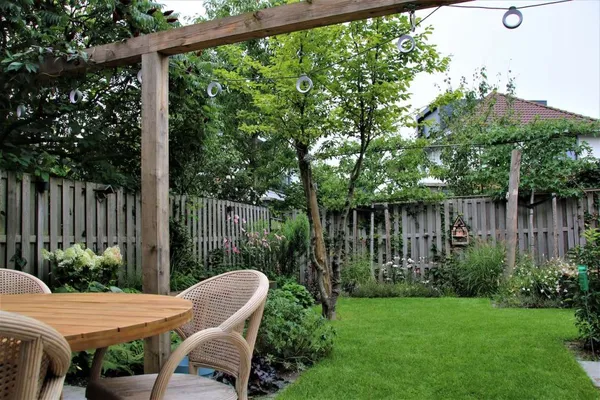
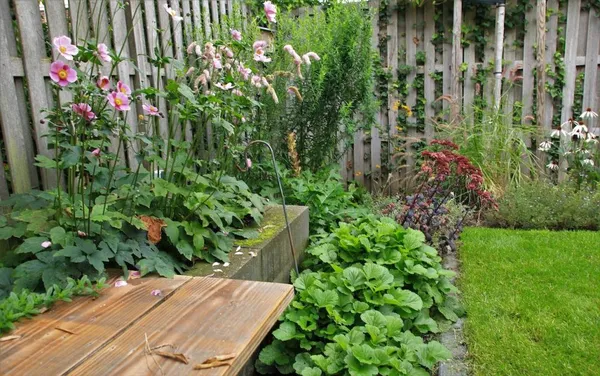
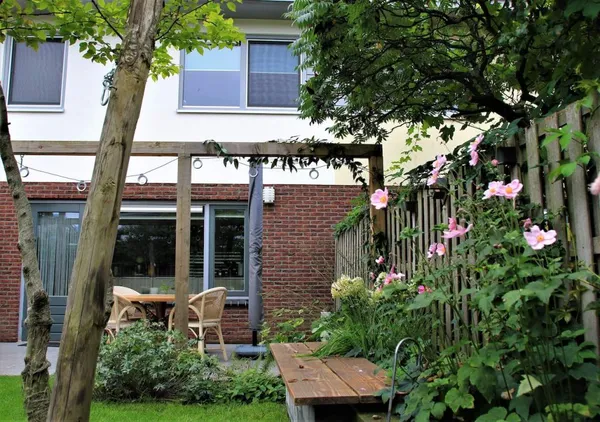
The garden after the new design was completed
Lush Flower Beds
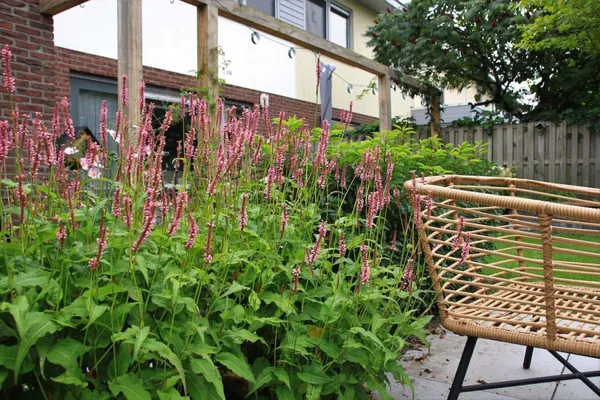
Be sure to create at least two spacious borders and plant them with plants that grow fairly quickly and thrive in your soil type, so you don’t end up with a “weedy garden.” Too many small patches of green make a small garden look cluttered. A well-filled border has few weeds and therefore requires little maintenance. It doesn’t have to be too neat—colors can blend together a bit—but if you’d rather have a tone-on-tone border, that’s certainly an option as well.
First, check how large a shrub you’d like to have will grow—it still needs to fit in your garden four years from now. Also, plant plenty of beautiful climbing plants along the fences and trellises so that all the walls of your garden will soon be lush and green. There are all kinds of excellent gardening magazines where you can find a wealth of information about plants, soil types, and fertilizing. Visit a good small-scale nursery where the staff will be happy to help you choose the right plants. Nurseries such as Marcel de Wagt, Kwekerij voor Opvallende vaste planten, the Hessenhof in Ede, e Kleine Plantage in Eenrum, and Coen Janssen in Dalfsen.
Also keep the seasons in mind; choose plants with fall colors, but evergreen plants are also a great choice so there’s still something to see in the winter.
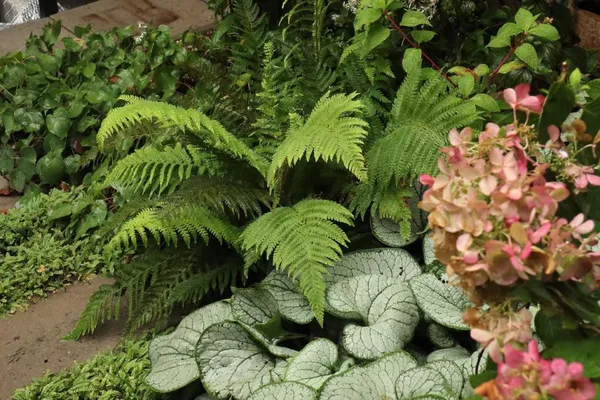
Good plants for a small garden include, for example: geranium varieties (there are many beautiful varieties in lilac, blue, purple, and pink), Nepeta, fall asters, sedum varieties, ornamental grasses that don’t self-seed, and herbs such as sage, thyme, and chives. Evergreen ferns, Helleborus orientalis, or Epimedium. Shrubs such as the hydrangea ‘For Ever and Ever,’ Syringa pallabina, Sarcococca ‘Confusa’ (evergreen, shade-tolerant), and shorter butterfly bushes…
Trees for small gardens: currant trees, crabapples, Carpinus betulus, and Heptacodium. These trees are all easy to prune, which is very important. Plant a tree in a good root barrier; otherwise, after a few years, the tree roots will lift the pavers. Make sure the crown of the tree you choose doesn’t start until 2 meters above the ground, so you can see through it.
The budget
In my line of work, I often notice that some clients have no idea how much it costs to landscape a garden. If you don’t want to do any of the work yourself, you can expect to pay around €100 per square meter. Even then, you won’t be able to choose expensive pavers, build a deck, or create a water feature. On top of the cost of materials, you’ll also have to pay the labor costs for a landscaper and/or paver. Don’t skimp on proper groundwork and paving—that’s skilled work and needs to be done right the first time.
So if your budget isn’t that big, first consider whether you might want to pitch in during the construction. There’s plenty to do: shoveling sand, laying pavers, digging up flower beds (depending on the soil type), and planting the plants yourself. Also, choose a simple concrete base tile—don’t immediately go for one of those expensive tiles they used on that fun gardening show on TV. Gravel also creates a great atmosphere for a patio and allows rainwater to drain well. Remember, paving doesn’t make the garden more beautiful—it’s just a small part of it; the overall atmosphere is what creates the final picture.
You can sometimes get creative and make your own patio furniture, which lets you save up for a few more years before buying truly sturdy, high-quality patio furniture that might even last long enough to move with you to your next garden.
Getting Started
With all these tips, you, too, can create a beautiful, pleasant, and green garden. I’d say: Get started and enjoy your own green garden as early as next year!
Below is another narrow city garden designed by Ineke—and it’s lovely and green, too! You can find more garden designs for small gardens at Brunekreeftelst.nl