
Everything About Hedge Plants and Hedges
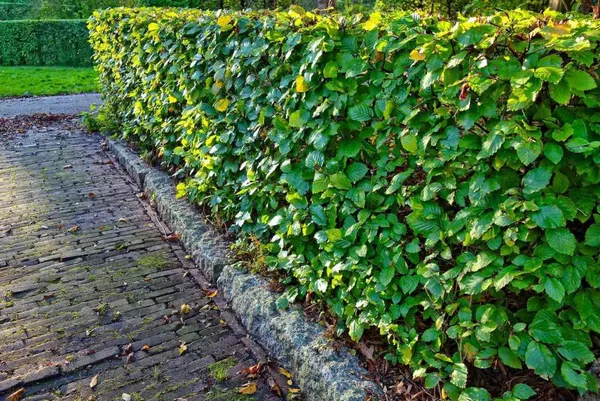
Hedges are indispensable in the garden. Of course, they’re ideal as a boundary between your garden and your neighbors’ or the sidewalk. But with hedge plants, you can also add structure and create different garden spaces, resulting in clearly distinct areas for various functions within your garden. Hedges provide nesting sites and shelter for birds, animals, and insects, and are perfect for creating a beautiful, green garden.
What is a hedge plant?
Hedge plants are plants used to create a continuous row of vegetation, often as a divider between gardens, or in a border or area within the garden. Hedges are often used to provide privacy and are planted along the property line. Many types of shrubs can be used as hedge plants. The most commonly used are beech, hornbeam, yew, cherry laurel, boxwood, privet, ivy, and conifers.
Hedge or Haag?
Although the terms “Heg” and “Haag” are often used interchangeably, “haag” is officially the correct term for a dense row of shrubs that are trimmed (pruned) at least once a year to maintain a specific shape or size. A hedge is allowed to grow more freely and is pruned less frequently. In practice, however, the two terms almost always mean the same thing.
Shrubs or trees?
Many hedge plants are actually trees. However, planting them close together creates a nice, dense barrier, and pruning them several times a year keeps their size in check. From this, you can already tell that they do require some extra care. Water generously (and often) after planting and throughout the first growing season. Also, apply fertilizer annually to ensure the hedge grows optimally.
Hedges in the garden or flower bed
Hedges are often used as dividers between gardens or along property lines bordering public spaces. A hedge provides plenty of privacy and shelter from the wind. Hedge plants can also be used within the garden to add structure and shape, or to (visually) separate different “spaces” within the garden. A hedge also serves as a beautiful green backdrop for all your border plants. Although formal hedges are the most well-known, we’re (fortunately) seeing that informal and natural hedges are becoming increasingly popular. Animals, birds, and insects make good use of them.
Would you like to Buy hedge plants for your garden? In this article, we’ll discuss the different types of hedge plants, evergreen and deciduous hedges, formal hedges and informal hedges, location, care, and pruning of hedges, and we’ll provide an overview of popular hedge plants that are suitable for a sunny spot in the garden or, conversely, shade, as well as for clay, sandy, or acidic soil.
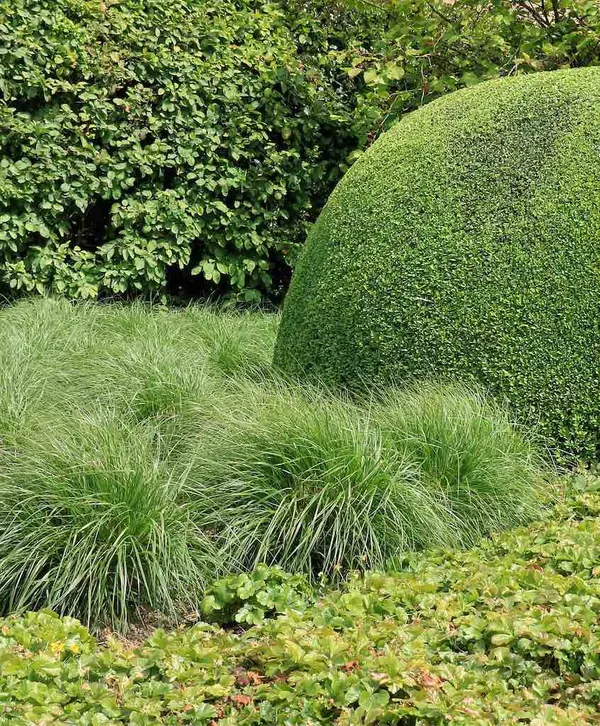
Evergreen hedge vs. Deciduous hedge
Some hedge plants lose their leaves in the winter, while evergreen hedges retain their leaves all year round (even in the winter).
Evergreen hedges
Evergreen hedges are ideal for adding shape and structure to a garden or flower bed. With evergreen hedge plants, you can enjoy beautiful green shrubs in your garden all year round. Many conifers also make excellent evergreen hedge plants.
Well-known evergreen hedge plants include:
- Bamboo (Phyllostachys)
- Beech (Fagus sylvatica)
- Boxwood and Boxwood Alternatives
- Cypress (Chamaecyparis)
- Photinia
- Evergreen snowball (Viburnum tinus)
- Holly (Ilex aquifolium)
- Italian cypress (Cupressus sempervirens)
- Japanese holly (Ilex crenata)
- Ivy (Hedera)
- Cherry Laurel (Prunus laurocerasus)
- Lavender (Lavandula)
- Privet (Ligustrum)
- Mahonia Bush (Mahonia)
- Non-invasive bamboo (Fargesia)
- Olive Willow (Elaeagnus ebbingei)
- Portuguese laurel (Prunus lusitanica)
- Red beech (Fagus sylvatica ‘Atropunicea’)
- Rhododendron (Rhododendron)
- Rosemary (Rosmarinus)
- Skimmia
- Fast-growing conifer hedge (Leylandii)
- Holm Oak (Quercus ilex)
- Shrub Honeysuckle (Lonicera nitida)
- Yew (poison tree)
- Tuscan jasmine or star jasmine (Trachelospermum jasminoides)
- Thuja (tree of life)
- Firethorn (Pyracantha)
Deciduous hedges
Although deciduous hedges become bare in winter, that doesn’t mean they’re boring. Quite the opposite! Many deciduous species are beautiful or distinctive in several seasons. Some hedge plants have beautiful blossoms in the spring, fresh green foliage, or leaves with an unusual color when they first emerge. They may also produce fruit or berries (though usually not if they’re pruned frequently). A few varieties develop beautiful fall colors in the fall and a striking silhouette in the winter, or even a colored trunk, bark, or branches. With these hedge plants, your garden changes with the seasons.
Well-known deciduous hedge plants include:
- Chinese Bellflower (Forsythia)
- Cinquefoil (Potentilla)
- Guelder Rose (Viburnum opulus)
- European hornbeam (Carpinus betulus)
- Hydrangea (Hydrangea)
- Dogwood (Cornus alba)
- Serviceberry (Amelanchier)
- Hawthorn (Crataegus monogyna)
- Privet (Ligustrum)
- Rugosa Rose (Rosa rugosa)
- Red dogwood (Cornus sanguinea)
- Red currant (Ribes sanguineum)
- Blackthorn (Prunus spinosa)
- Field Maple (Acer campestre)
- Elderberry (Sambucus nigra)
- European spindle tree (Euonymus europaeus)
- Barberry (Berberis thunbergii)
Low hedge
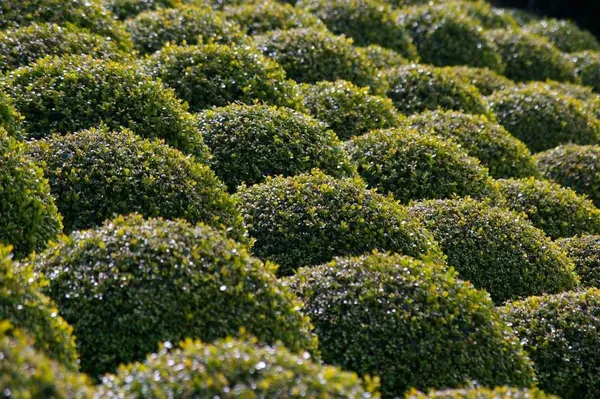
Low hedges are perfect for adding a beautiful border to a flower bed or for providing structure to the garden without creating tall barriers. They work well in a formal garden, but low hedges can also be used in a less formal garden. Perhaps the best-known low hedge is the boxwood hedge. However, there are other hedge plants suitable for low hedges. Many of these plants are also ideal as boxwood alternatives (in case boxwood doesn’t survive in your garden).
Common types of low hedges include:
- Boxwood (Buxus sempervirens)
- Cinquefoil (Potentilla)
- Evergreen snowball (Viburnum tinus)
- Japanese holly (Ilex crenata)
- Lavender (Lavandula)
- Privet (Ligustrum)
- Olive Willow (Elaeagnus ebbingei)
- Portuguese laurel (Prunus lusitanica)
- Rosemary (Rosmarinus)
- Skimmia
- Shrub Honeysuckle (Lonicera nitida)
- Yew (poison tree)
Tall hedge
Do you really need a taller or high hedge? Even then, there are still plenty of options for a beautiful green wall.
Well-known tall hedge plants:
- Bamboo (Phyllostachys)
- Beech (Fagus sylvatica)
- Cypress (Chamaecyparis)
- European hornbeam (Carpinus betulus)
- Holly (Ilex aquifolium)
- Italian cypress (Cupressus sempervirens)
- Ivy (Hedera)
- Cherry Laurel (Prunus laurocerasus)
- Hawthorn (Crataegus monogyna)
- Non-invasive bamboo (Fargesia)
- Red beech (Fagus sylvatica ‘Atropunicea’)
- Blackthorn (Prunus spinosa)
- Fast-growing conifer hedge (Leylandii)
- Holm Oak (Quercus ilex)
- Yew (poison tree)
- Thuja (tree of life)
- Field Maple (Acer campestre)
Narrow hedge
In a small garden, a hedge can sometimes take up more space than you’d like (though you do get a lot in return). It’s no wonder, then, that narrow hedges are so popular. From hedge plants that naturally grow narrow, to espalier-trained varieties and climbing plants trained on a trellis. The popular ready-made hedges are also mostly narrow hedges.
Good plants for a narrow hedge
- Boxwood and Boxwood Substitutes
- Evergreen snowball (Viburnum tinus)
- Italian cypress (Cupressus sempervirens)
- Japanese holly (Ilex crenata)
- Ivy (Hedera)
- Cherry Laurel (Prunus laurocerasus ‘Caucasica’)
- Privet (Ligustrum)
- Non-invasive bamboo (Fargesia)
- Olive Willow (Elaeagnus ebbingei)
- Passionflower (Passiflora)
- Portuguese laurel (Prunus lusitanica)
- Shrub Honeysuckle (Lonicera nitida)
- Yew (poison tree)
- Tuscan jasmine or star jasmine (Trachelospermum jasminoides)
- Firethorn (Pyracantha)
- Evergreen clematis (Clematis armandii)
See also: Which climbing plants are suitable for a narrow hedge?, Which laurel stays narrow?, and Which bamboo stays narrow?
Flowering hedge
Some beautiful plants for a flowering hedge are:
- Abelia (Abelia grandiflora)
- Camelia (Camellia)
- Chinese Bellflower (Forsythia)
- Choisya (Choisya ternata)
- Cinquefoil (Potentilla)
- Guelder Rose (Viburnum opulus)
- Photinia
- Evergreen snowball (Viburnum tinus)
- St. John's Wort (Hypericum)
- Hibiscus (Hibiscus syriacus)
- Hydrangea (Hydrangea)
- Serviceberry (Amelanchier)
- Lavender (Lavandula)
- Mahonia Shrub (Mahonia)
- Hawthorn (Crataegus monogyna)
- Oleander (Nerium oleander)
- Rhododendron (Rhododendron)
- Blackthorn (Prunus spinosa)
- Butterfly Bush (Buddleja davidii)
- Firethorn (Pyracantha)
- Hardy Fuchsia (Fuchsia magellanica)
Mixed hedge
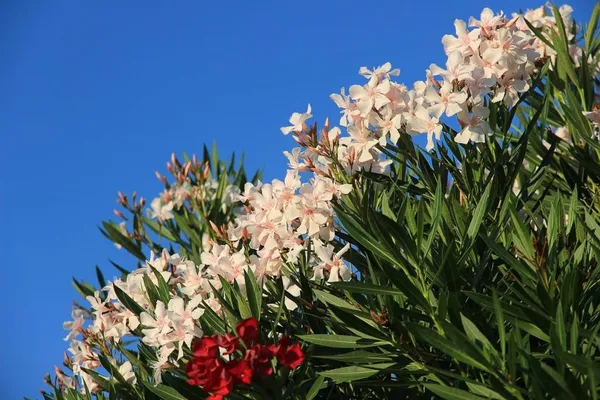
Hedge plants are often planted by species. However, combining different hedge plants can actually create a very beautiful effect. This is often much more beneficial for animals, birds, and insects as well!
Here are a few nice combinations for a mixed hedge:
Flowering hedge (mixed)
A flowering hedge can consist of various flowering plants. For example, plants specifically for butterflies, bees, or insects. Think of a hedge made up of lilacs, currants, and butterfly bushes. The main purpose can also be ornamental value. Well-known examples include a hedge of hydrangeas or panicle hydrangeas. A hedge made up of various butterfly bushes attracts many butterflies AND has great ornamental value.
Fruit hedge
Fruit hedges are also a great addition to your garden. You can enjoy a hedge in bloom, and later in the season, you can literally pick the fruit. Birds and animals also love fruit hedges. Choose dwarf varieties so they take up minimal space. Mini fruit trees or low-stem varieties are ideal, as are climbing fruit plants and berries.
An impenetrable hedge
Would you like to truly enclose your property and prevent anyone from just walking into your yard? Then plant an impenetrable hedge. Consider plants such as hawthorn, blackthorn, rugosa rose, dog rose, firethorn, holly, blackberry, and raspberry.
Bird-friendly hedge
Do you want to create a hedge for birds? If so, it’s important to include a combination of fruit-bearing plants, berry-bearing plants, and plenty of shelter. Plants with thorns are ideal for providing shelter (such as hawthorn, blackthorn, and firethorn). You could also let climbing berries grow through it, such as raspberries and blackberries. A slightly wider hedge is preferable, as it offers more shelter and nesting opportunities.
Zeeland hedge
A Zeeland hedge consists of a whole collection of beautiful hedge plants. Unfortunately, Zeeland hedges aren’t planted very often these days. Yet these hedges are ideal for animals, birds, and insects. They also keep people and, for example, cats out of your yard (it’s no coincidence that they were once used as livestock fences). A Zeeland hedge wouldn’t be complete without hawthorn. Dog rose and blackthorn also belong in this hedge. Furthermore, a Zeeland hedge can vary somewhat depending on the location (partly depending on the soil type). Other hedge plants that are often used include ash, guelder rose, hornbeam, elm, privet, field maple, and elder. Sometimes holly is added as well.
Location, Care, and Pruning of Hedges
To get the most out of a healthy hedge and ensure good growth, it’s important to plant each plant in the right spot. Know what kind of soil you have in your garden and which areas get a lot of sun—or very little.
When deciding on the right spot in your garden, first take a good look at the conditions, the plant’s characteristics, and its requirements regarding its location. Learn more about the plants first, and then choose only those that are suitable for your garden. Fortunately, with many hedge plants, this is less of a concern than with many other plants. Hedge plants are very hardy and resilient!
How much sun?
A distinction is made between Full sun (more than 5–6 hours of direct sunlight), partial sun, or Partial shade (up to 4 hours of sunshine), Shadow (less than 4 hours of sunshine) and Deep Shadow (virtually no sun).
Open or sheltered site?
Some plants require a sheltered spot, out of the wind, or at least protected from the cold east wind in winter. These are often plants that not hardy or less hardy in our climate. These plants often require well-drained soil so they don’t become too waterlogged in the winter. Also keep in mind that the average boundary between gardens is often not very sheltered. This makes it less suitable for climbing plants and hedge plants that aren’t very hardy.
What type of soil?
The soil is also important for your plants to grow well. Some plants aren’t very picky when it comes to soil type, but many plants do require a specific type of soil. In our country, the following soil types are most common: clay soil, sandy soil, and peat soil (acidic soil).
You can read more about soil and soil types in our article “Soil – Soil Type, Acidity, and Drainage“
Watering and Fertilizing for Hedge Plants
When caring for hedge plants, it’s important to water them generously once a week during their first growing season (more often during dry spells; daily if potted). In the spring, you can fertilize the plants (e.g., with cow manure pellets or ornamental garden fertilizer). Do not exceed the recommended amount.
Learn more about Watering (how much and how often), or about Fertilizing Plants (When and How).
Hedge trimming (or shearing)
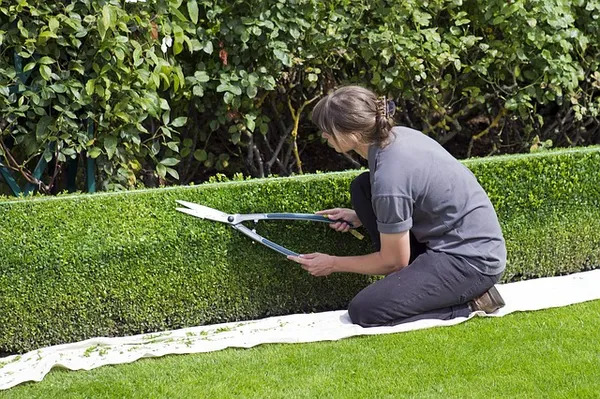
To keep a hedge in shape and prevent it from growing too large, it’s important to prune it every year. Pruning encourages the plant to branch out again, making the hedge increasingly dense. Water generously after pruning and fertilize in the spring. Incidentally, it’s not really called “pruning” a hedge, but rather “shearing” it.
How often should you trim a hedge?
Depending on the type of hedge, pruning once a year may be sufficient, or twice a year, or even three times, or more often. It also makes a difference whether the hedge is formal, informal, or natural. Examples of hedges that only need to be pruned once a year include Taxus and Ilex crenata. Most types of hedges should be pruned twice a year. Examples of hedge plants that need to be pruned more often include Leylandii, Thuja, and Hedera.
When should you trim a hedge?
Prune the hedge for the first time in late spring—for example, between May and the end of June. Keep in mind that if you prune too early, you might disturb bird nests. That’s certainly not the intention! It’s best to prune before the longest day of the year.
The second pruning should be done after the summer, around September. Pruning the hedge in September ensures it goes into winter looking neat and tidy, and allows new growth to harden off sufficiently before the frost sets in. At this time of year, there won’t be much new growth left.
Fast-growing hedge plants such as Leyland cypress and arborvitae may require more frequent pruning.
How do you trim a hedge (and with what?)
You should trim a hedge from top to bottom, and the hedge should remain slightly wider at the bottom than at the top. This usually ensures that the hedge receives sufficient light across its entire surface. Be careful not to prune conifers too deeply: never cut back to the bare wood! If you do, your conifer won’t grow back, and the brown or bare spots will remain visible permanently. Yew is an exception to this rule; it will even sprout new growth from the bare trunk (though this does take a while).
Most hedge plants can be pruned just fine using either hand tools or electric pruning shears. For hedge plants with thicker branches, it may still be necessary to prune (partly) by hand to prevent damage to the tools. In such cases, using loppers or pruning shears is a good idea. Cherry laurel, for example, develops thick and stiff branches fairly quickly.
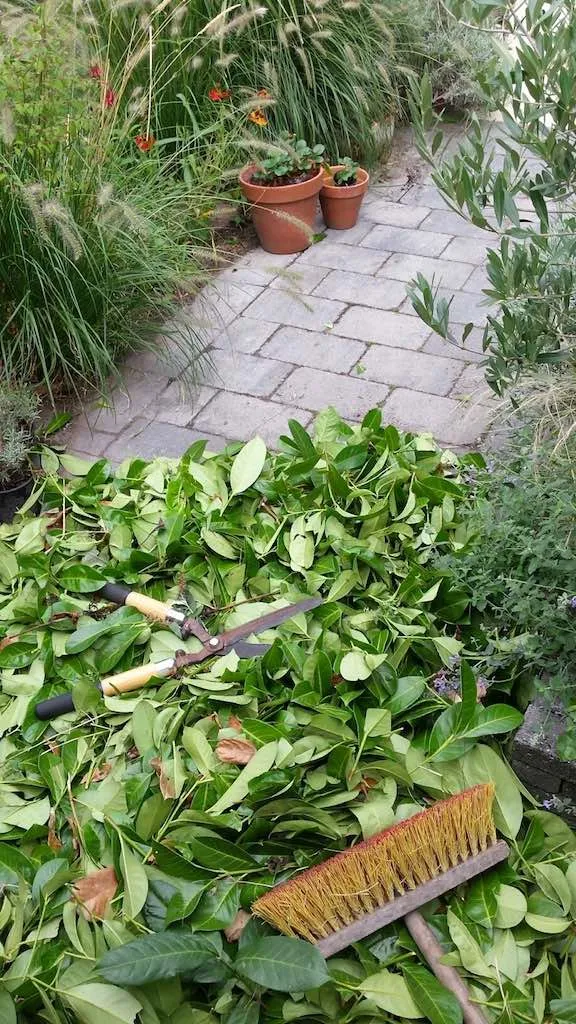
It’s best to go over large-leaved hedge plants (cherry laurel, photinia) one more time with pruning shears. Leaves that are only partially cut off turn brown but remain on the plant for a long time. By pruning these half-cut leaves by hand, you’ll achieve a neat result right away.
We often lay a small tarp under the hedge here, so it’s easier to remove all the clippings from your flower bed afterward. You could even leave the clippings that decompose quickly where they are.
Check out all of our Tips for Pruning
Sun or Shade?
Traditional hedge plants can often thrive in both sun and shade. Since flowering is often not necessary (or even undesirable), shade is perfectly fine for many true hedge plants. However, the growth rate of some species is often somewhat slower in such conditions.
The type of soil is also less important for many true hedge plants, although there are exceptions.
Hedges for Clay Soil
Planting and transplanting can sometimes be quite difficult in clay soil. Still, clay provides a good nutrient base for many plants. There are many shrubs that thrive in clay soil. However, some shrubs may have trouble with clay that stays wet for a long time in the winter.
See our article “91 Plants for Clay Soil (That Don't Grow Too Large)“
Hedges for Sandy Soil
Although planting is easy in sandy soil, many plants require soil amendment to ensure they receive sufficient nutrients and to help the soil retain moisture longer. That said, there are certainly plants that grow well in sandy soil. Hedge plants in sandy soil do, however, need additional nutrients more quickly.
Be sure to read the article “Tips for a Garden in Dry, Sandy Soil“
Hedges for Acidic Soil
Acidic soil, such as peat soil, or a spot in the woods, isn’t suitable for all plants. But there are some very beautiful and unique hedge plants that actually grow and bloom better in acidic soil.
See also our article “7 Shrubs for Acidic Soil“
Planting a hedge
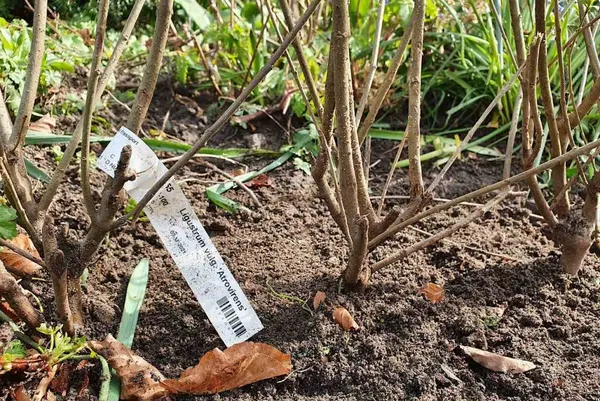
When should you plant a hedge?
You can plant potted hedge plants (grown in pots) year-round, unless there is a freeze (during the day). Hedge plants grown in open ground (with a root ball or bare roots) can only be planted between October and April. The best time to plant hedge plants is in the spring, as well as in the fall.
How many plants per meter?
One of the most frequently asked questions about hedges is how many plants you should plant per meter. Here is a guideline for commonly planted species:
How many hedge plants per meter?
How do you plant a hedge?
- Before planting, place the hedge plants in a bucket of water and let them soak for a few hours (this is especially important for rootstock).
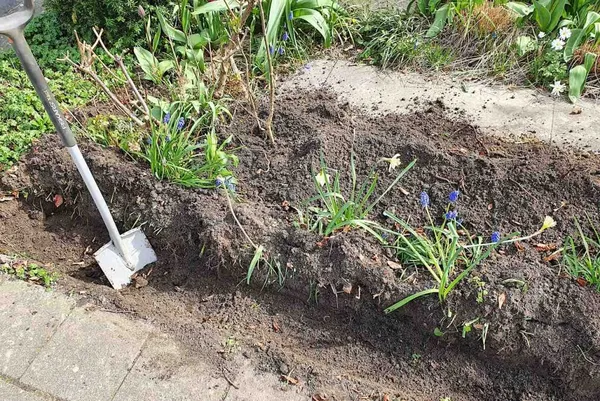
- Dig a trench 30–40 cm deep. For larger plants, a deeper planting hole may be necessary.
- Enrich the soil with compost, leaf mold, or good potting soil (mix this with the existing soil).
- Plant the hedge plants in the trench so that a nice, even hedge forms (at the same depth as they were at the nursery; you can tell by the discoloration or the top of the pot). Stretching a string makes it easier to create a straight line.
- To create a wide and dense hedge, two rows of plants can be planted in a staggered pattern (double row).
- If you have a mesh-wrapped root ball, do not remove it until after planting, or simply cut off the top. The roots of bare-root hedge plants (root stock) should be spread out slightly (and kept well moistened).
- Check to see if the depth is still correct, and then add more soil. Next, pack it down firmly.
- Then water generously, and repeat this weekly during the first year of growth, watering more frequently during dry periods.
- After planting, you can immediately prune the hedge plants back by one-third to encourage more (and lower) branches, resulting in a nice, full hedge.
- Make sure there are no plants or weeds growing around the hedge. For example, spread a layer of mulch.
Tip: Smaller plants often take root better than larger ones. The larger the plant, the more extra care is needed to help it take root properly. Potted plants (especially smaller ones) generally have a very low failure rate. For plants grown in the ground, this can be around 10–20%, depending on the conditions.
What's your favorite hedge plant in the garden?
* This post contains a sponsored link