
Dwarf Seringa: Perfect for Small Gardens and Balconies
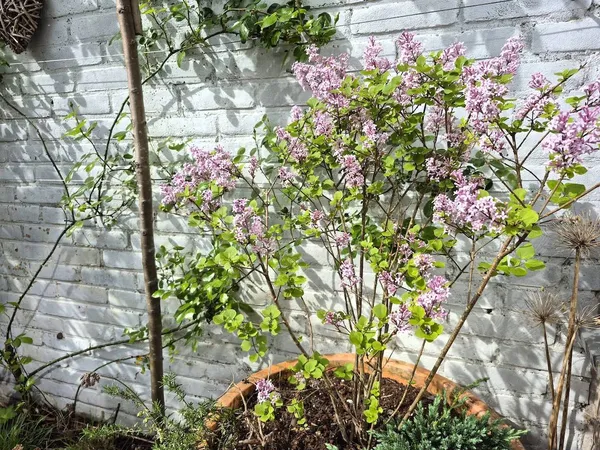
A blooming lilac really captures the essence of spring. The beautiful clusters of flowers and delightful fragrance are truly something to look forward to. Well-known lilac varieties include Syringa vulgaris ‘Charles Joly,’ ‘Mme Lemoine,’ and ‘Sensation.’ However, these lilacs can grow into large shrubs or even small trees (as tall as 3–5 meters). Of course, that’s not what you want in a small garden or on your balcony… Fortunately, there are also lilac varieties that stay small and even true dwarf varieties. We’d love to show you some great options. That way, you can enjoy the beautiful flowers and intense fragrance even in a small garden.
Just a quick note: Types of lilacs (Syringa)
There are several types of lilacs, each with its own characteristics and growth habit.
Syringa vulgaris – (3–5 m) a large, vigorous grower with a strong fragrance and classic blooms in May
Syringa meyeri – (1–1.5 m) compact, slow-growing, and often strongly fragrant
Syringa microphylla – (1.5–2.5 m) an airy shrub with a slightly longer blooming period, but a somewhat less intense fragrance
Syringa pubescens subsp. patula – (1.5–2 m) a compact, vigorous, and hardy variety
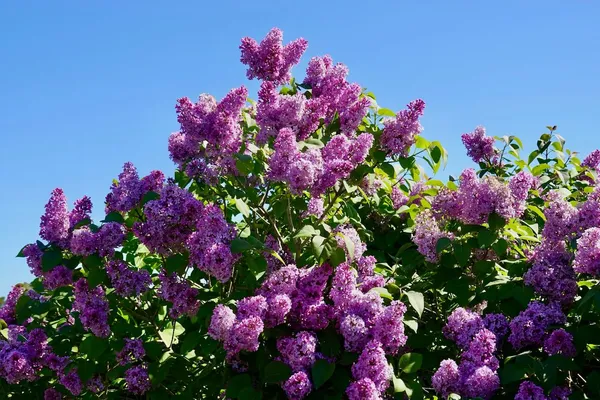
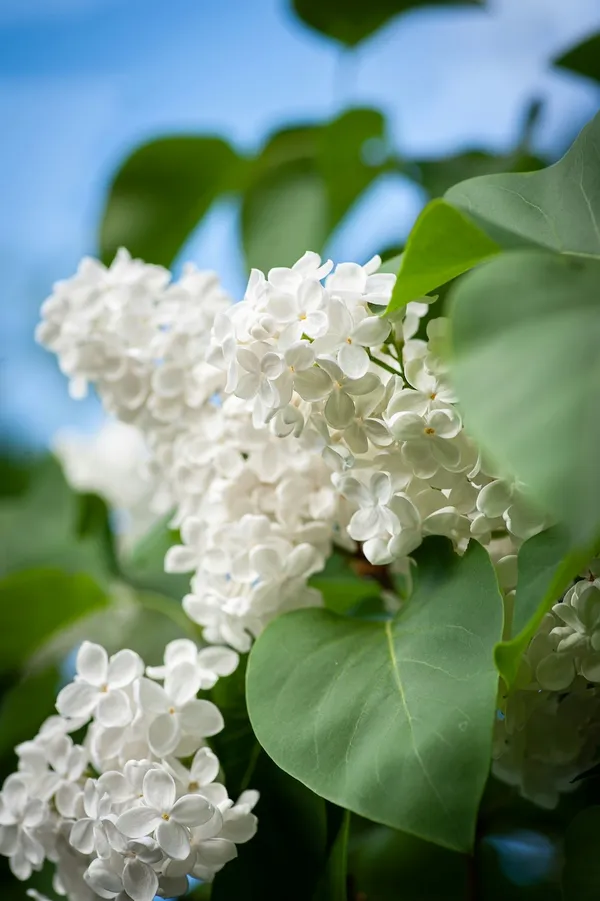
Which lilac stays the smallest?
True dwarf lilacs don’t grow taller than about 120 cm. They are often cultivars of Syringa meyeri. “Palibin” is our favorite, and we’ve had it in our rotating pot for years. Dwarf lilacs are perfect for a pot or planter in your garden or on your balcony.
Characteristics of the dwarf lilac
height: 60–120 cm
Growth habit: compact, bushy, and dense
Growth rate: slow to moderate
Maintenance: Requires little pruning
Flowering: May–June, abundant and fragrant
second bloom: sometimes a light second bloom
Popular dwarf cherries (cultivars)
- “Bloomerang Dwarf”
- “Flowerfesta”
- “Palibin”
- “Red Pixie”
- “Tinkerbelle”
👉 These are the best choices for really small spaces and pots.
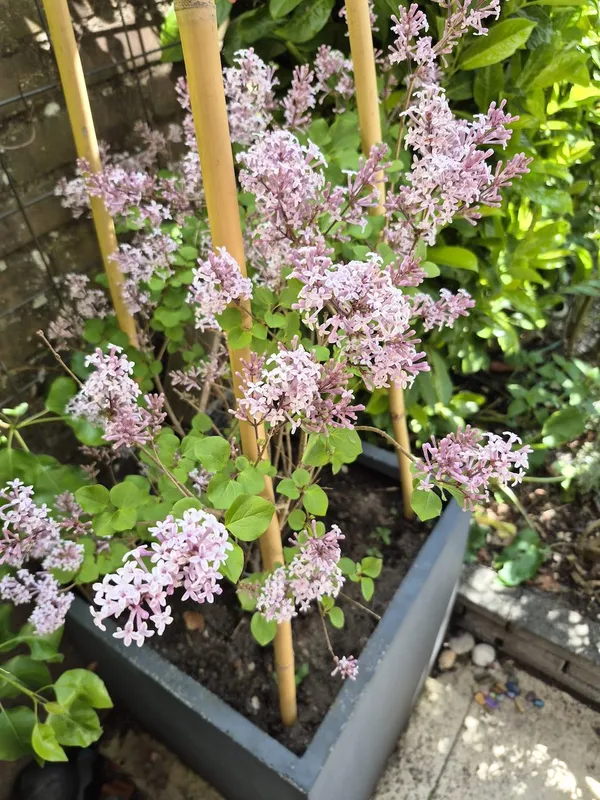
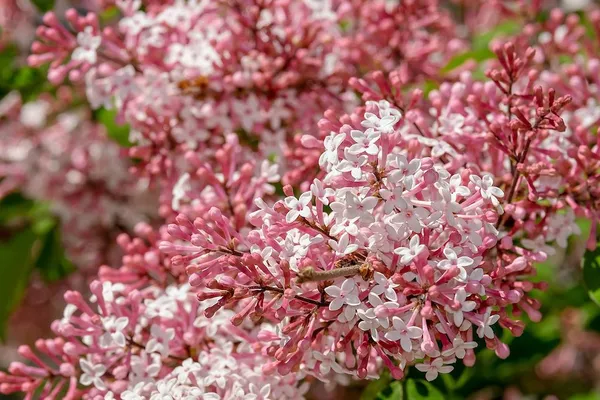
Which lilacs stay small?
In addition to true dwarf lilacs, there are also some larger varieties that still remain considerably smaller than most Syringa vulgaris. You can expect these to reach a height of about 120–200 cm. These are primarily Syringa microphylla and Syringa pubescens (patula).
Characteristics of a dwarf lilac
height: 1.2–2 meters (patula) to 2.5 meters (microphylla)
Growth habit: sturdy, slightly wider shrub
growth rate: moderate
Flowering: May–June, abundant and full
second bloom: sometimes present to a limited extent
Aroma: from mild to distinct
Popular compact lilacs (cultivars)
- “Bloomerang”
- “Josée”
- “Minuet”
- “Miss Kim”
- “Sugar Plum Fairy”
- “Superba”
👉 Perfect if you want to add volume and texture to your garden without it turning into a large shrub.
How do you care for a lilac?
Lilacs bloom best in full sun. The more sun they get, the more profuse the blooms and the stronger the fragrance. Aim for at least 6 hours of sun per day for optimal blooms and fragrance. The soil must be well-drained. Lilacs don’t like wet feet and thrive best in slightly calcareous soil (though they aren’t overly picky). Watering is especially important for young plants and those in pots. Once they’re well-established, they can tolerate some drought. However, during prolonged dry spells, they may lose their flowers sooner. Don’t forget to water them occasionally during the hot summer months.
Do you want to prune a lilac? Always do this right after it blooms. This way, you’ll preserve the flower buds for the following year. You can also prune earlier in the spring (especially useful if you’re rejuvenating the plant), but this will reduce the number of flowers. Most lilacs bloom on old wood (last year’s branches).
Can you keep a large lilac small?
It’s fairly easy to keep a lilac bush compact by pruning it. It’s best to do this right after it blooms. However, pruning does come at the expense of flowering, since lilacs bloom on old wood, especially at the tips. You can also choose to prune it back heavily (and sacrifice a year of blooms) so that your shrub can last a few more years in your small garden. Or you can rejuvenate your lilac in stages, over several years.
Can you grow a (dwarf) lilac in a pot?
Dwarf lilacs, in particular, are well-suited for growing in a pot or container. A standard lilac can really only be grown this way with a lot of extra care.
Choose a spacious pot or container (at least 40–50 cm). A larger pot means your plant is less likely to dry out or run out of nutrients. Potted plants are more susceptible to drying out, so water them generously several times a week or even daily. Be sure to ensure good drainage (drill holes yourself if your pot or container doesn’t already have them).
For a pot, you might choose, for example, Syringa ‘Palibin,’ ‘Tinkerbelle,’ or ‘Bloomeran Dwarf.’
So there are plenty of compact options that let you enjoy the beautiful flowers and wonderful scent of a lilac even in a small garden or on your balcony. The true dwarf lilacs might actually be the best choice here.