
Choosing Pots and Balcony Planters for a Green, Smart, and Stylish Balcony
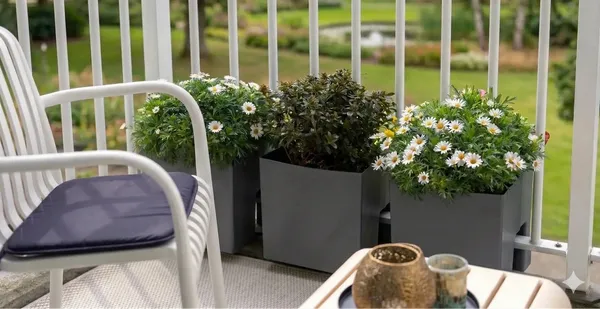
Photo credits: Vercony.com
Plants bring a balcony to life. But whether it actually feels pleasant depends just as much on the pots they’re planted in. These pots provide structure, determine how you use the space, and make the difference between a somewhat haphazard collection and a real balcony garden.
With the right pots, gardening on your balcony becomes a lot easier. Plants grow better, you use your space more efficiently, and the whole setup looks more serene. And let’s be honest: that last point often makes the biggest difference.
Which pots are suitable for a balcony?
There’s a huge selection of pots and planters—both online and at the garden center. Still, the most important difference isn’t so much the color or shape, but rather the type of pot you choose.
Classic individual pots offer the most flexibility. Think terracotta, plastic, or ceramic. They work well for individual plants and give you a lot of freedom in arranging them. Terracotta has a warm, natural look, but it dries out faster and isn’t always frost-resistant. Plastic is sturdy, lightweight, and practical. Ceramic adds a lot of character, but it’s quite a bit heavier.
You can also use balcony planters. These are especially handy if you want to group several plants together, such as herbs or profusely blooming annuals. They’re often placed along the balcony railing, allowing you to add extra greenery without taking up floor space. They instantly create a sense of calm and cohesion.
And then there’s another category that’s becoming increasingly important on smaller balconies: smart or integrated planters. These are planters that are designed not only to hold plants, but also to make smarter use of space.
A good example of this is the GreenUp planter from Vercony. This is a new (Dutch) design in which the planter is placed through the balcony railings. That’s important when every centimeter counts! This balcony planter combines a sleek look with practicality. An integrated balcony planter makes a big difference, because it reduces the number of separate pots you need and creates a more uncluttered look.
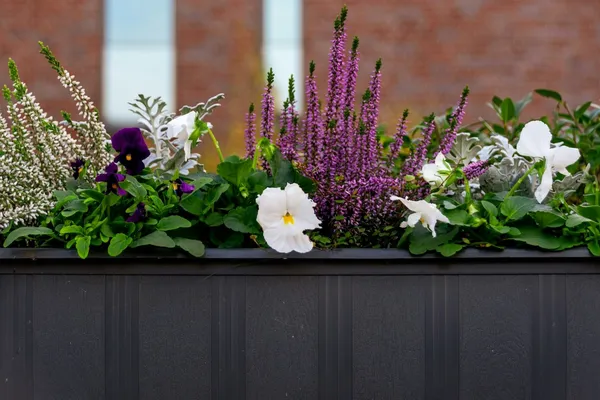
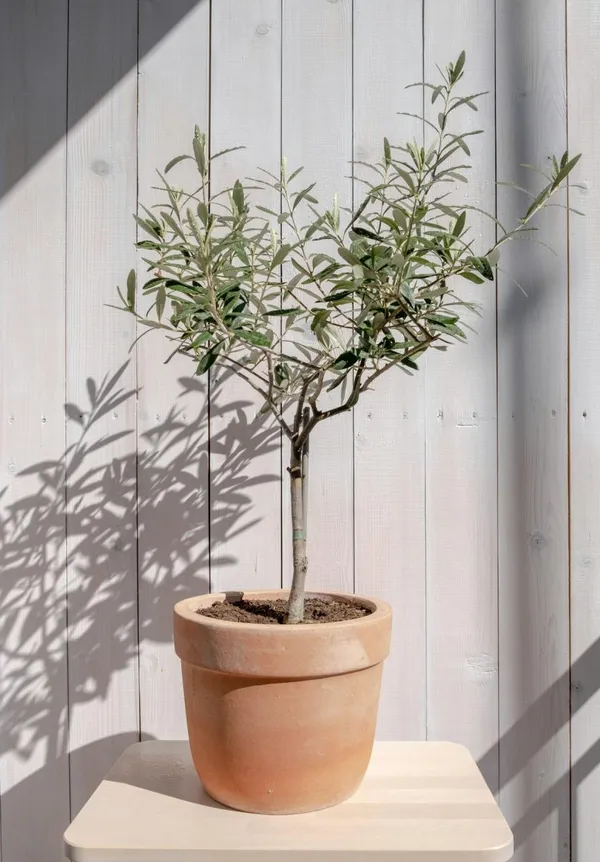
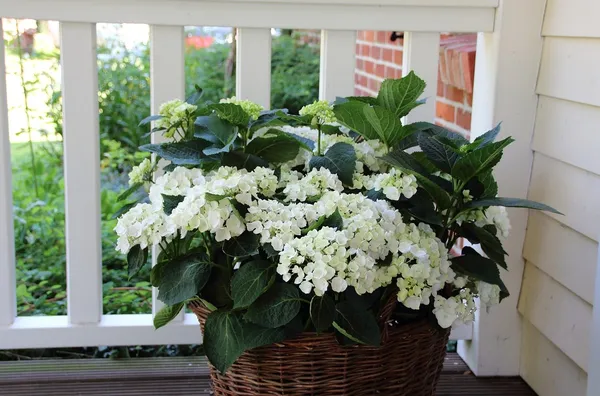
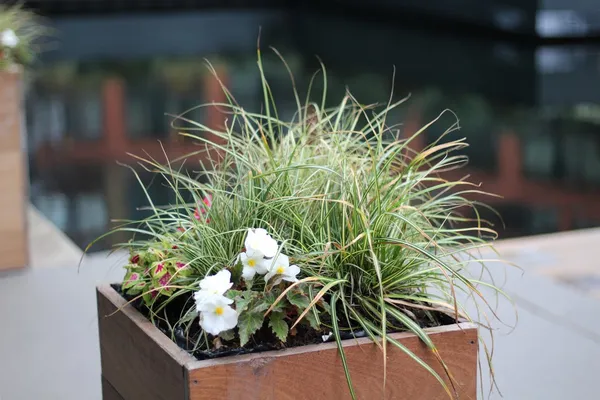
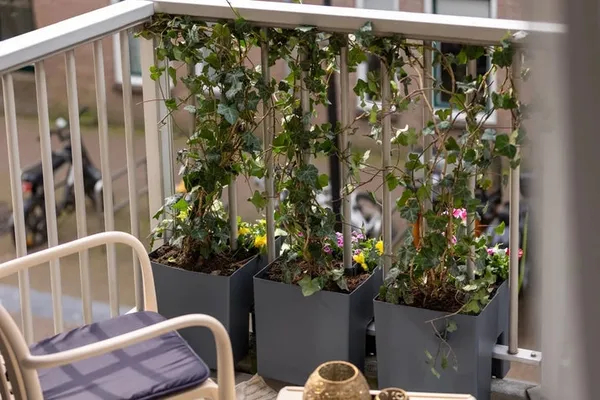
Photo credits: Vercony.com
How do you choose the right pot for your balcony?
Many people focus mainly on how a pot looks. That makes sense. But from a practical standpoint, it’s often better to consider function first. Size plays a key role in this. Plants simply need space. In a pot that’s too small, everything dries out faster, and you have to keep adjusting the watering. Bigger is usually better—for the plant and for you.
Weight is something you can easily underestimate. Wet soil in a heavy ceramic pot can quickly add up. That’s why a combination often works well: a few sturdy, larger containers and lighter pots that you can move around.
And then there’s drainage. It’s not exactly exciting, but it’s essential. Without holes in the bottom, water will pool, and plants don’t like that. Over time, this can lead to problems like root rot and plant loss. So, does your pot or planter have any holes? If not, drill a few yourself to ensure proper drainage.
Which pot goes with which plant?
Herbs do just fine in smaller pots, as long as the water can drain away. Vegetables like tomatoes or bell peppers, on the other hand, need deeper soil to grow strong. Flowers prefer wider containers so they have enough space to develop. And what about climbing plants? They not only need a good pot, but also something to climb up—like a trellis or a support. For shrubs and small trees, it’s best to choose a generously sized pot (keep the weight in mind).
Tip: If you're unsure about the size, go a size larger. In practice, this almost always works out in your favor.
How do you water pots on the balcony?
A good pot is only half the battle. What’s inside it determines how long your plants will last and how heavy your pot will become.
A layer of hydro granules at the bottom helps excess water drain away. On top of that, add potting soil—and this is really important: regular garden soil tends to become too compact when used in pots. Potting soil stays looser and retains moisture better, allowing the roots to function more effectively. You can also cover the top of the potting soil with a layer of decorative gravel or crushed stone.
After a while, the potting soil does tend to become depleted. Adding a little fertilizer or replacing the top layer helps keep everything going.
Do you have a tall pot or container? If so, see if you can fill it partially with soil, since soil is heavy. For example, fill the bottom half of the pot with lightweight material, such as extra hydro granules, Styrofoam, old plant pots, or something similar.
Making Smart Use of Space on Your Balcony
On a balcony, it’s all about smart layout—after all, space is limited.
Putting everything on the floor usually doesn’t work very well. It quickly looks cluttered, and you lose space. By using vertical space—with shelves or wall planters—it immediately feels more open. Railing planters are also useful for this; they make use of space you wouldn’t otherwise use. Don’t forget about climbing plants, either.
What often works well is using layers—that is, varying the heights. Start with a few larger pots as a base and arrange smaller pots around them.
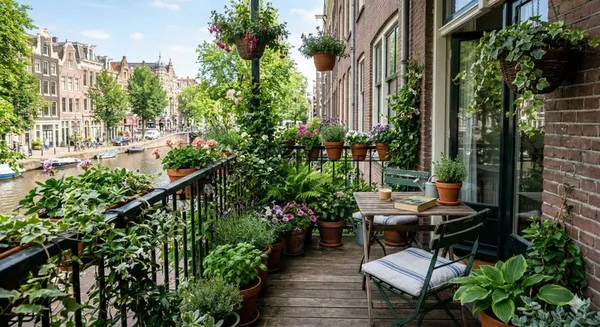
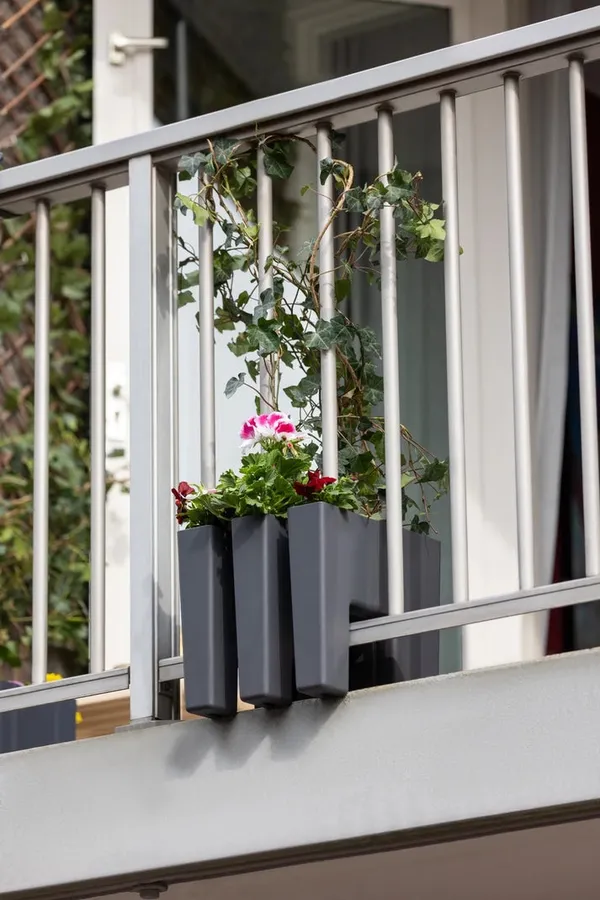
Photo credits: Vercony.com
Styling: Creating a Cozy Atmosphere with Pots on the Balcony
Planters set the mood more than you might think. They can create a sense of calm or, on the contrary, a lively atmosphere on your balcony.
You can create a sense of calm by using repetition. Simply repeating a few materials or colors goes a long way. If you want a more relaxed look, you can vary the shapes, as long as there’s still some cohesion. In that case, try repeating the types of plants or flower colors, for example.
Grouping them together also works well. Instead of having individual pots scattered across the balcony, a combination of, for example, one larger planter with two smaller ones next to it often creates a more striking and calmer look.
Frequently Asked Questions About Planters on the Balcony
How big should a pot be for balcony plants?
Deeper than you think. For most plants, the hole should be at least 20 cm deep, and for larger plants, 30 cm or more. Deeper is usually better (less maintenance)!
Which pots are best for a balcony?
That depends on your situation, but lightweight materials like plastic are often the most practical.
What kind of potting soil do you use in pots?
Always use potting soil. It is specially formulated for use in pots. Potting soil is lighter and retains moisture longer.
Do pots always need holes?
Plants that you put in pots outdoors always need holes for drainage.
How often should you water potted plants?
That depends on the weather and the size of the pot. In the summer, you may need to water it every day, while larger pots retain moisture longer.
Can you put any plant in a pot?
Many plants do, but not all of them. Large plants or those with deep roots need more space than a pot can provide. With proper care, you'll be surprised at what you can grow in a (spacious) pot.
Which pots can withstand sun and weather?
Terracotta, plastic, ceramic, and wood can all be kept outdoors, but they react differently. Dark pots can get hot in the sun, plastic can sometimes discolor over time, and not every pot is frost-resistant (such as terracotta). The most important thing is that the material suits the spot on your balcony and the amount of sun and cold it receives.
What are some common mistakes people make when using pots on the balcony?
Choosing pots that are too small is the most common mistake. People also often forget about drainage and underestimate the weight of filled pots. In addition, too much variation in styles or placing everything at the same level often results in a cluttered look.
A functional balcony starts with the right pots
Good pots on the balcony are the foundation of a lovely balcony garden. They determine how your plants grow, how much space you have left for yourself, and the overall feel of the space.
By making thoughtful choices, you can create a beautiful, pleasant, AND practical balcony. Start simple. Just a few good pots or planters can make a big difference!