
Can bamboo be grown in a pot or container?
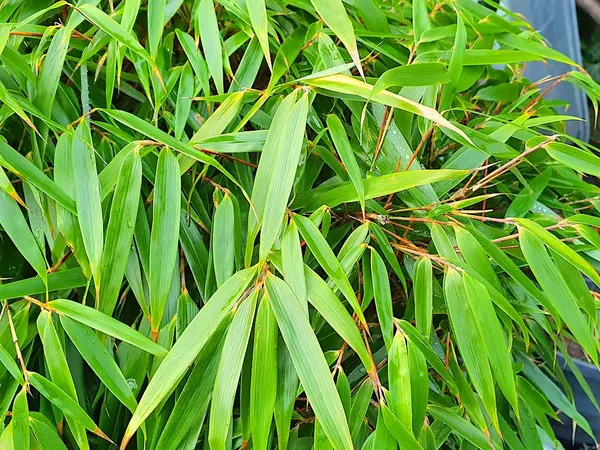
You often see it in restaurants and bars or on stylish rooftop terraces: bamboo in a pot, a planter, or even in a wine barrel, an oil drum, or an old zinc trash can…
But bamboo doesn't always look fresh and healthy in a pot or planter.
Is bamboo suitable for growing in a pot or container?
Although we agree that it looks beautiful and that bamboo is also a great choice for a hedge on, say, a balcony or rooftop terrace, growing bamboo in a pot or planter is not without its challenges.
Bamboo is actually prone to drying out. When grown in a pot, bamboo dries out even faster. So you should definitely keep that in mind. During the growing season—and especially during dry spells—watering it daily is absolutely essential.
Many non-invasive Bamboo (Fargesia) becomes sparser in the winter, which means it’s not always completely opaque. Potted plants are often real eye-catchers or are placed in a prominent spot. That’s another thing to consider when choosing bamboo.
The advantage of a (spacious) pot is that you can also look at the invasive bamboo species, such as Phyllostachys. If you have a pot or container that’s not too small, these plants can thrive in it for years. They can’t run wild, though, because they’re not planted in the ground. You can easily trim off any rhizomes that extend beyond the pot. However, most varieties do grow quite tall. Because of this, these varieties might still not be suitable for your small garden. In a pot, though, they’ll stay slightly shorter than they would in the ground.
How do you care for bamboo in a pot or planter?
Growing bamboo in a container or pot isn't without its challenges, but it's definitely worth a try. With the following care tips, you can easily grow bamboo in a pot.
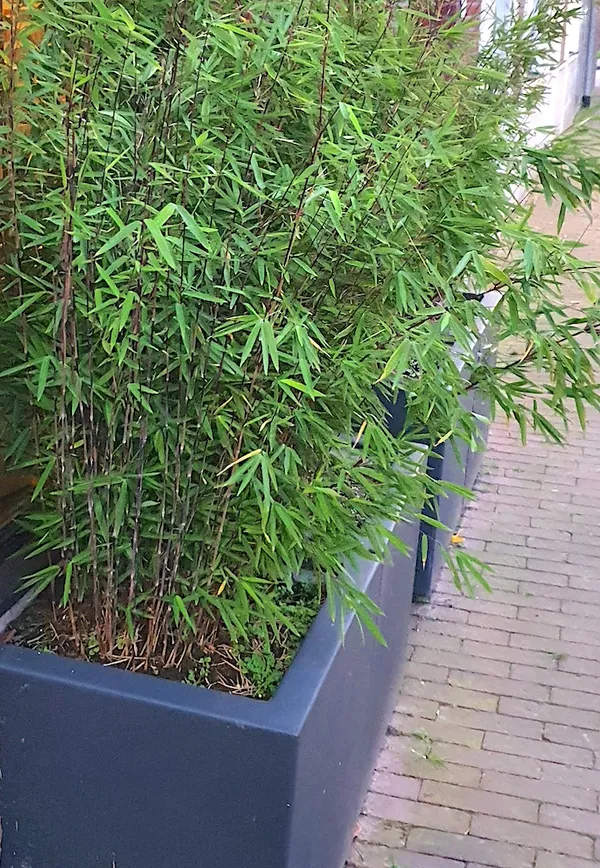
How often do you water a potted bamboo plant?
It's best to keep it in a jar water several times a week. This is certainly true of bamboo. During the growing season, it may be necessary to water thoroughly every day, or even several times a day. This, of course, depends on various conditions, such as whether the plant is in full sun or exposed to the wind. The larger the pot or container, the better it absorbs and retains water. We also recommend mixing moisture-retaining material into the soil when growing bamboo in a pot. Examples include humus-rich soil, hydro granules, or vermiculite.
To prevent overwatering, good drainage is essential. Make sure the pot has enough drainage holes so the roots don’t rot over time.
What is the minimum size of a pot or container for bamboo?
For non-invasive species (Fargesia) We recommend using a container or pot that is at least 40 cm wide (but preferably at least 50 cm). A height of at least 40 cm is also recommended. For fast-growing bamboo (such as Phyllostachys), you’ll quickly need a container or pot that’s at least 60–80 cm wide. Here, too, a minimum height of 40 cm is required.
For both types, it’s best to use larger containers whenever possible. Taller containers can also be used for bamboo, but in terms of retaining more moisture, this usually doesn’t make much of a difference right away. It will likely take several years before the bamboo reaches the deeper soil and can draw additional moisture from it.
How often should you feed them? And what kind of food is suitable for bamboo?
You can fertilize bamboo twice a year. In the spring, fertilize bamboo around February–March. You can fertilize it again in the summer. Just make sure to Don't Fertilize Too Late apply regular fertilizer or use a special fall fertilizer instead, because otherwise you risk getting a lot of new (weak) growth shoots before winter. Bamboo likes plenty of organic matter as fertilizer. You can use well-decomposed manure, cow manure (in pellet form), or apply special ornamental grass fertilizer (or regular lawn fertilizer). After all, bamboo is a type of grass!
What kind of soil should you use for potted bamboo?
It’s best to plant bamboo in a pot using good potting soil. This often already contains some all-purpose fertilizer to give it a good start. In addition, potting soil contains more moisture-retaining material, which helps the soil stay moist longer. Sprinkle a thick layer of hydro granules on the bottom of the pot and, if desired, add some vermiculite to the potting soil. You can also use good-quality planting soil, but fertilized garden soil is not suitable.