
Bumps on the leaves of your grapevine: Gall Mites
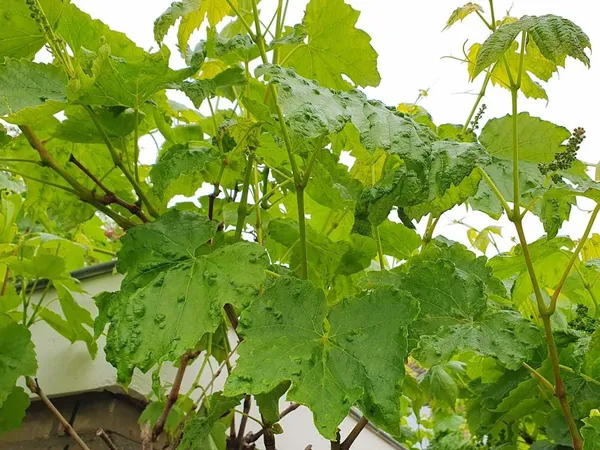
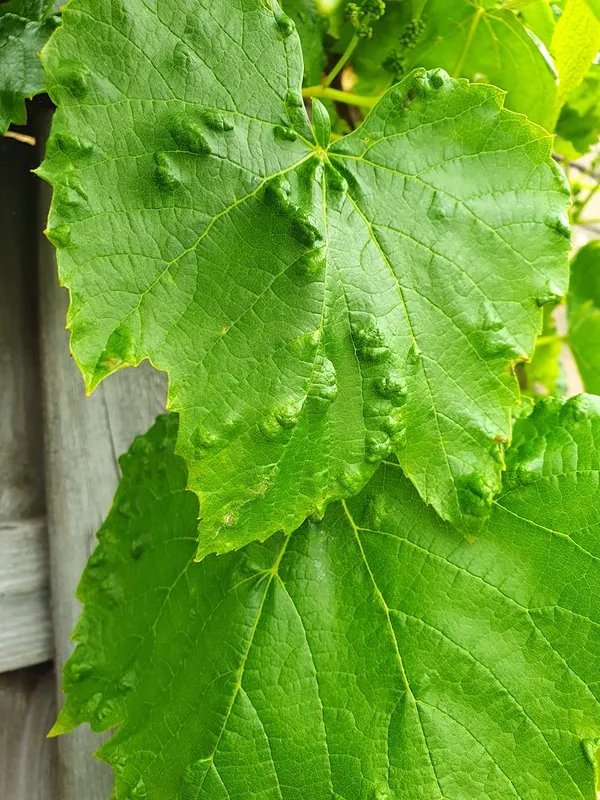
Grapes (Vitis vinifera) are fast-growing vines. Once they begin to sprout in (slightly later) spring, things move very quickly. In no time at all, grapes produce long shoots and come into full leaf. Grapes aren’t very difficult to care for, although they can be susceptible to diseases and pests. In the spring (just after, or at the same time as, the rapid growth), you’ll often see bumps or lumps forming on the leaves. This means your grapevine has gall mites.
What is a gall mite?
The grapevine mite (Eriophyes vitis) is a small, microscopic organism that can cause damage to grapevines. Grapevine mites feed on the sap of grape leaves, causing them to become misshapen, discolored, and bumpy. Grape mites appear to have become increasingly common and widespread in recent years.
What does grapevine mites look like?
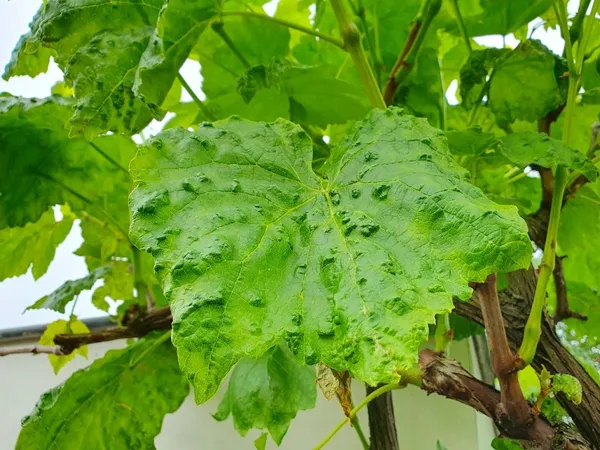
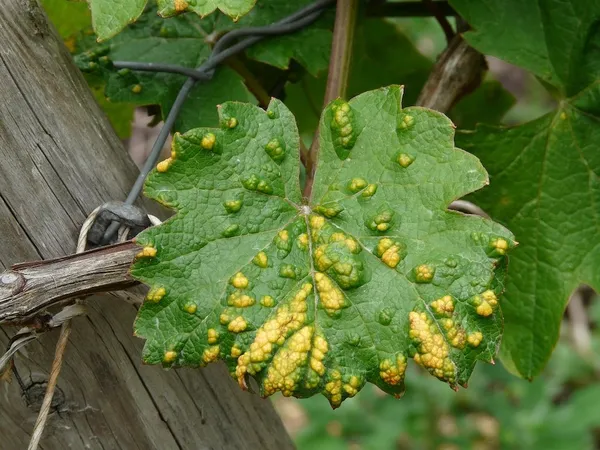
Grape mites are easy to spot. You can clearly see small bumps or lumps on the leaves. This is often accompanied by leaf deformation and discoloration. If you look closely at the underside of the leaf, you’ll see the mites sitting in the bumps they’ve created on the leaf.
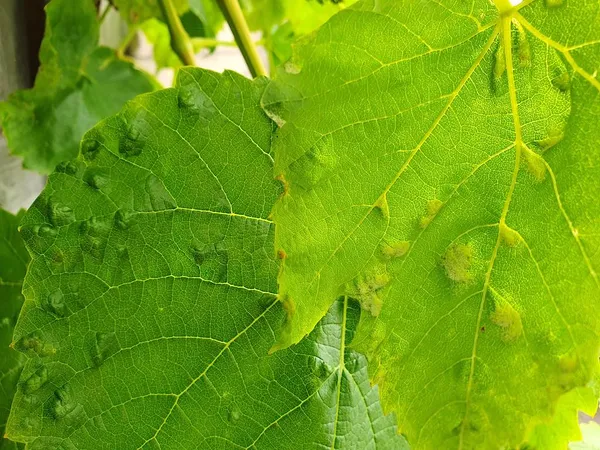
On the left, the upper surface of a leaf with gall mites; on the right, the underside
Are gall mites harmful to your grapevines or your grapes?
In most cases, gall mites cause little to no damage to the plant or your grapes. They also generally have no effect on the vine’s growth or yield. So there’s no need to worry. However, it doesn’t look very nice, and the vine appears unhealthy.
How can you prevent and control grapevine mites or gall mites?
If you catch it early, you can try to prevent the spread by removing the infected leaves from your grapevine. It’s best not to put the leaves on the compost pile; instead, throw them in the trash can.
If the gall mite has already spread further, you may want to consider pruning your grapevine. Create more air, light, and space between the branches and shoots. This can help limit further spread. Be careful not to spread infested pruning debris throughout your garden. It’s best to dispose of it immediately.
There are also predatory mites that feed on gall mites. This is a way to control gall mites biologically. We would not recommend using chemical pesticides. Not only do we never use chemical pesticides ourselves, but you should also keep in mind that this is a plant from which you will be harvesting and eating grapes in a few weeks or months.