
All About Trees
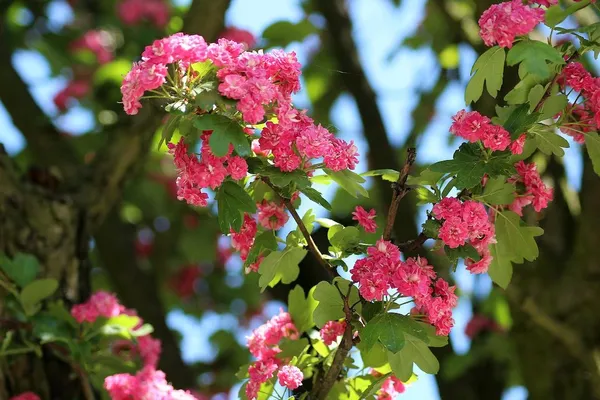
A tree is a must-have in any garden—even a small one! A tree adds character to your garden and gives it a more mature look. Trees add height to the garden and provide shelter and food for animals, insects, and birds. A suitable tree for a small garden is one that remains small, or trees that grow narrow and columnar, slow-growing trees, or trees that can be easily kept small through pruning. Fortunately, there’s still quite a lot of choice. In any case, we wouldn’t want to be without a tree in our garden!
What is a tree?
A tree is a tall, woody, perennial plant with at least one woody trunk and a crown. It usually has a relatively large root system and is at least 2–3 meters tall. There are trees that lose their leaves in the winter (deciduous trees) as well as trees that remain green all year round (evergreen trees, or trees that retain their leaves).
Is it a tree or a shrub?
The Dutch names of some trees can sometimes cause confusion. A number of shrubs have names that include the word “tree,” even though they aren’t actually trees. Examples include the Judas tree (Cercis), the serviceberry (Amelanchier), the magnolia (beaver tree or false tulip tree), the olive tree (Olea europaea), and the fig tree (Ficus carica). Nevertheless, in general terms, a tree has a single upright (woody) trunk, while shrubs branch out from low above the ground. The popular multi-stemmed trees can therefore be called either trees or shrubs. However, we often refer to them as trees anyway. In most cases, this isn’t due to low branching but to additional stems emerging from the ground. Many shrubs are also available in tree form (grafted onto a rootstock or not).
Trees in a Small Garden
A tree adds height, shape, and privacy to your garden. Trees provide ornamental value throughout the different seasons (think of fresh new foliage, flower buds, blossoms, fruit, beautiful fall colors, and sometimes striking trunks and branches). Trees provide shelter and nesting sites for animals and birds. They also provide food for animals, birds, insects, bees, and butterflies. Many tree species grow too large for a small garden, but fortunately, there are still plenty of options for trees in small gardens!
Would you like to buy trees For your garden? In this article, we’ll discuss the different types of trees—evergreen and deciduous—as well as their location requirements, care, and pruning. We’ll also provide an overview of popular trees that are suitable for sunny spots in the garden or, conversely, shady areas, and for clay, sandy, or acidic soil.
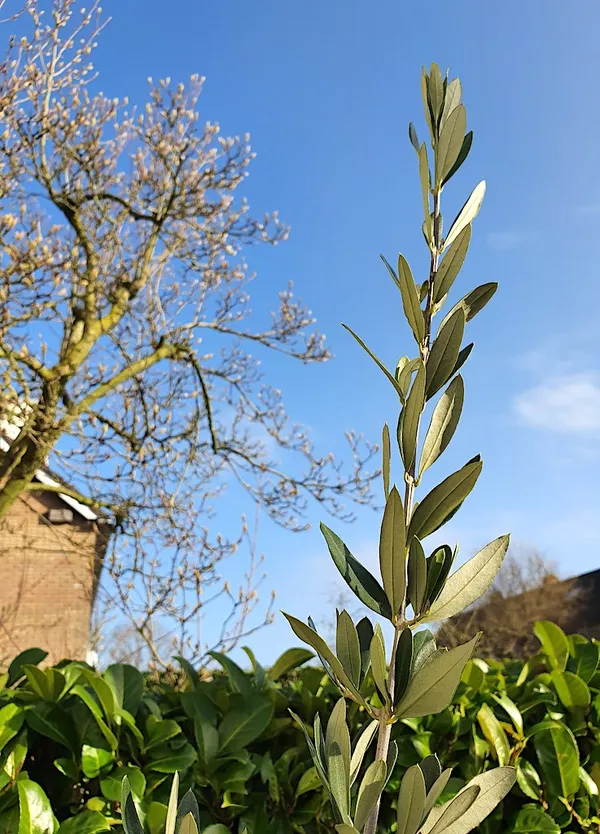
Magnolia and Olive (Deciduous vs. Evergreen)
Evergreen Trees vs. Deciduous Trees
There are trees that lose their leaves in the winter, and there are evergreen trees that keep their leaves all year round (even in the winter).
Evergreen trees
Evergreen trees are ideal for adding shape and structure to a garden or flower bed. You can let them grow in their natural form and prune them occasionally, or you can opt for topiary (for example, pruning them into a ball, block, or column shape). Evergreen trees often bloom for a shorter period or less profusely than deciduous trees. They also (usually) do not display striking fall colors. However, you can enjoy beautiful green trees in your garden all year round. Plus, they provide privacy even in winter.
Popular evergreen trees for small gardens:
- Elaeagnus ebbingei (olive willow)
- Eucalyptus gunni (gum tree)
- Ilex Nellie R. Stevens (American holly)
- Ligustrum japonicum (Japanese privet)
- Magnolia grandiflora (evergreen magnolia)
- Olea europaea (olive tree)
- Photinia fraseri (glossy photinia)
- Prunus laurocerasus (cherry laurel)
- Prunus lusitanica (Portuguese laurel)
- Quercus ilex (holm oak)
- Quercus suber (cork oak)
- Trachycarpus fortunei (fan palm)
View more evergreen trees
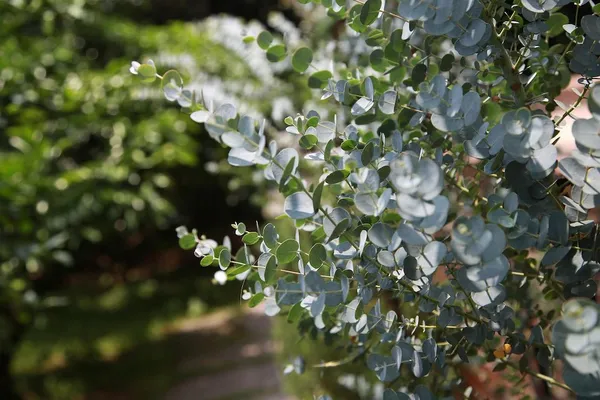
Evergreen tree: Eucalyptus gunni
Deciduous trees
Although deciduous trees lose their leaves in winter, that doesn’t mean they’re boring. Quite the contrary! Many deciduous species are beautiful or unique in multiple seasons. Think of blossoms in the spring, vibrant green foliage or leaves with an unusual color when they emerge, colorful flowers in summer, fruits in late summer, beautiful fall colors in the fall, and a striking silhouette in winter—or even a colored trunk, bark, or branches. With these trees, your garden changes with the seasons. An added benefit is that deciduous trees don’t block light from your garden (and home) in the winter.
Beautiful Trees for Small Gardens (Deciduous):
- Acer griseum (paper maple)
- Acer palmatum (Japanese maple)
- Amelanchier (serviceberry)
- Albizia julibrissin (Persian silk tree)*
- Aralia elata (Devil's Walking Stick or Angel Tree)
- Betula utilis ‘Doorenbos’ (white birch)*
- Broussonetia papyrifera (paper mulberry)
- Cercidiphyllum japonicum ‘Rotfuchs’ (katsura tree)*
- Cercis canadensis (Judas tree)
- Cornus controversa (giant dogwood)
- Cornus mas (yellow dogwood)
- Crataegus laevigata ‘Paul’s Scarlet’ (red hawthorn)
- Crataegus lavalleei (hawthorn)
- Cydonia oblonga (quince)
- Elaeagnus umbellata (autumn olive)
- Ficus carica (fig tree)
- Fruit trees (apple, pear, cherry, plum, peach, apricot)
- Genista aetnensis (Italian broom)
- Gleditsia triacanthos (honey locust)*
- Heptacodium miconoides (seven-sons tree)
- Koelreutia paniculata (yellow soapberry)*
- Lagerstroemia indica (Indian lilac)
- Magnolia (false tulip tree)
- Malus (ornamental apple)
- Parottia persica ‘Vanessa’ (Persian ironwood)*
- Prunus cerasifera ‘Nigra’ (red cherry plum)
- Prunus sargentii (Japanese ornamental cherry)
- Prunus serrula (Tibetan ornamental cherry)
- Prunus serrulata (ornamental cherry)
- Prunus subhirtella ‘Autumnalis’ (winter cherry)
- Prunus yedoensis (Japanese ornamental cherry)
- Pyrus calleryana ‘Chanticleer’ (ornamental pear)
- Pyrus salicifolia ‘Pendula’ (willow-leaved weeping ornamental pear)
- Rhus typhina (sumac)
- Sorbus aucuparia (rowan)
- Sorbus hupehensis (Chinese rowan)
- Styrax japonicus (Japanese storax tree)*
* May eventually grow to be very large or wide
Be sure to check out our Favorite Trees for Small Gardens, or the best trees up to 3 meters tall for a small garden.
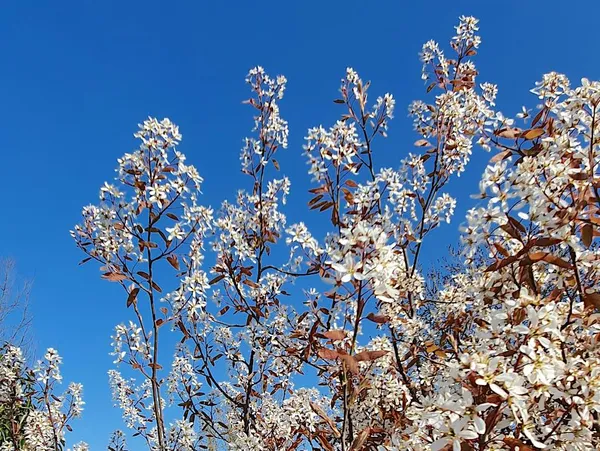
A Beautiful Tree for a Small Garden: Amelanchier lamarckii
Coniferous Trees
Spherical trees are also very well-suited for smaller gardens. They remain small, or can easily be kept small. Many of these trees can actually grow quite large on their own, but because they are repeatedly pruned into a small spherical shape, spherical trees are ideal for small(er) gardens.
Well-known bulbous trees:
- Acer campestre ‘Nanum’ (bulbous field maple)
- Acer platanoides ‘Globosum’ (globose maple)
- Catalpa bignonioides ‘Nana’ (dwarf catalpa)
- Ginkgo biloba ‘Mariken’ (Japanese nut tree, grown as a ball-shaped tree)
- Liquidambar ‘Gum Ball’ (round sweetgum)
- Platanus hispanica ‘Alphens Globe’ (ball-shaped plane tree)
- Quercus palustris ‘Green dwarf’ (swamp oak)
- Robinia pseudoacacia ‘Umbraculifera’ (ball-shaped acacia)
Read More about conifers
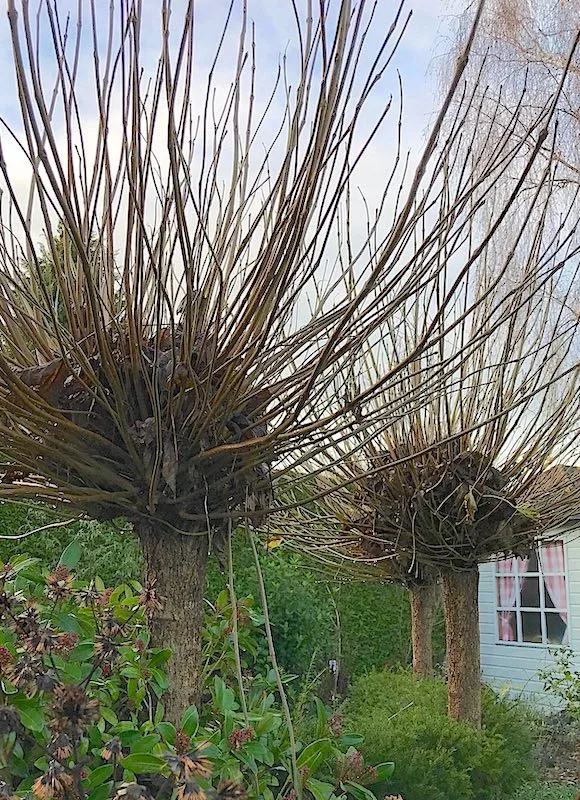
Tree Species: Ball-shaped Catalpa
Columnar Trees
A columnar tree is a taller shrub or tree that grows upright in a slender form. These are generally special cultivars of well-known or lesser-known (hedge) plants. They are usually not only slender but also have a very neat shape.
Well-known columnar trees:
- Betula pendula ‘Fastigiata’ (columnar birch)
- Carpinus betulus ‘Frans Fontaine’ (columnar hornbeam)
- Cedrus libani ‘Fastigiata’ (columnar cedar)
- Cupressus sempervirens ‘Stricta’ (Italian cypress)
- Fagus sylvatica ‘Dawyck’ (columnar beech)
- Ginkgo biloba ‘Fastigiata Blagon’ (Japanese ginkgo)
- Juniperus scopulorum ‘Blue Arrow’ (juniper)
- Koelreutia paniculata ‘Fastigiata’ (yellow soap columnar tree)
- Liquidambar styraciflua ‘Slender Silhouette’ (columnar sweetgum)
- Pinus sylvestris ‘Fastigiata’ (columnar)
- Prunus serrulata ‘Amanogawa’ (columnar cherry)
- Quercus robur ‘Fastigiata’ (columnar English oak)
- Taxus baccata ‘Fastigiata’ (columnar yew)
- Ulmus hollandica ‘Wredei’ (Goudiep)
View more columnar trees
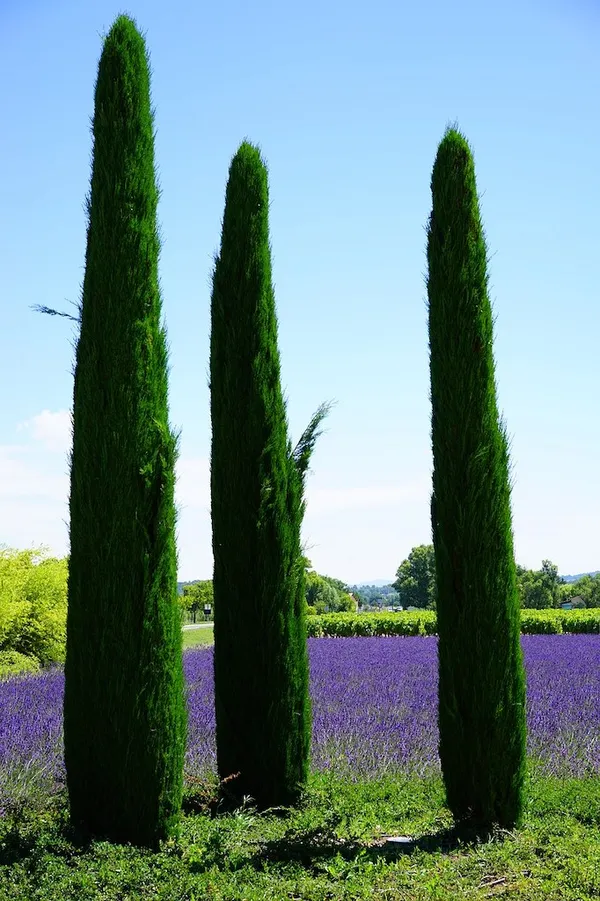
Columnar Trees – Italian Cypress
Flowering Trees
In addition to adding shape and structure to the garden, many varieties also bloom beautifully!
Some trees bloom for only a very short time, while others have a longer blooming period. Some trees produce large flowers, while others have an abundant bloom with many small flowers. Some have a distinctive flowering form (e.g., umbel-shaped flowers or blooms with striking bracts), a delightful fragrance, or a flower color that changes as the bloom progresses. Many trees bloom in the spring or summer. However, there are also trees that bloom in the fall or winter (winter-blooming plants).
Flowering Trees for Small Gardens:
- Amelanchier (serviceberry)
- Albizia julibrissin (Persian silk tree)
- Aralia elata (devil's walking stick or angel tree)
- Cercidiphyllum japonicum ‘Rotfuchs’ (katsura tree)
- Cercis canadensis (Judas tree)
- Cornus controversa (giant dogwood)
- Cornus kousa (Japanese dogwood)
- Cornus mas (yellow dogwood)
- Crataegus laevigata ‘Paul’s Scarlet’ (red hawthorn)
- Crataegus lavalleei (hawthorn)
- Cydonia oblonga (quince)
- Fruit trees (apple, pear, cherry, plum, peach, apricot)
- Genista aetnensis (Italian broom)
- Heptacodium miconoides (seven-sons tree)
- Koelreutia paniculata (yellow soapberry)
- Lagerstroemia indica (Indian lilac)
- Magnolia (false tulip tree)
- Malus sp. (ornamental apple)
- Parottia persica ‘Vanessa’ (Persian ironwood)
- Prunus cerasifera ‘Nigra’ (red cherry plum)
- Prunus sp. (ornamental cherry)
- Prunus subhirtella ‘Autumnalis’ (winter cherry)
- Pyrus calleryana ‘Chanticleer’ (ornamental pear)
- Sorbus aucuparia (rowan)
- Styrax japonicus (Japanese storax tree)
See also our Favorite Flowering Trees
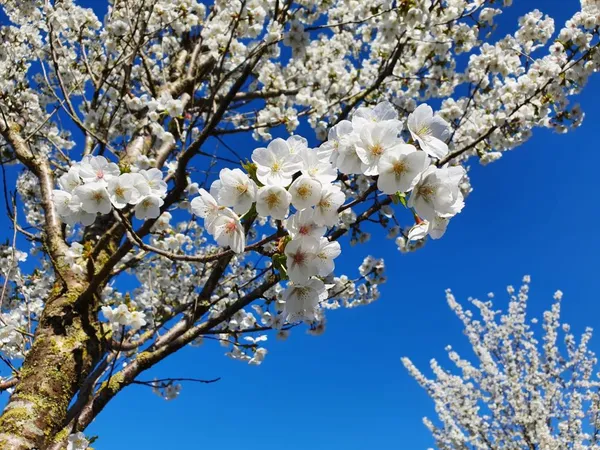
Ornamental cherry blossom
Tree Location, Care, and Pruning
To get the most out of healthy trees, good growth, and possible blooms, it’s important to plant a tree in the right spot. Know what kind of soil you have in your yard and which areas get a lot of sun—or very little.
When deciding on the right spot in your garden, first carefully consider the conditions, the plant’s characteristics, and its requirements regarding its location. Take into account the tree’s growth rate and its eventual size. First, research your favorite trees, and then choose only the one that’s suitable for your garden.
How much sun?
A distinction is made between Full sun (more than 5–6 hours of direct sunlight), partial sun, or Partial shade (up to 4 hours of sunshine), Shadow (less than 4 hours of sunshine) and Deep Shadow (virtually no sun).
Open or sheltered location?
Some trees require a sheltered location, out of the wind, or at least protected from the cold east wind in winter. These are often plants that not hardy or less hardy in our climate. These plants often also require well-drained soil so they don't get too wet in the winter.
What type of soil?
The soil is also important for your plants to grow well. Some trees aren’t very picky when it comes to soil type, but many species do require a specific type of soil. In our country, the following soil types are most common: clay soil, sandy soil, and peat soil (acidic soil).
You can read more about soil and soil types in our article “Soil – Soil Type, Acidity, and Drainage“
Watering and Fertilizing Trees
When caring for trees, it’s important to water them generously every week during the first growing season (more often during dry spells; daily if potted). In the spring, you can fertilize the plants (e.g., with cow manure pellets or ornamental garden fertilizer). Do not exceed the recommended amount.
Learn more about Watering (how much and how often), or about Fertilizing Plants (When and How).
Pruning Trees
Is a tree getting too big for your small garden, losing its beautiful shape, or is the crown (inside) becoming very sparse? If so, pruning may be necessary. Pruning can also be used to stimulate flowering or fruit production.
Most deciduous trees can be Pruning in Winter. The trees are dormant at that time. Since these trees are bare in the winter, it’s also easier to determine the right shape. Keep in mind, though, that pruning in the winter can lead to rapid growth.
Not all deciduous trees should be pruned in the winter. These include the ABC trees: maple, birch, hornbeam, walnut, wild chestnut, poplar, and stone fruit trees (cherry, plum, almond).
It's best to prune evergreen trees and exotic species in the spring, once the risk of frost has passed.
By pruning in the summer, when the tree is in full leaf, you can slow its growth. This is a good way to keep many trees and fruit trees small. Pruning wounds also heal quickly and easily at this time.
Check out all of our Tips for Pruning Trees
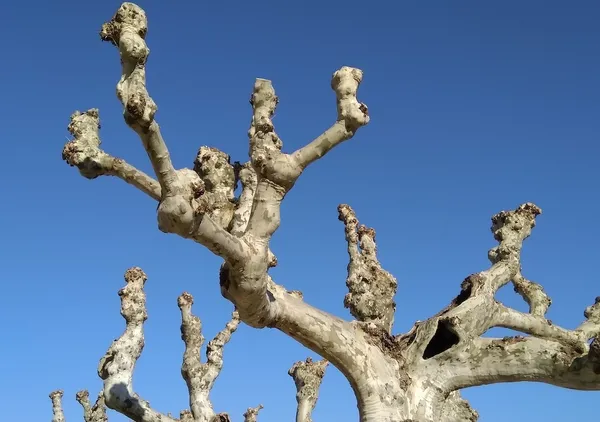
Roof Plataan after pruning
Trees for Clay Soil
Planting and transplanting can sometimes be quite difficult in clay soil. Still, clay provides good nutrients for many plants. There are many trees that thrive in clay soil. However, some trees may have trouble with clay that remains wet for a long time in the winter.
See our article “91 Plants for Clay Soil (That Don't Grow Too Big)“
Trees for Sandy Soil
Although planting is easy in sandy soil, many plants require soil amendment to ensure they receive sufficient nutrients and to help the soil retain moisture longer. That said, there are certainly trees that grow well in sandy soil.
Be sure to read the article “Tips for a Garden in Dry, Sandy Soil“
Trees for Acidic Soil
Acidic soil, such as peat soil, or a spot in the woods isn't suitable for all plants. But there are some very beautiful and unique trees that actually grow and bloom better in acidic soil.
See our article “7 Trees and Shrubs for Acidic Soil“
Planting a Tree
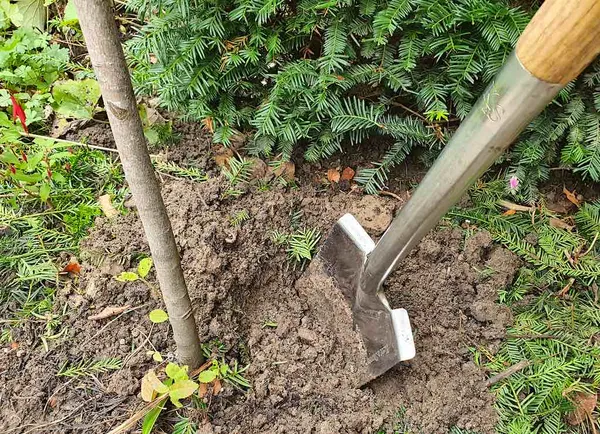
When should you plant trees?
You can plant potted trees (grown in pots) year-round, except when there is a freeze (during the day). Trees grown in open ground (with a root ball or bare roots) can only be planted between October and April. The best time to plant trees is in the spring, as well as in the fall.
How do you plant a tree?
- Dig a spacious planting hole and amend the soil if necessary. Use compost or good-quality potting soil, for example.
- If the root ball is very dry, let the plant sit in water for a few hours (or overnight), or water it generously the day before planting (note: the tree can become very heavy!).
- Plant the tree at the same depth as it was at the nursery (in other words, use the top of the pot as a guide for ground level). Firmly pack the soil around the root ball.
- After planting, water open water. Even when it's cloudy or rainy, and in the winter. Not only does this give the tree a good start, but it also helps the soil settle better around the roots.
- After watering, spread a layer of compost (or another mulch (mulch) around the tree to prevent it from drying out. Water generously every week during the first growing season—especially during dry spells!
What's your favorite tree for a small garden?
* This post contains a sponsored link