
All About Shrubs and Bushes
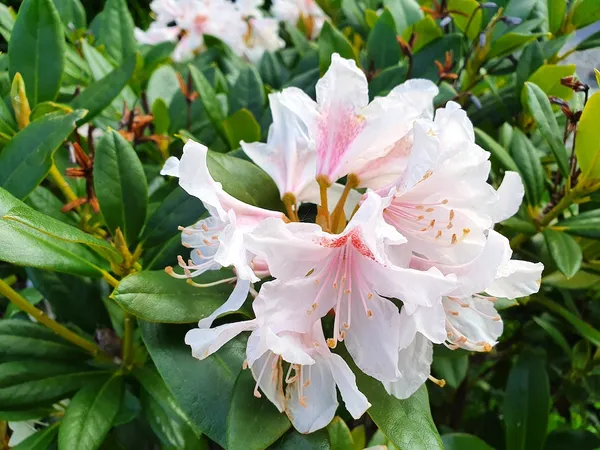
Shrubs are indispensable in the garden. They are incredibly versatile and add shape and structure to the garden. Shrubs are easy to care for and require little maintenance. Many shrubs are also very hardy and can withstand rough treatment. Evergreen shrubs are also ideal for use as a boundary (hedge). Many shrubs produce beautiful blooms.
What is a shrub?
A shrub is a plant whose stems become woody. Shrubs branch out low to the ground. In winter, shrubs remain above ground. There are also types of shrubs that stay green in winter.
What is the difference between a shrub and a bush?
There is NO difference between shrubs and bushes. "Heester" is the official term for a shrub.
Is it a shrub or a tree?
With some shrubs, it’s not immediately clear whether they’re a shrub or a tree. As a result, the (Dutch) names are often confusing. Think of the Judas tree (Cercis), serviceberry (Amelanchier), magnolia (beaver tree or false tulip tree), olive tree (Olea europaea), and fig tree (Ficus carica). These are actually all shrubs. This also applies to the popular Japanese maple.
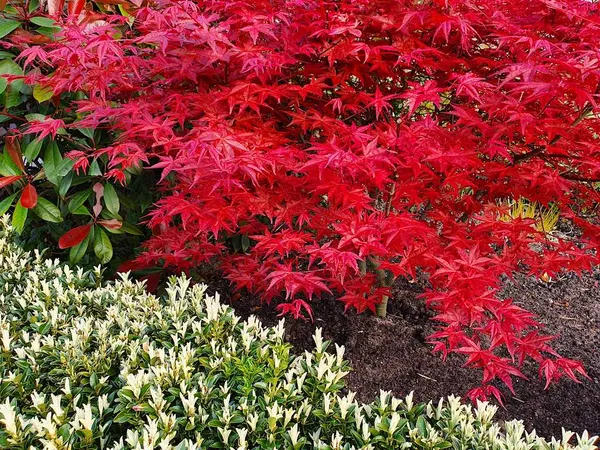
Acer palmatum, Euonymus, and Photinia
Shrubs in the garden or flower bed
Shrubs help you create shape and structure in your garden and flower beds. In winter, they retain their shape, even as many other plants die back above ground. Shrubs provide shelter and nesting sites for animals and birds. They also provide food for animals, birds, insects, bees, and butterflies.
Would you like to Buy Shrubs for your garden? In this article, we’ll discuss the different types of shrubs—evergreen and deciduous—as well as their planting locations, care, and pruning, and we’ll provide an overview of popular shrubs that are suitable for a sunny spot in the garden or, conversely, for shade, as well as for clay soil, sandy soil, or acidic soil.
Evergreen Shrubs vs. Deciduous Shrubs
Some shrubs lose their leaves in the winter, while evergreen shrubs retain their leaves all year round (even in the winter).
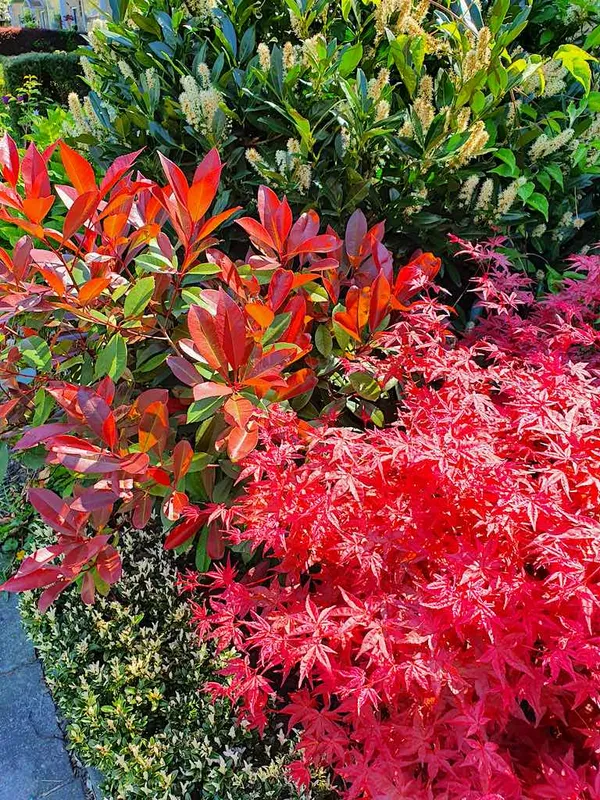
Acer palmatum, Photinia, and Prunus laur. ‘Otto Luycken’
Evergreen shrubs
Evergreen shrubs are ideal for adding shape and structure to a garden or border. You can let them grow in their natural form and prune them occasionally, or you can choose to shape them (for example, into a ball, block, or column). Evergreen shrubs often bloom for a shorter period or less profusely than deciduous shrubs. They also (usually) lack striking fall color. However, you can enjoy beautiful green shrubs in your garden all year round.
Well-known evergreen shrubs include:
- American lilac (Ceanothus)
- Camelia (Camellia)
- Conifers
- Photinia
- Evergreen snowball (Viburnum davidii, tinus)
- Hedge plants such as spindle tree, cherry laurel, olive willow, Portuguese laurel, and yew
- Hebe
- Lavender (Lavandula)
- Oleander (Nerium oleander)
- Olive (Olea europaea)
- Rhododendron (Rhododendron)
- Rock Heath (Pieris)
- Rosemary (Rosmarinus)
- Skimmia
- Tree Ivy (Hedera arborescens)
- Firethorn (Pyracantha)
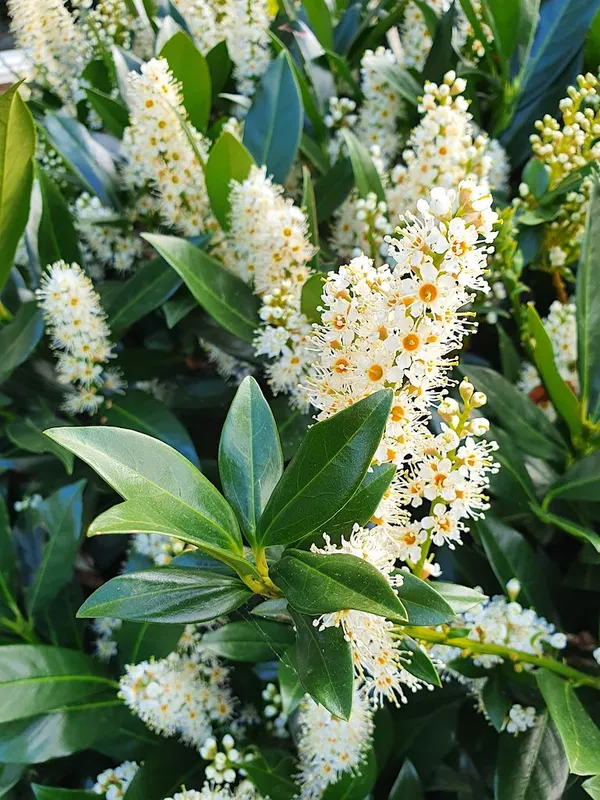
Prunus laurocerasus ‘Otto Luycken’
Deciduous shrubs
Although deciduous shrubs lose their leaves in the winter, that doesn’t mean they’re boring. Quite the opposite! Many deciduous species are beautiful or unique in several seasons. Think of blossoms in the spring, vibrant green foliage or foliage with an unusual color as it emerges, colorful flowers in summer, fruits in summer and late summer, beautiful fall colors in the fall, and a striking silhouette in winter—or even a colored trunk, bark, or branches. With these shrubs, your garden will change with the seasons.
Well-known deciduous shrubs include:
- Guelder Rose (Viburnum opulus)
- Hibiscus (Hibiscus syriacus)
- Hydrangea (Hydrangea)
- Japanese maple (Acer palmatum)
- Dogwood (Cornus)
- Magnolia
- Hawthorn (Crataegus)
- Rose (Rosa)
- Lilac (Syringa vulgaris)
- Ornamental Cherry (Prunus serrulata)
- Witch hazel (Hamamelis)
- Fig (Ficus carica)
- Butterfly Bush (Buddleja)
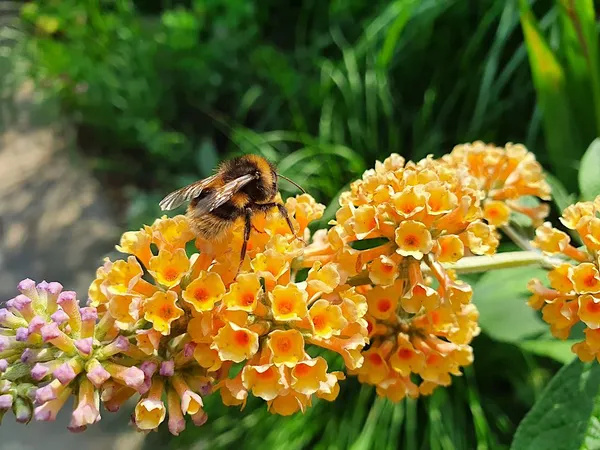
Buddleja weyeriana ‘Sungold’
Flowering shrubs
In addition to adding shape and structure to the garden, many varieties also bloom beautifully!
Some shrubs bloom for only a very short time, while others have a long blooming season. Some shrubs produce large flowers, while others have abundant blooms with many small flowers. Some have a distinctive flowering form (e.g., umbel flowers or blooms with striking bracts), a delightful fragrance, or a flower color that changes over the course of the blooming period. Many shrubs bloom in the spring or summer. However, there are also shrubs that bloom in the fall or winter (winter-blooming plants).
Popular flowering shrubs include:
- American lilac (Ceanothus: long-blooming)
- Mountain Jasmine (Philadelphus)
- Camelia (Camellia)
- Chinese Bellflower (Forsythia)
- Evergreen snowball (Viburnum tinus: very long blooming period)
- Hibiscus (Hibiscus syriacus: long-blooming)
- Hydrangea (Hydrangea: very long blooming period)
- Japanese dogwood (Cornus kousa)
- Serviceberry (Amelanchier)
- Magnolia
- Winter Cherry (Prunus subhirtella autumnalis: long flowering period)
- Rhododendron (Rhododendron)
- Lilac (Syringa vulgaris)
- Shrub Rose (Rosa: long-blooming)
- Witch hazel (Hamamelis)
- Butterfly Bush (Buddleja davidii: very long blooming period)
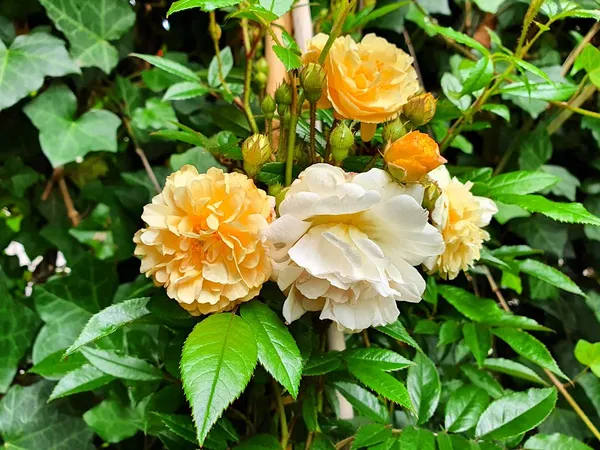
Rosa ‘Ghislaine de Feligonde’
Location, Care, and Pruning of Shrubs
To get the most out of healthy shrubs, good growth, and abundant blooms, it’s important to plant each plant in the right spot. Know what kind of soil you have in your garden and which areas get a lot of sun—or very little.
When deciding on the right spot in your garden, first take a good look at the conditions, the plant’s characteristics, and its requirements regarding its location. Learn more about the plants first, and then choose only those that are suitable for your garden.
How much sun?
A distinction is made between Full sun (more than 5–6 hours of direct sunlight), partial sun, or Partial shade (up to 4 hours of sunshine), Shadow (less than 4 hours of sunshine) and Deep Shadow (virtually no sun).
Open or sheltered site?
Some shrubs require a sheltered location, out of the wind, or at least protected from the cold east wind in winter. These are often plants that not hardy or less hardy in our climate. A south-facing or west-facing wall is ideal for this. These plants often require well-drained soil so they don’t get too wet in the winter.
What type of soil?
The soil is also important for your plants to grow well. Some plants aren’t very picky when it comes to soil type, but many plants do require a specific type of soil. In our country, the following soil types are most common: clay soil, sandy soil, and peat soil (acidic soil).
You can read more about soil and soil types in our article “Soil – Soil Type, Acidity, and Drainage“
Water and Fertilizer for Shrubs
When caring for shrubs, it’s important to water them generously once a week during the first growing season (more often during dry spells, and daily if potted). In the spring, you can fertilize the plants (e.g., with cow manure pellets or ornamental garden fertilizer). Do not exceed the recommended amount.
Learn more about Watering (how much and how often), or about Fertilizing Plants (When and How).
Pruning Shrubs
Is a shrub getting too big, or is it becoming very sparse (in the center or at the bottom), or is it only blooming at the top? If so, it's time to prune the shrub.
As a general rule, spring-flowering and early-flowering shrubs (those that bloom before the longest day of the year) should be pruned immediately after flowering. Summer-blooming shrubs (i.e., those that bloom after June 21) should be pruned in (early) spring.
Shrubs that bloom on one-year-old wood (such as butterfly bush, roses, and panicle hydrangeas) can be pruned back to just above the ground. For shrubs that bloom on perennial wood (such as lilacs, rhododendrons, and hydrangeas), only the spent flowers should be removed. Rejuvenation can be done in the spring, but it will reduce flowering.
Check out all of our Tips for Pruning
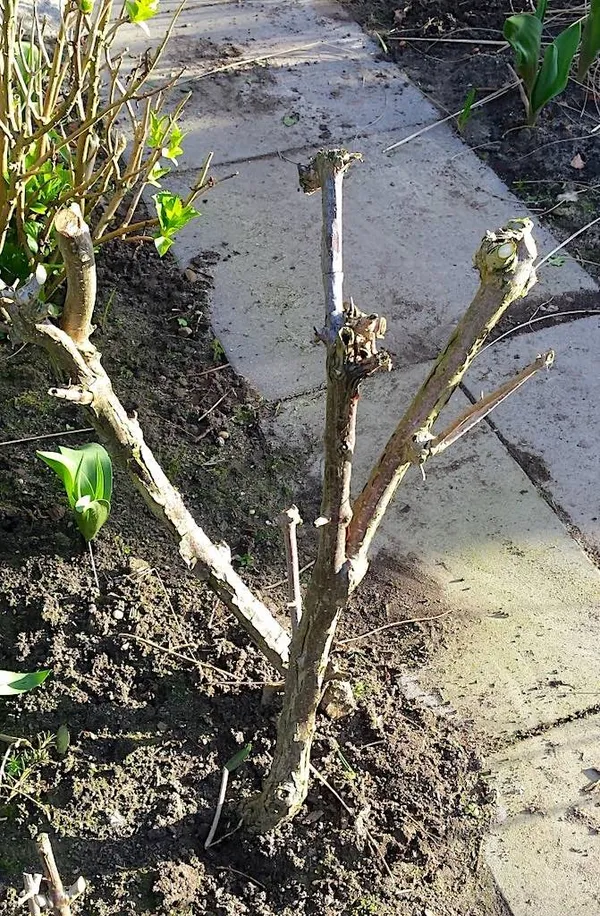
Panicle Hydrangea (Hydrangea paniculata) After Pruning
Shrubs and Bushes for Sunny Spots
- American lilac (Ceanothus)
- Mountain Jasmine (Philadelphus)
- Gorse (Citisus)
- Choisya
- Rockrose (Cistus)
- Escallonia
- Evergreen snowball (Viburnum tinus)
- Magnolia
- Mediterranean herbs such as lavender, oregano, rosemary, and thyme
- Oleander (Nerium oleander)
- Olive (Olea europaea)
- Panicle hydrangea (Hydrangea paniculata)
- Rose (Rosa)
- Lilac (Syringa vulgaris)
- Ornamental Cherry (Prunus serrulata)
- Fig (Ficus carica)
- Butterfly Bush (Buddleja davidii)
- Silver Bindweed (Convolvulus)
Shrubs and Bushes for Shade
- Garden Hydrangea (Hydrangea macrophylla)
- Blueberry (Vaccinium)
- Bread Tree (Aucuba)
- Camelia (Camellia)
- Evergreen snowball (Viburnum davidii)
- Holly (Ilex)
- Japanese maple (Acer palmatum)
- Spindle Tree (Euonymus)
- Dogwood (Cornus)
- Cherry Laurel (Prunus laurocerasus)
- Magnolia stellata
- Mahonia Bush (Mahonia)
- Rock Heath (Pieris)
- Rhododendron (Rhododendron)
- Skimmia
- Fatsia
- Elder (Sambucus)
- Barberry (Berberis)
Shrubs and Bushes for Clay Soil
Planting and transplanting can sometimes be quite difficult in clay soil. Still, clay provides a good nutrient base for many plants. There are many shrubs that thrive in clay soil. However, some shrubs may struggle with clay that remains wet for a long time in the winter.
See our article “91 Plants for Clay Soil (That Don't Grow Too Large)“
Shrubs and Bushes for Sandy Soil
Although planting is easy in sandy soil, many plants require soil amendment to ensure they have enough nutrients and to retain moisture longer. That said, there are certainly plants that grow well in sandy soil.
Be sure to read the article “Tips for a Garden in Dry, Sandy Soil“
Shrubs and Bushes for Acidic Soil
Acidic soil, such as peat soil, or a spot in the woods isn't suitable for all plants. But there are some very beautiful and unique shrubs that actually grow and bloom better in acidic soil.
See our article “7 Shrubs for Acidic Soil“
Planting a shrub
When should you plant shrubs?
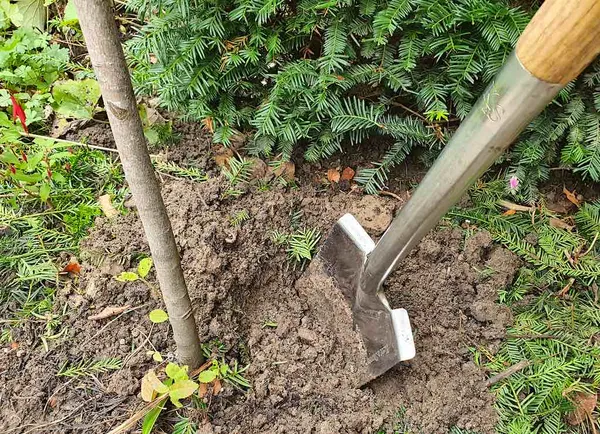
You can plant potted shrubs (grown in pots) all year round, except when there is a (daytime) frost. Shrubs grown in open ground (with a root ball or bare roots) can only be planted between October and April. The best time to plant shrubs is in the spring, as well as in the fall.
How do you plant a shrub?
- Dig a large planting hole and amend the soil if necessary. Use compost or good-quality potting soil, for example.
- If the root ball is very dry, let the plant sit in a bucket of water for a few hours (or overnight).
- Plant the shrub at the same depth as it was at the nursery (in other words, use the top of the pot as a guide for soil level). Firmly press the soil down around the plant.
- After planting, water open water. Even when it's cloudy or rainy, and in the winter. Not only does this give the plant a good start, but it also helps the soil settle better around the roots.
- After watering, spread a layer of compost (or another mulch (mulch) around the plant to prevent it from drying out. Water generously once a week during the first growing season, especially during dry spells!
What's your favorite shrub in the garden?
* This post contains a sponsored link