
All About Perennials
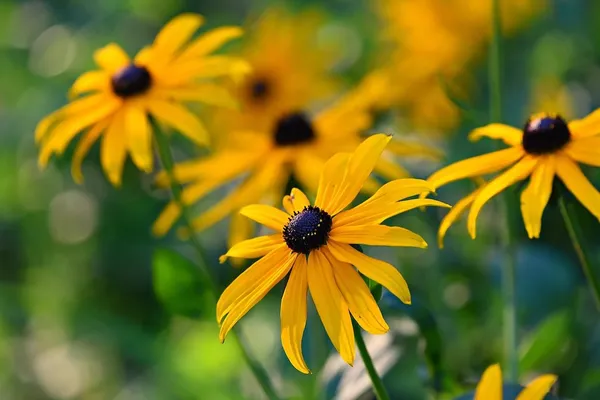
Perennials are a must-have in any garden. They add plenty of color and come in many shapes, colors, and heights. They have traditionally been used in mixed borders to fill in gaps between shrubs, but today they’re also incredibly popular when combined with ornamental grasses, for example, in a perennial border or prairie border.
What is a perennial plant?
A perennial is a non-woody plant that dies back above ground in the winter. The roots survive the winter, and the plant sprouts again in the spring.
Characteristics of Perennials
- Herbaceous (not woody)
- Perennial (the above-ground parts die back, but the roots survive the winter)
- Has been alive for more than two years
- Blooms every year or, at least, several times during its lifespan
- Seed-forming
Are perennials evergreen?
The term “perennial” is often misused. It is sometimes used to refer to plants that remain green in the garden, even in winter. This is incorrect. The terms “evergreen” and “evergreen plant” are used for this purpose. In fact, most perennials do not stay green at all in winter. Their above-ground parts die back. Only the dead stems remain visible in winter (which, incidentally, can be quite beautiful), or in some cases, the plants are no longer visible above ground at all. In the spring, they then sprout anew.
Perennials in the garden or flower bed
Perennial borders have become hugely popular again in recent years. While they used to be commonly used in English or cottage gardens, perennials are now often combined with ornamental grasses. This creates borders and gardens with a natural look. This popular garden style is also known as a prairie garden or prairie planting. You don’t see many perennial borders without ornamental grasses these days. Still, you can create beautiful combinations even without ornamental grasses. Think of geraniums with yarrow and/or salvia, various types of echinacea, rudbeckia with verbena, sedum and salvia, or persicaria with yarrow.
Would you like to Buying Perennials for your garden? In this article, we’ll discuss the different types of perennials and evergreens, as well as their ideal growing conditions, care, and pruning. We’ll also provide an overview of popular perennials that are suitable for sunny spots in the garden or, conversely, shady areas, and for clay, sandy, or acidic soil.
Evergreen Perennials
Although many perennials die back above ground in the winter, there are also plants that remain green throughout the winter. The low-growing varieties of these are often ideal as ground cover.
Popular Evergreen Perennials for Small Gardens:
- Acorus (calamus)
- Ajuga reptans (creeping bugle)
- Arabis (skewed-calyx or fringed flower)
- Artemisia (mugwort)
- Asarum (man's ear)
- Bergenia (shoe-leather plant)
- Campanula poscharskyana (bellflower)
- Erysimum (wallflower)
- Euphorbia (spurge)
- Geranium marcrorrhizum (geranium)
- Hellebore (Christmas rose)
- Heuchera (coral bells)
- Iberis (candleflower)
- Iris (yellow iris)
- Kniphofia (fire rocket)
- Liriope muscari (lilyturf)
- Pachysandra (shade plant)
- Penstemon (tortoise flower)
- Sedum (stonecrop)
- Vinca minor (periwinkle)
- Waldsteinia (golden strawberry)
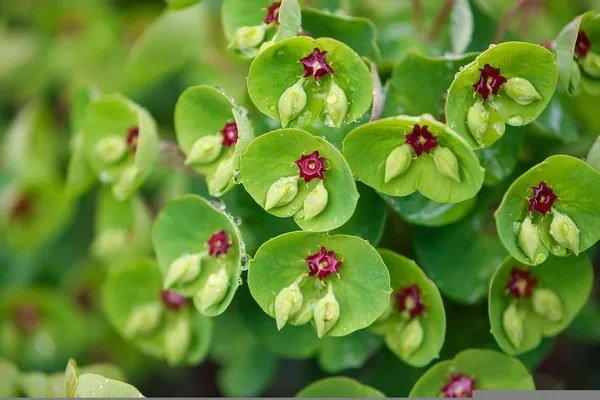
Euphorbia
Good Ground Cover Plants
Many evergreen perennials are ideal for ground cover. These low-growing plants ensure that the ground is covered and that weeds don’t stand a chance. However, this requires a continuous layer of these plants.
- Acaena (spiny nut)
- Ajuga reptans (creeping bugle)
- Asarum (man's ear)
- Bergenia (shoe-leather plant)
- Campanula poscharskyana (bellflower)
- Geranium macrorrhizum (geranium)
- Hedera (ivy)
- Heuchera (coral bells)
- Lamium (deadnettle)
- Lirioipe muscari (lily grass)
- Leptinella (copper button)
- Pachysandra (shade plant)
- Phlox subulata (creeping phlox)
- Pulmonaria (lungwort)
- Sedum (stonecrop)
- Vinca minor (periwinkle)
- Waldsteinia (golden strawberry)
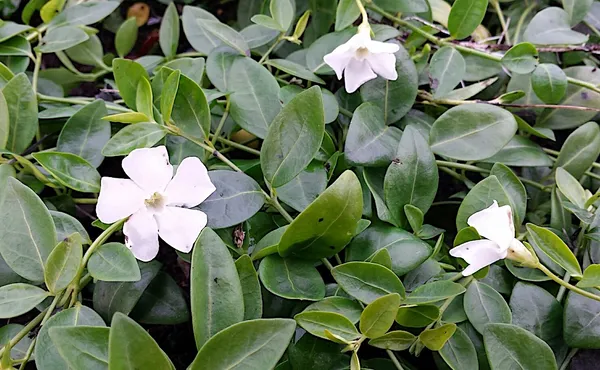
Vinca minor ‘Alba’
Long-blooming Perennials
Perennials bring plenty of blooms (and color) to the garden. Some perennials bloom for only a very short time, but fortunately, there are also varieties that have a very long blooming season. These perennials bloom for a very long time.
- Agastache (licorice plant)
- Astrantia major (Zeeland knapweed)
- Campanula (bellflower)
- Echinacea purpurea (purple coneflower)
- Erigeron karvinskianus (wall fleabane)
- Erysimum (wallflower)
- Helenium (sunflower)
- Helleborus (Christmas rose)
- Geranium
- Leucanthemum (daisy)
- Lythrum (purple loosestrife)
- Nepeta (catnip)
- Perovskia (giant lavender or Russian sage)
- Persicaria amplexicaulis (knotweed)
- Rudbeckia (black-eyed Susan)
- Salvia (sage)
- Sedum (stonecrop)
- Verbena bonariensis (verbena)
- Veronicastrum virginicum (black speedwell)
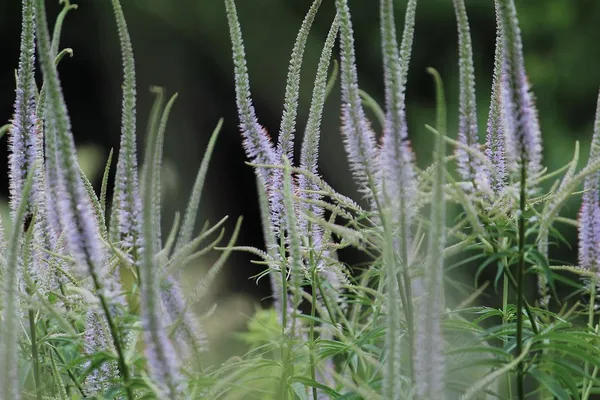
Veronicastrum virginicum
Location, Care, and Pruning of Perennials
To get the most out of healthy perennials and ensure good growth and blooming, it’s important to plant them in the right spot. Know what kind of soil you have in your garden and which areas get a lot of sun—or very little.
When deciding on the right spot in your garden, first take a close look at the conditions, the plant’s characteristics, and its specific requirements regarding its location. Take into account the plant’s growth rate and its eventual size. First, learn more about your favorite perennials, and then choose only those that are suitable for your garden.
How much sun?
A distinction is made between Full sun (more than 5–6 hours of direct sunlight), Partial Sun, or Partial shade (up to 4 hours of sunshine), Shadow (less than 4 hours of sunshine) and Deep Shadow (virtually no sun).
Open or sheltered site?
Some plants require a sheltered spot, out of the wind, or at least protected from the cold east wind in winter. These are often plants that not hardy or less hardy in our climate. These plants often also require well-drained soil so they don't become too waterlogged in the winter.
What type of soil?
The soil is also important for your plants to grow well. Some plants aren’t very picky when it comes to soil type, but many species do require a specific type of soil. In our country, the following soil types are most common: clay soil, sandy soil, and peat soil (acidic soil).
You can read more about soil and soil types in our article “Soil – Soil Type, Acidity, and Drainage“
Watering and Fertilizing Perennials
When caring for perennials, it’s important to water them generously once a week during the first growing season (more often during dry spells, and daily if potted). In the spring, you can fertilize the plants (e.g., with cow manure pellets or ornamental garden fertilizer). Do not exceed the recommended amount.
Learn more about Watering (how much and how often), or about Fertilizing Plants (When and How).
Pruning Perennials
If a plant becomes too large for your small garden, loses its attractive shape, or starts to grow less vigorously (from the inside out) or even becomes bare, then pruning may be necessary. Pruning can also be used to encourage flowering, and summer-flowering plants should be pruned back around the end of May (also known as the Chelsea Chop) promotes bushier growth and more blooms.
Prune perennials back in (early) spring, cutting them just above the ground. This removes dead stems and seed heads around the time the plants start sprouting again. This way, animals, birds, and insects can benefit from food and shelter for as long as possible, and you can enjoy the beautiful silhouettes in your garden all winter long.
If plants get too big, they can be divided right away into several smaller plants. It’s best to remove the central part of the perennial in question. Because perennials grow outward, growth in the center will gradually decrease over time.
Evergreen perennials only need a little pruning when the foliage starts to look less attractive.
Check out all of our Tips for Pruning Perennials
Perennials for full sun
Many perennials thrive in full sun. They pair beautifully with ornamental grasses, for example. For many perennials, the more sun they get, the more profusely they bloom. Do you have a sunny border or a sunny garden? Then these plants are perfect for you.
- Achillea (yarrow)
- Agastache (licorice plant)
- Aster (fall aster)
- Campanula (bellflower)
- Delphinium (larkspur)
- Echinacea purpurea (purple coneflower)
- Erigeron karvinskianus (wall daisy)
- Gaura lindheimeri (beautiful candle)
- Helenium (sunflower)
- Lychnis coronaria (crown-of-thorns)
- Mediterranean herbs (e.g., rosemary, lavender, and thyme)
- Nepeta (catnip)
- Perovskia (giant lavender)
- Rudbeckia (black-eyed Susan)
- Salvia (sage)
- Sedum spectabile (stonecrop; now known as Telephium)
- Stachys (lamb's ear)
- Verbena bonariensis (verbena)
View More Perennials for Sunny Spots
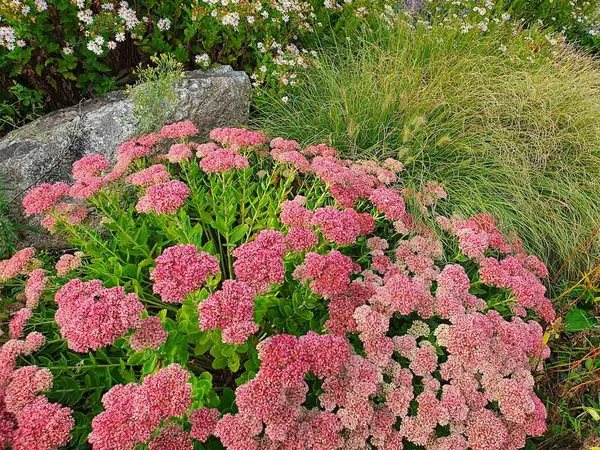
Sedum spectabilis with Pennisetum and Aster
Perennials for Shade
Although well-known perennials often thrive in full sun, there are certainly perennials that can be planted in the shade as well. That’s great, because small gardens in particular often have a lot of shade.
- Anemone (autumn anemone)
- Ajuga reptans (creeping bugle)
- Asplenium (tongue fern)
- Aquilegia vulgaris (columbine)
- Bergenia cordifolia (shoe-leaved bergenia)
- Brunnera macrophylla (Caucasian forget-me-not)
- Dicentra spectabilis (bleeding heart)
- Digitalis purpurea (foxglove)
- Epimedium (horny goat weed)
- Galium odoratum (sweet woodruff)
- Geranium
- Hellebore (sneeze herb or Christmas rose)
- Heuchera (coral bells)
- Hosta (plantain lily)
- Kirengeshoma palmata (Japanese waxflower)
- Persicaria amplexicaulis (knotweed)
- Polystichum setiferum (needle fern)
- Pulmonaria (lungwort)
- Rodgersia (admiral)
- Tiarella (foamflower)
- Viola (little violin)
See also our Favorite flowering perennials for the shade
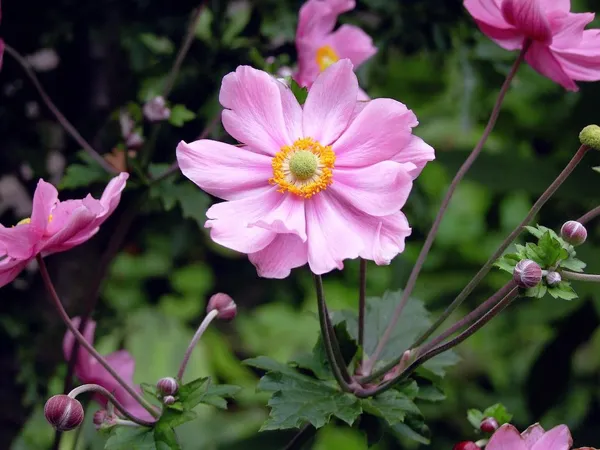
Anemone hupehensis
Perennials for Clay Soil
Planting and transplanting can sometimes be quite difficult in clay soil. Still, clay provides a good nutrient base for many plants. There are many plants that thrive in clay soil. However, some perennials may struggle with clay that remains wet for a long time in the winter.
See our article “91 Plants for Clay Soil (That Don't Grow Too Big)“
Perennials for Sandy Soil
Although planting is easy in sandy soil, many plants require soil amendment to ensure they receive sufficient nutrients and to retain moisture longer. Still, there are quite a few perennials that grow well in sandy soil.
Be sure to also read the article “Tips for a Garden in Dry, Sandy Soil“
Perennials for Acidic Soil
Acidic soil, such as peat soil, or a spot in the woods, isn't suitable for all plants. But there are some very beautiful and unique perennials that actually grow and bloom better in acidic soil.
Be sure to check out our favorites shrubs for acidic soil.
Planting Perennials
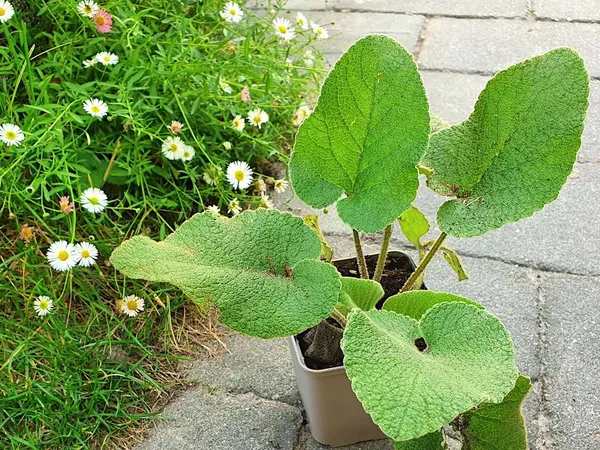
Phlomis in a P9 pot
When should you plant?
Perennials are usually grown in pots. This means you can plant them year-round, except when there is a (daytime) frost. The best time to plant perennials is in the spring, as well as in the fall.
How do you plant perennials?
- Dig a spacious planting hole and improve the soil if necessary. Use compost or good-quality potting soil, for example.
- If the root ball is very dry, let the plant sit in water for a few hours (or overnight), or water it generously the day before planting.
- Plant it at the same depth as it was at the nursery (in other words, use the top of the pot as the soil level). Firmly press the soil around the root ball.
- After planting, water open water. Even when it's cloudy or rainy, and in the winter. Not only does this give your new plants a good start, but it also helps the soil settle better around the roots.
- After watering, spread a layer of compost (or another mulch (mulch) around the plants to prevent them from drying out. Water generously every week during the first growing season—especially during dry spells!