
All About Ornamental Grasses
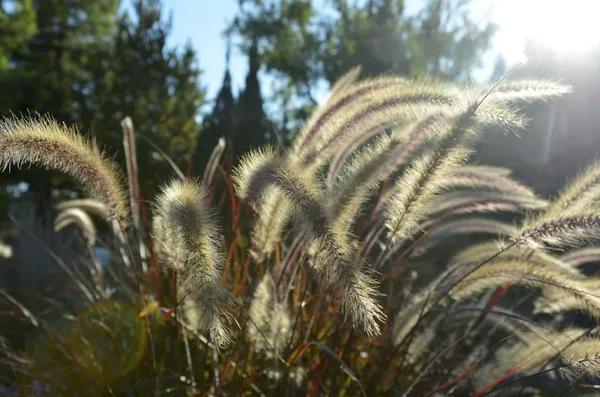
Ornamental grasses help extend the blooming season in your garden. Until summer, they remain a fresh green and are often still somewhat inconspicuous, but after that, they’ll bloom beautifully with lovely, large, or airy plumes and spikes. Many ornamental grasses remain attractive for a long time and retain their shape even long after flowering. They turn golden yellow or yellow-brown but remain standing tall. When all other plants have finished blooming, ornamental grasses still add a lot of visual interest to the border.
What is ornamental grass?
An ornamental grass is a grass-like plant with added ornamental value. For example, due to its flowers (spikes, plumes, etc.), variegated foliage, or beautiful fall color. Ornamental grasses often die back above ground in the winter (though the dead stems remain standing for a long time), only to sprout anew in the spring. Well-known ornamental grasses include fountain grass (Pennisetum), fescue (Festuca), Chinese silver grass (Miscanthus), pampas grass (Cortdaria), and sedge (Carex).
Ornamental grasses in the garden or flower bed
Ornamental grasses add movement to your garden or border. The stalks sway in the wind and provide a nice backdrop for perennials. Ornamental grasses help other (perennial) plants stand out. They offer a beautiful contrast or create a softer look or greater unity in the border. Many ornamental grasses also make excellent ground covers. Thanks to their clump-forming growth habit and overhanging stalks, bare soil in the border quickly becomes hidden from view. Over time, the foliage of some perennials loses its beauty. Ornamental grasses are an excellent way to conceal this from view, leaving only the beautiful blooms visible. Many ornamental grasses remain attractive for a very long time, well beyond their flowering period. They therefore not only enhance the fall border but also retain significant ornamental value throughout the winter.
Would you like to Buy ornamental grass for your garden? In this article, we’ll discuss the different types of ornamental grasses, evergreen and deciduous ornamental grasses, planting locations, care, and pruning, and we’ll provide an overview of popular ornamental grasses that are suitable for sunny spots in the garden or, conversely, shady areas, as well as for clay, sandy, or acidic soil.
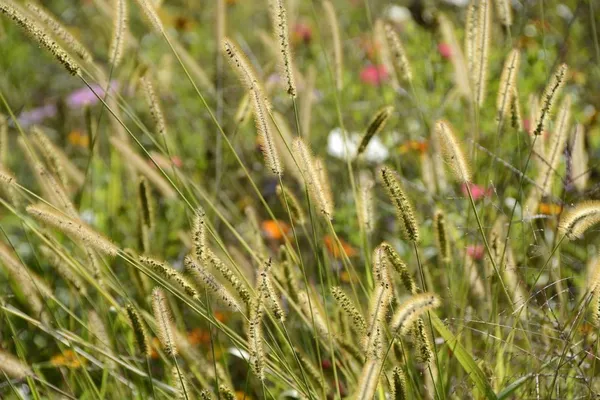
Evergreen Ornamental Grasses vs. Deciduous Ornamental Grasses
Some ornamental grasses lose their leaves in the winter, while others are evergreen and retain their leaves year-round (even in the winter).
Evergreen ornamental grass
Evergreen ornamental grasses are ideal for more formal borders, or borders that need to maintain the same appearance year-round. For most evergreen ornamental grasses, flowering is secondary.
Well-known evergreen ornamental grasses include:
- Carex (sedge)
- Cortaderia (pampas grass)
- Festuca (fescue)
- Liriope (lilyturf)
- Luzula (field sedge)
- Ophiopogon (black grass)
- Sesleria (blue grass)
- Stipa (feather grass)
View more evergreen ornamental grasses
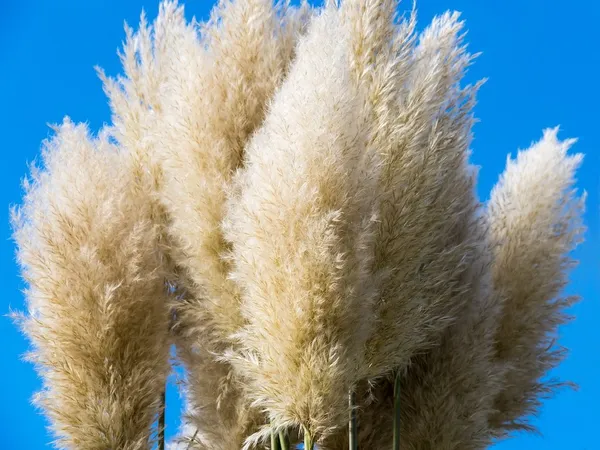
Cortaderia
Deciduous ornamental grass
Most ornamental grasses are deciduous. However, the foliage (stems) remains on the plant for a very long time. Depending on the species, this can last well into winter, or simply until the plant is pruned back in (early) spring. Many deciduous ornamental grasses change color in the fall to golden yellow to yellow-brown.
Well-known deciduous ornamental grasses include:
- Calamagrostis (diamond grass / ostrich grass)
- Deschampsia (smele)
- Hakonechloa (Japanese mountain grass)
- Imperata cylindrica ‘Red Baron’ (Japanese blood grass)
- Melica (eyelash pearl grass)
- Miscanthus sinensis (Chinese silvergrass/ornamental silvergrass)
- Molinia (purple moor grass)
- Panicum virgatum (finger grass)
- Pennisetum (lamp-cleaner grass)
- Sporobolus (pearl grass)
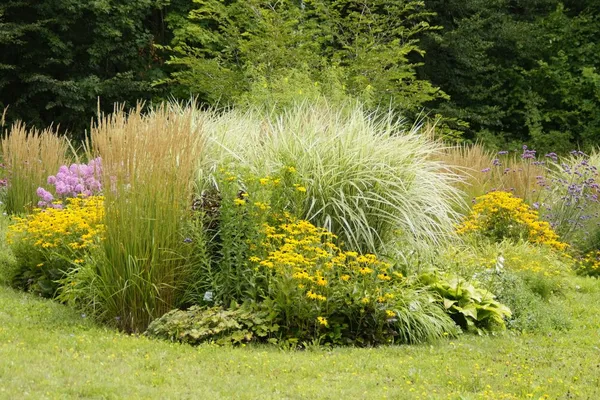
Ornamental Grass Border
When do ornamental grasses bloom?
Although their blooms look very different from those of perennials, for example, ornamental grasses certainly do bloom. Most ornamental grasses bloom with spikes or plumes. Some are inconspicuous, but most are quite noticeable. Fall is the flowering season for most types of ornamental grasses. It’s no wonder that a border with plenty of ornamental grasses becomes more and more beautiful starting in the summer. Even after the actual flowering is over, the flower spikes and plumes often remain on the plant for a very long time. This way, you can enjoy the graceful form and the still-swaying ornamental grasses well into the winter.
Location, Care, and Pruning of Ornamental Grasses
To get the most out of healthy shrubs, good growth, and abundant blooms, it’s important to plant each plant in the right spot. Know what kind of soil you have in your garden and which areas get a lot of sun—or very little.
When deciding on the right spot in your garden, first take a good look at the conditions, the plant’s characteristics, and its requirements regarding its location. Learn more about the plants first, and then choose only those that are suitable for your garden.
How much sun?
A distinction is made between Full sun (more than 5–6 hours of direct sunlight), partial sun, or Partial shade (up to 4 hours of sunshine), Shadow (less than 4 hours of sunshine) and Deep Shadow (virtually no sun).
Open or sheltered site?
Some ornamental grasses require a sheltered location, out of the wind, or at least protected from the cold east wind in winter. These are often plants that not hardy or less hardy in our climate. A south-facing or west-facing wall is ideal for this. These plants often also require well-drained soil so they don’t become too wet in the winter.
What type of soil?
The soil is also important for your plants to grow well. Some plants are not very particular about soil type, but many plants do require a specific type of soil. In our country, the following soil types are most common: clay soil, sandy soil, and peat soil (acidic soil).
You can read more about soil and soil types in our article “Soil – Soil Type, Acidity, and Drainage“
Water and Fertilization for Ornamental Grasses
When caring for ornamental grasses, it’s important to water them generously once a week during the first growing season (more often during droughts, daily if potted). In the spring, you can fertilize the plants (e.g., with cow manure pellets or ornamental garden fertilizer). Do not exceed the recommended amount. Once they are well established, ornamental grasses require almost no additional water, and for many species, extra fertilizer is not always necessary.
Learn more about watering (how much and how often), or about Fertilizing Plants (When and How).
Pruning Ornamental Grasses
Most ornamental grasses should be cut back completely in (early) spring, to just above the ground. A good time to do this is when you see the first young shoots reappearing. Not all ornamental grasses are pruned the same way. We distinguish between evergreen ornamental grasses, grasses with sturdy stems (which sprout anew from the ground), and soft ornamental grasses (which sprout anew from the center of the clump).
Pruning Evergreen Ornamental Grasses
Evergreen ornamental grasses require very little pruning. This applies, for example, to Carex, Festuca, and Luzula. If the foliage still looks good, there’s no need to prune. If the foliage has lost its appeal, you can cut them back to just above the ground. They’ll sprout again with fresh, vibrant foliage.
Hardy ornamental grasses
We prune ornamental grasses such as Pennisetum, Miscanthus, Molinia, Calamagrostis, and Cortaderia all the way back in early spring (February/March). Be careful not to cut off the new shoots, though, because you’ll see them all year long.
Soft ornamental grasses
Ornamental grasses such as Stipa and Festuca require virtually no pruning. To keep them looking their best, run your hand through the plant in the spring, and you’ll see that the old foliage comes loose almost immediately. You’re essentially brushing out the withered stalks.
Read here More about pruning ornamental grasses, or check out all of our Tips on Pruning
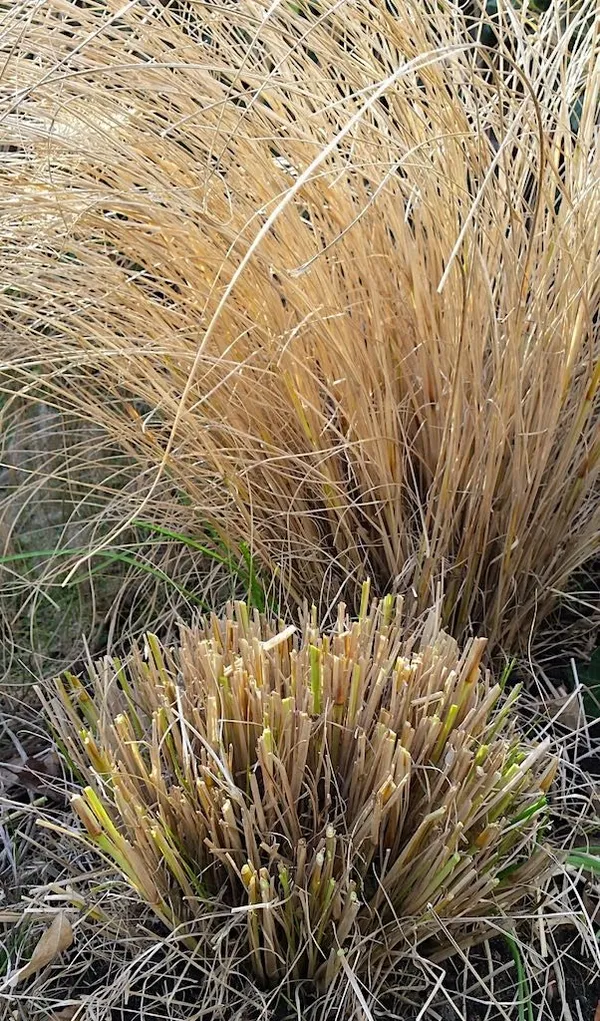
Pruning Pennisetum
Ornamental Grasses for Sunny Spots
The vast majority of ornamental grasses prefer a sunny location.
- Calamagrostis (diamond grass / ostrich grass)
- Carex (sedge)
- Cortaderia (pampas grass)
- Deschampsia (smele)
- Festuca (fescue)
- Hakonechloa (Japanese mountain grass)
- Imperata cylindrica ‘Red Baron’ (Japanese blood grass)
- Melica (eyelash pearl grass)
- Miscanthus sinensis (Chinese silver grass/ornamental silver grass)
- Molinia (purple moor grass)
- Panicum virgatum (finger grass)
- Pennisetum (lamp cleaner grass)
- Sporobolus (pearl grass)
- Stipa (feather grass)
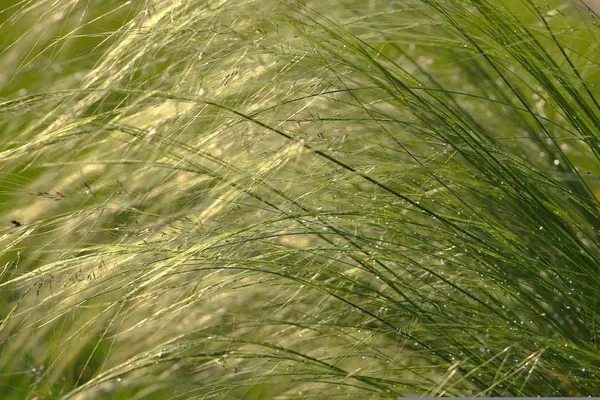
Stipa
Ornamental Grasses for Shade
- Acorus gramineus (sweet flag)
- Briza media (quaking grass)
- Calamagrostis (feather grass)
- Carex (sedge)
- Hakonechloa macra (Japanese mountain grass)
- Liriope muscari (lilyturf)
- Luzula (field sedge)
- Melica (pearl grass)
- Ophiopogon (black grass)
- Panicum virgatum (finger grass)
- Poa chaixii (mountain meadow grass)
- Sesleria autumnalis (blue grass)
View More ornamental grasses for shade
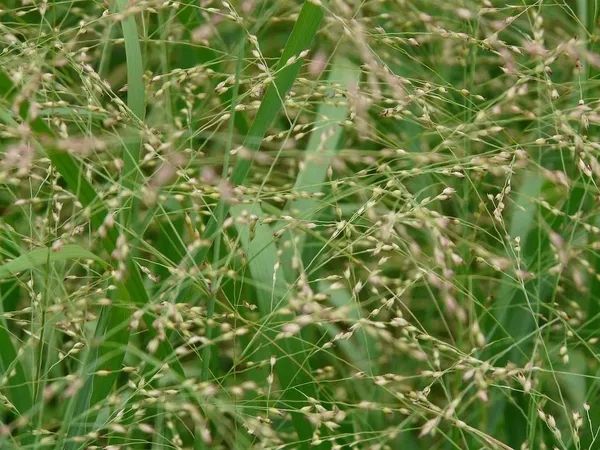
Briza Media
Ornamental grass for wet soil
For many ornamental grasses, soil that is too wet is a problem. This greatly increases the risk of root rot (especially in the winter). However, there are also ornamental grasses that can thrive in damp and wet locations.
- Acorus (calamus)
- Arundo (giant reed)
- Briza media (quaking grass)
- Carex elata and grayi
- Cortaderia (pampas grass)
- Equisetum (horsetail)
- Juncus (reeds)
View More ornamental grasses and plants for wet soil
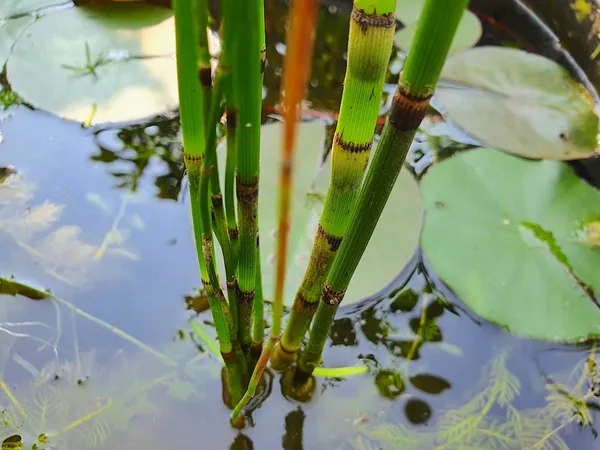
Horsetail is usually used as a pond plant
Ornamental Grasses for Clay Soil
Planting and transplanting can sometimes be quite difficult in clay soil. Still, clay provides a good nutrient base for many plants. There are many plants that thrive in clay soil. However, some ornamental grasses may struggle with clay that remains wet for a long time in the winter.
See our article “Which ornamental grasses are suitable for clay soil?”
Ornamental Grasses for Sandy Soil
Although planting is easy in sandy soil, many plants require soil amendment to ensure they receive sufficient nutrients and to help the soil retain moisture longer. Many ornamental grasses, on the other hand, thrive in sandy soil.
Be sure to also read the article “Which ornamental grasses are suitable for sandy soil?”
Ornamental Grasses for Acidic Soil
Acidic soil, such as peat soil, or a spot in the woods isn’t suitable for all plants. But there are some very beautiful and unique plants that actually grow and bloom better in acidic soil. A number of ornamental grasses can also grow under these conditions.
Be sure to check out our favorites shrubs for acidic soil.
Planting Ornamental Grasses
When should you plant ornamental grasses?
Ornamental grasses are usually grown in pots. This means you can plant them year-round, except when there is a (daytime) frost. The best time to plant ornamental grasses is in the spring. In the summer, they require a lot of extra water to establish themselves properly. In the fall and winter, there is a risk of root rot, especially in wet soil.
How Do You Plant Ornamental Grasses?
- Dig a spacious planting hole and amend the soil if necessary. Use compost or good-quality potting soil, for example.
- If the root ball is very dry, let the plant sit in water for a few hours (or overnight), or water it generously the day before planting.
- Plant it at the same depth as it was at the nursery (in other words, use the top of the pot as a guide for soil level). Firmly press the soil around the root ball.
- After planting, water open water. Even when it's cloudy or rainy, and during the winter. Not only does this give your new plants a good start, but it also helps the soil settle better around the roots.
- After watering, spread a layer of compost (or another mulch (mulch) around the plants to prevent them from drying out. Water generously every week during the first growing season—especially during dry spells!
What's your favorite ornamental grass in the garden?
* This post contains a sponsored link