
All About Climbing Plants
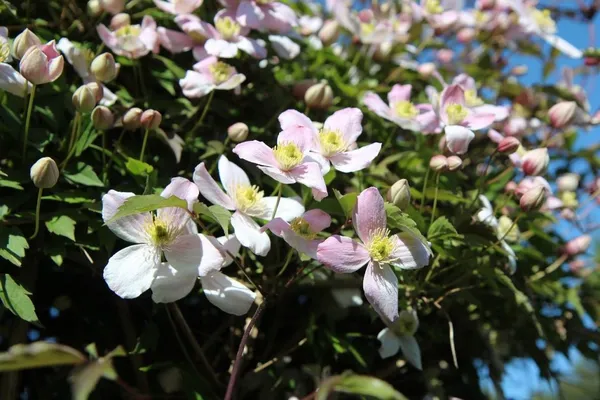
Climbing plants are ideal for small gardens. They take up very little space in the flower bed, yet they can still cover a large (vertical) area of your garden. Many climbing plants bloom profusely, and bees love them!
There are large-flowered climbing plants, such as roses and clematis, as well as small-flowered climbing plants, such as honeysuckle and jasmine. Many climbing plants have a wonderful fragrance. Some varieties grow very quickly, while others take longer to cover a surface. Climbing plants make the most of the vertical space in your garden and are beautiful for covering a bare wall or fence.
What is a climbing plant?
Climbing plants are plants that need support to grow upward. Usually, their stems and runners aren’t sturdy enough to support the plant’s weight. However, with sufficient support, they can grow quite tall. Climbing plants can find support in other plants, walls, and fences, as well as special trellises and structures. Without sufficient support, many true climbing plants tend to grow as trailing plants.
What is the difference between espalier plants and climbing plants?
There is NO difference between espalier plants and climbing plants. Although people used to often refer to espalier roses and other espalier plants, “climbing rose” and “climbing plant” are now the standard terms. Incidentally, more and more shrubs are being grown in an espalier form, but these are not true climbing plants.
What kinds of climbing plants are there?
Climbing plants can be classified based on how they find support or attach themselves. A distinction is made between self-clinging climbing plants (ivy, wild grapevine), trellising vines (clematis, grapevine), thorny vines (rose, blackberry), wall-clinging shrubs (firethorn, American lilac), and twining vines (jasmine, honeysuckle).
Climbing Plants in the Garden or Flower Bed
Climbing plants are ideal for a small garden or border. Even a narrow strip of ground can work (with a little extra care). With these plants, you can transform boring walls and bare fences into green walls. Climbing plants are also a great way to add height to your garden and garden design. Let them grow over a pergola, a canopy, a shed, a fence, or a wall. They also add an extra layer or backdrop to a narrow border. Many types of climbing plants have fragrant flowers and attract plenty of bees, butterflies, and insects. Mature climbing plants also provide extra shelter and sometimes food, such as berries, for birds.
Would you like to Buy climbing plants For your garden? In this article, we’ll discuss the different types of climbing plants—evergreen and deciduous—as well as their location requirements, care, and pruning. We’ll also provide an overview of popular espalier plants suitable for sunny spots in the garden or, conversely, shady areas, as well as those suited for clay soil, sandy soil, or acidic soil.
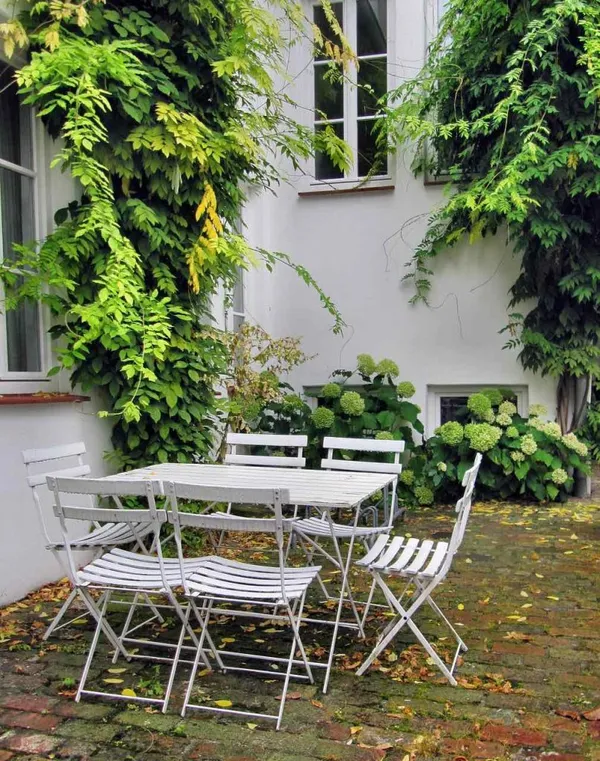
Evergreen Climbers vs. Deciduous Climbers
Some climbing plants lose their leaves in the winter, while others are evergreen and keep their leaves all year round (even in the winter).
Evergreen climbing plants
Evergreen climbing plants are ideal for permanently covering a structure, shed, or wall. Older specimens are often popular for bird nests (such as ivy). Evergreen climbing plants are also well-suited for use as narrow hedges or hedges for narrow strips. Ivy is one of the most commonly used climbing plants for this purpose, but other options include Clematis armandii, star jasmine, or passionflower. However, a very sheltered spot is required. Evergreen climbing plants (usually) do not have any special fall color. But you can enjoy beautiful green walls in your garden all year round.
Well-known evergreen climbing plants include:
- American lilac (Ceanothus)
- Clematis armandii
- Evergreen honeysuckle (Lonicera henryi)
- Ivy (Hedera)
- Passionflower (Passiflora)
- Star Jasmine/Tuscan Jasmine (Trachelospermum)
- Firethorn (Pyracantha)
View all evergreen climbing plants and climbing plants suitable for use as hedges
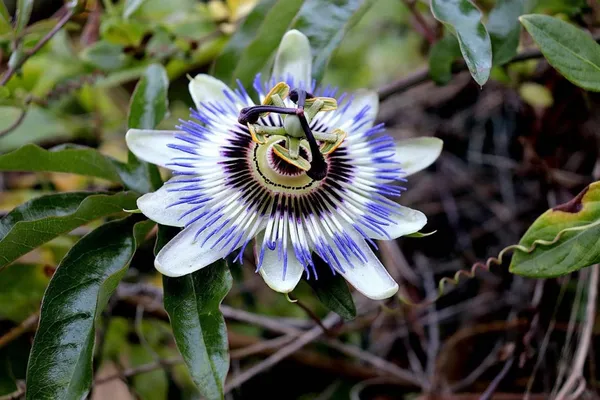
Passiflora caerulea
Deciduous climbing plants
Although deciduous climbing plants lose their leaves in the winter, that doesn’t mean they’re boring. Quite the opposite! Many deciduous varieties bloom profusely, or for a long time, or have a particularly strong (but pleasant) scent.
Well-known deciduous climbing plants include:
- Wisteria
- Clematis
- Hops (Humulus lupulus)
- Honeysuckle (Lonicera)
- Climbing Hydrangea (Hydrangea petiolaris)
- Climbing Rose (Rosa)
- Trumpet Vine (Campsis)
- Wild grapevine (Parthenocissus)
- Winter Jasmine (Jasminum nudiflorum)
Less well-known climbing plants:
- True jasmine (Jasminum officinale) – not very hardy
- Kiwi (Actinidia deliciosa)
- Kiwiberries (Actinidia arguta)
- Ornamental Pea (Lathyrus) – annual
- False gherkin or climbing bes (Akebia quinata)
- Ornamental Grape (Vitis coignetiae)
- Ornamental kiwi (Actinidia kolomikta)
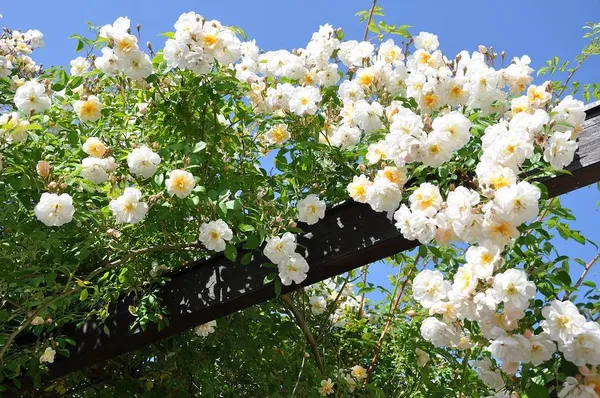
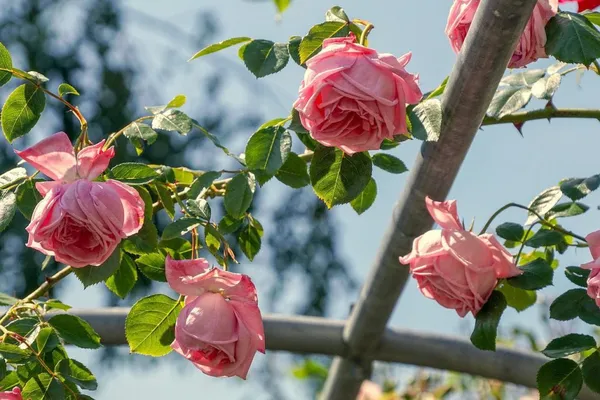
Repeated-blooming rose
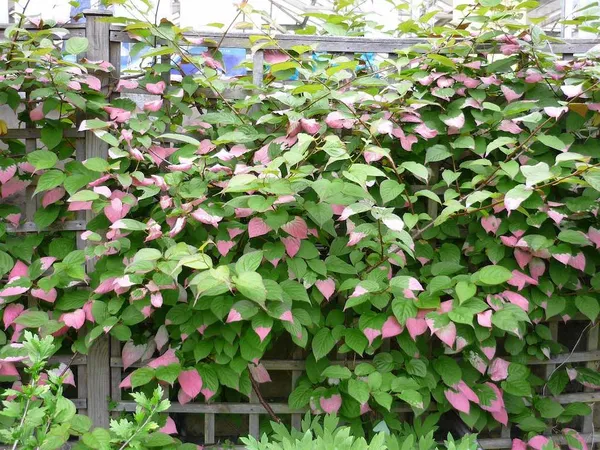
Ornamental kiwi
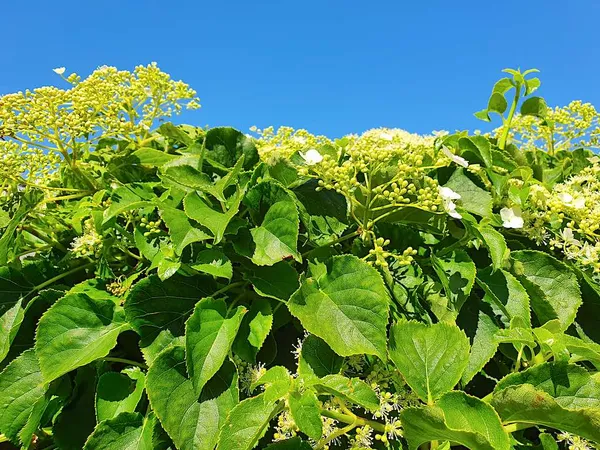
Climbing hydrangea
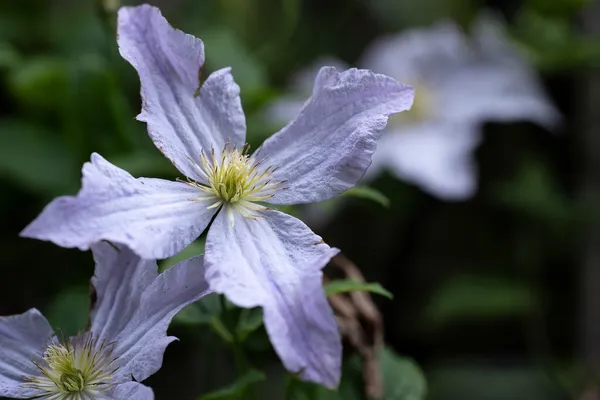
Clematis
Which climbing plants have a long blooming season?
In addition to adding shape and structure to the garden, many varieties also bloom beautifully!
Some climbing plants bloom for only a very short time, while others have a long blooming season. They may have large flowers or produce an abundance of small blooms. Some have an unusual flower shape (e.g., umbel-shaped or star-shaped flowers) and/or a delightful fragrance. Many climbing plants bloom in the spring or summer. However, there are also climbing plants that bloom specifically in the fall or winter (winter-blooming plants).
Popular long-blooming climbing plants include:
- Repeated-blooming climbing roses (Rosa)
- Honeysuckle (Lonicera periclymenum)
- Nasturtium (Tropaeolum majus) – annual
- Passionflower (Passiflora)
- Winter Jasmine (Jasminum nudiflorum)
- Summer-flowering Clematis (Group 3)
Which climbing plants grow quickly?
Do you want your new plants to quickly cover a specific object or part of the garden? If so, it’s best to choose fast-growing climbing plants. They’re ideal if you want to hide an unsightly shed or fence from view, but also if you’d like to narrow hedge of climbing plants want to achieve.
Well-known fast-growing climbing plants:
- Wisteria (Wisteria sinensis or floribunda)
- Hops (Humulus lupulus)
- Honeysuckle (Lonicera periclymenum)
- Kiwibes and Kiwi (Actinidia arguta or deliciosa)
- Ivy (Hedera hibernica or helix)
- Nasturtium (Tropaeolum) – annual
- Passionflower (Passiflora caerulea)
- Wild grapevine (Parthenocissus)
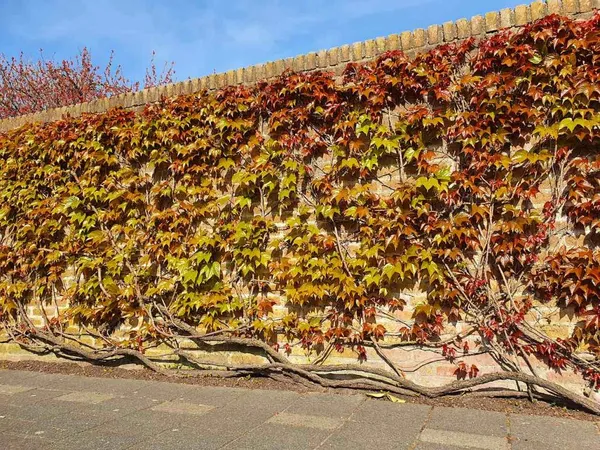
Parthenocissus (Virginia creeper)
Location, Care, and Pruning of Climbing Plants
To get the most out of healthy climbing plants—ensuring good growth and abundant blooms—it’s important to plant each one in the right spot. Know what kind of soil you have in your garden and which areas get a lot of sun—or very little.
When deciding on the right spot in your garden, first take a good look at the conditions, the plant’s characteristics, and its specific requirements regarding its location. Learn more about the plants first, and then choose only those that are suitable for your garden.
How much sun?
A distinction is made between Full sun (more than 5–6 hours of direct sunlight), partial sun, or Partial shade (up to 4 hours of sunshine), Shadow (less than 4 hours of sunshine) and Deep Shadow (virtually no sun).
Open or sheltered site?
Some climbing plants require a sheltered location, out of the wind, or at least protected from the cold east wind in winter. These are often plants that not hardy or less hardy in our climate. A south-facing or west-facing wall is ideal for this. These plants often also require well-drained soil so they don’t get too wet in the winter.
What type of soil?
The soil is also important for your plants to grow well. Some plants aren’t very picky when it comes to soil type, but many plants do require a specific type of soil. In our country, the following soil types are most common: clay soil, sandy soil, and peat soil (acidic soil).
You can read more about soil and soil types in our article “Soil – Soil Type, Acidity, and Drainage“
Water and Fertilizer for Climbing Plants
When caring for climbing plants, it’s important to water them generously once a week during the first growing season (more often during dry spells, and daily if potted). In the spring, you can fertilize the plants (e.g., with cow manure pellets or ornamental garden fertilizer). Do not exceed the recommended amount.
Learn more about Watering (how much and how often), or about Fertilizing Plants (When and How).
What can you use to support climbing plants?
Most climbing plants need good support. This can be provided by nearby plants, but you can also use proper climbing supports. Examples include a trellis, a frame made of bamboo poles, wire mesh, a lattice, a framework of ropes, metal tension wire, etc.
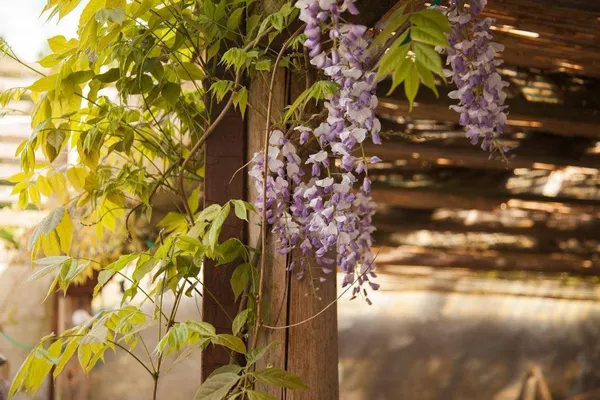
Wisteria floribunda (Japanese wisteria)
Pruning Climbing Plants
Is a climbing plant getting too bushy or too tall, or is it only blooming at the very top? Then it's time to prune the plant.
As a general rule, spring-flowering and early-flowering climbing plants (those that bloom before the longest day of the year) should be pruned immediately after flowering. Summer-flowering climbing plants (i.e., those that bloom after June 21) should be pruned in (early) spring.
Climbing plants that bloom on one-year-old wood can be pruned back to just above the ground if necessary. This prevents a tangle of rapid growth and ensures good flowering.
Check out all of our Tips for Pruning and read How to Prune Clematis and how and when to Grapevines need to be pruned, Pruning Wisteria, or Pruning a climbing rose.
Climbing Plants for Sunny Spots
- Clematis (base should be in the shade)
- Grape (Vitis)
- Wisteria
- Kiwi (Actinidia)
- Star Jasmine / Tuscan Jasmine (Trachelospermum)
- Honeysuckle (Lonicera)
- Trumpet Flower (Campsis)
- Passionflower (Passiflora)
- Climbing Rose (Rosa)
Climbing Plants for Shade
- Clematis alpina
- Honeysuckle (Lonicera)
- Ivy (Hedera)
- Akebia
- Firethorn (Pyracantha)
- Wild grapevine (Parthenocissus)
View All climbing plants for shade
Climbing Plants for Clay Soil
Planting and transplanting can sometimes be quite difficult in clay soil. Still, clay provides a good nutrient base for many plants. There are many plants that thrive in clay soil. However, some plants may have trouble with clay that stays wet for a long time in the winter.
See our article “91 Plants for Clay Soil (That Don't Grow Too Big)“
Climbing Plants for Sandy Soil
Although planting is easy in sandy soil, many plants require soil amendment to ensure adequate nutrients and to retain moisture longer. That said, there are certainly plants that grow well in sandy soil.
Be sure to read the article “Tips for a Garden in Dry, Sandy Soil“
Climbing Plants for Acidic Soil
Acidic soil, such as peat soil, or a spot in the woods isn't suitable for all plants. However, many climbing plants are native to this type of environment, so acidic soil isn't a problem for many of them.
See our article “7 Shrubs for Acidic Soil“
Planting a climbing plant
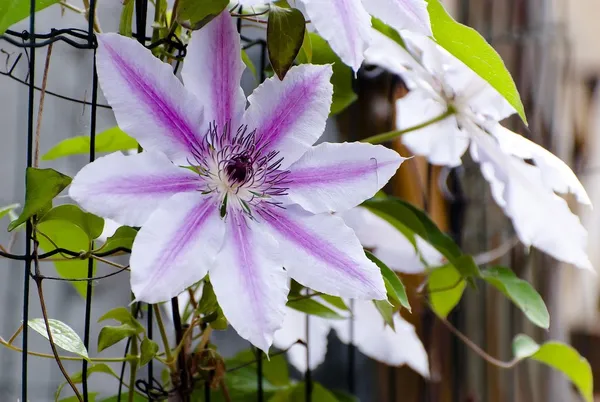
Clematis Nelly Moser
When should you plant climbing plants?
You can plant potted climbing plants (grown in pots) year-round, unless there is a freeze (during the day). Climbing Plants Grown in Open Ground (with a root ball or bare roots) can only be planted between October and March. Climbing roses are often sold as bare-root plants. The best time to plant climbing plants is in the spring, as well as in the fall. Less hardy climbing plants, such as Tuscan jasmine and passionflower, should not be planted too late in the season, so that they have as much time as possible to establish themselves properly.
How do you plant a climbing plant?
- Make sure you've already set up a good plant support or support structure (before you start planting).
- Dig a spacious planting hole and enrich the soil with rich organic compost or garden soil. If the root ball is very dry, let the plant soak in a bucket of water for a few hours (or overnight).
- Carefully remove the climbing plant from the pot. The roots and young shoots are often still fragile in young climbing plants.
- Plant the climbing plant at the same depth as it was at the nursery (in other words, use the top of the pot as a guide for soil level). Plant it preferably about 30 cm from a wall or fence. Let the climbing plant lean slightly backward toward the wall or trellis. Firmly press the soil around the plant. Note: Clematis and other plants susceptible to wilt disease should be planted 10–15 cm deeper. For climbing roses, the graft should be at ground level.
- After planting, water open water. Even when it's cloudy or rainy, and in the winter. Not only does this give the plant a good start, but it also helps the soil settle better around the roots.
- Detach the shoots from the original trellis and guide them over your trellis or structure. Don't tie them too tightly, so that the shoots can withstand some movement caused by wind and weather.
- After watering, spread a layer of compost (or another mulch (mulch) around the plant to prevent it from drying out. Water generously every week during the first growing season—especially during dry spells!
See also our article How do you plant a clematis (and avoid problems)?
What's your favorite climbing plant in the garden?
* This post contains a sponsored link