
A witch hazel in a small garden? Is that even possible?
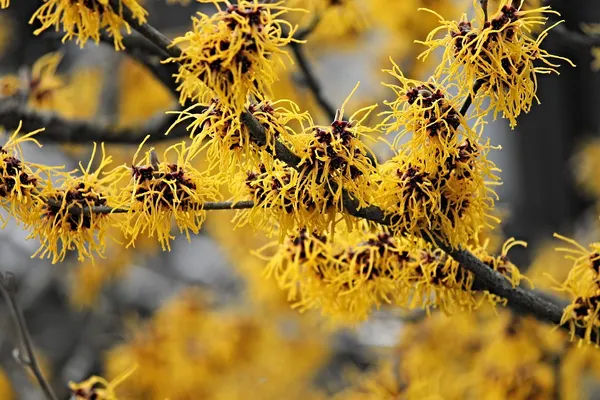
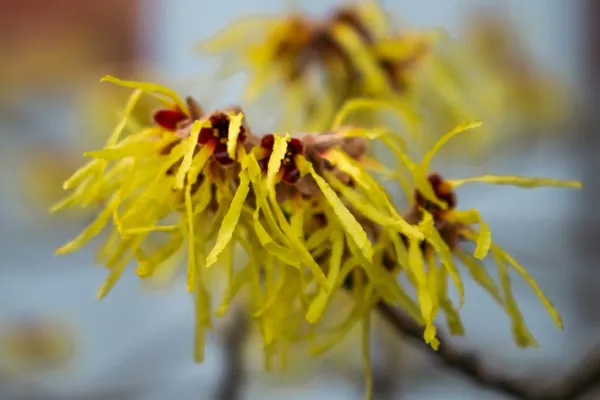
The witch hazel (Hamamelis) has spectacular blooms—especially on older plants—with distinctive ribbon-like or spider-like flowers. They bloom for a long time (from around December–January through March), and when they’re in bloom, there’s little else in flower. Many varieties also have a wonderful fragrance. We certainly wouldn’t want to miss out on this winter-blooming plant. However, the witch hazel does have one drawback: it grows very wide! And that’s not exactly ideal for a small garden…
Is a witch hazel suitable for a small garden?
Although witch hazel grows slowly, it will still become wider over time. Its blooms often don’t become truly spectacular until the plant is older (and therefore wider). The best place for Hamamelis is as a specimen plant in the garden, rather than in a flower bed.
But since witch hazel isn’t ornamental in every season (it’s a fairly unremarkable plant in the summer), it isn’t always the best choice for a small garden. Of course, you’d prefer a specimen plant that’s beautiful or unique in every season.
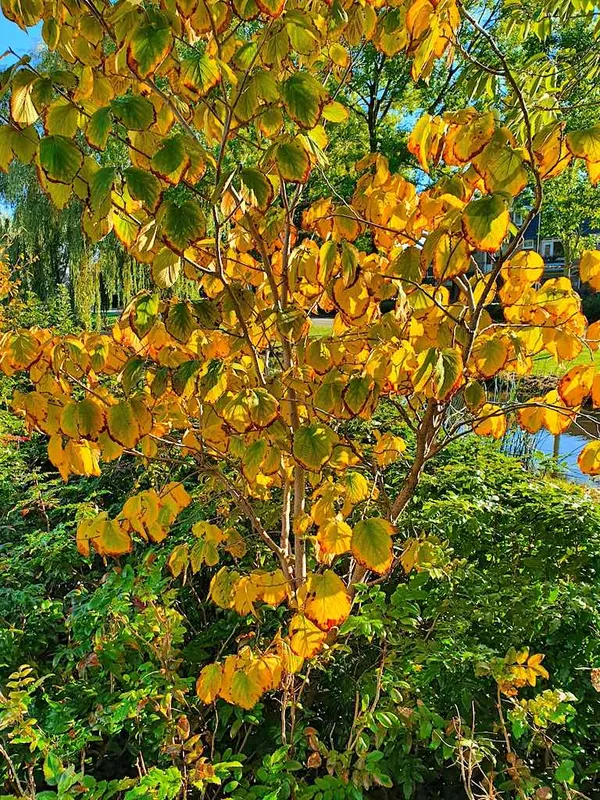
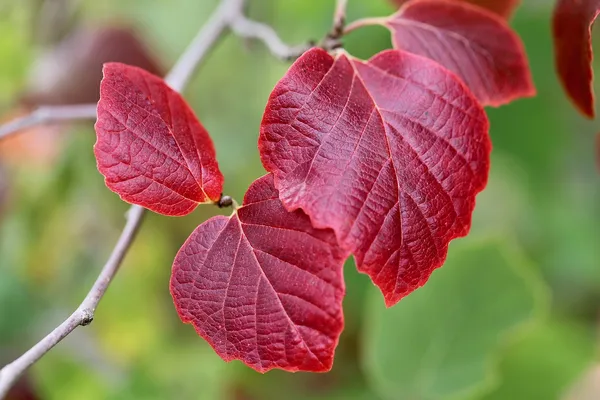
Still, witch hazel is a plant we love to have in our small garden. In winter, it offers a long blooming period, unique flowers, and—if you choose the right variety—a delightful fragrance. In addition, many varieties also display beautiful fall colors. So, the key is to choose the right variety so you can enjoy it as much as possible.
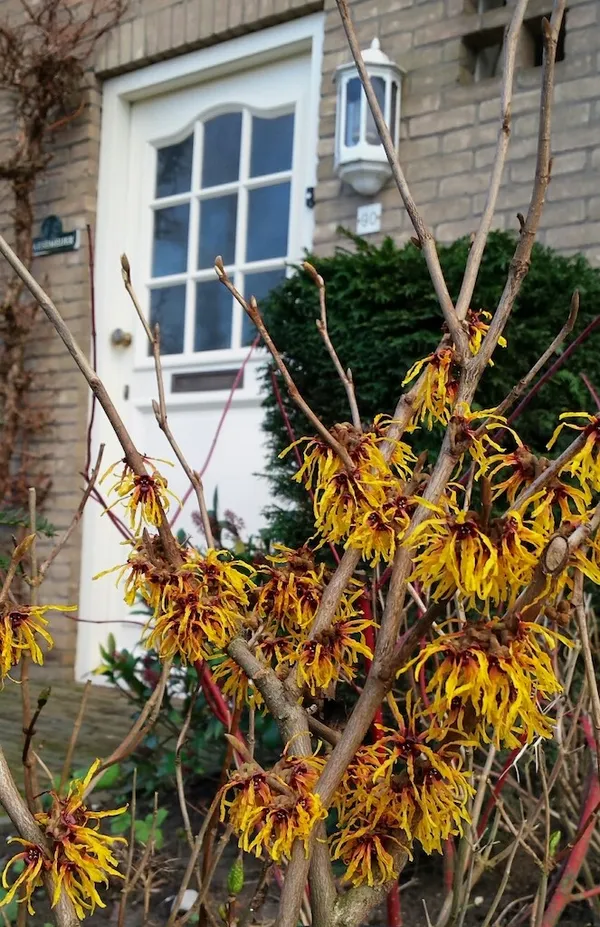
We have a witch hazel in the front yard. Because of this, it doesn’t matter that the plant is getting a little wider all the time, since we don’t use the front yard as a place to sit. However, in the winter, we have a good view of the witch hazel from inside the house.
How can you keep a witch hazel compact?
Would you like to have a witch hazel in your garden, but want to keep it small? That’s definitely possible! It’s important to prune it annually so the plant doesn’t get too big. Instead of its characteristic growth pattern with long branches, this will encourage your witch hazel to branch out more and produce shorter shoots. If you do this correctly, it won’t come at the expense of good flowering. Of course, your witch hazel won’t have quite as much visual impact as an older, fully grown specimen, but it’s still well worth it.
Can you grow witch hazel in a pot?
It is also possible to grow witch hazel in a pot or container. This slows its growth even further. It’s best to choose a somewhat roomier pot. Eventually, however, it’s best to transplant most varieties into the ground.
How should you prune witch hazel to keep it compact?
Prune annually. Do this after flowering, in late winter or early spring. Cut back last year’s branches to 2–3 buds. This will result in a densely branched, profusely flowering shrub.
Tip: A witch hazel is also well-suited as a multi-stemmed shrub.
Which witch hazels stay smaller or don't spread as wide?
Are you looking for varieties that you don’t have to actively keep small by pruning? There are also some cultivars that have been specifically bred for their compact growth habit. Examples include the dwarf variety Hamamelis ‘Quasimodo,’ or more upright-growing varieties like the recently introduced ‘Harry.’
- Hamamelis vernalis ‘Quasimodo’ (dwarf variety)
- Hamamelis x intermedia ‘Harry’ (upright)
- Hamamelis x intermedia ‘Moonlight’ (upright)
- Hamamelis x intermedia ‘Orange Peel’ (upright)
- Hamamelis x intermedia ‘Pirmavera’ (upright)
- Hamamelis x intermedia ‘Vesna’ (upright)
See more varieties and information about witch hazel (Hamamelis)