
A vegetable garden on your balcony or (rooftop) terrace?
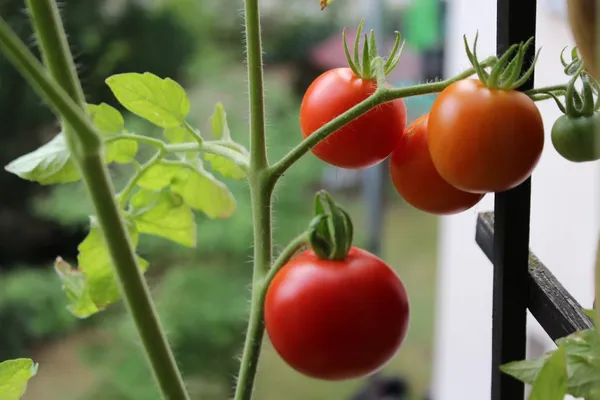
Would you like to have a vegetable garden, but all you have is a balcony or (rooftop) terrace? No problem: You can grow vegetables, herbs, and fruit on a balcony or terrace, too! You don’t need a big garden at all to have a fun vegetable garden. We’re happy to share our tips for a vegetable garden in pots and containers, so you too can enjoy delicious fresh vegetables, herbs, and fruit from your own (balcony) garden.
What should you keep in mind?
Vegetable Garden in Pots and Containers
Of course, there is no soil on a balcony, rooftop terrace, or patio. For a balcony vegetable garden So you’ll have to rely on pots and containers. This has both advantages and disadvantages. Pots and containers require a bit more maintenance. You’ll need to water them more often, and regular fertilization is also necessary for good growth and yield. New pots and containers can be quite pricey. Fortunately, you won’t need many for your space. Of course, you can also use just about anything as a pot or container to keep costs down. Just be sure to choose lightweight materials whenever possible.
The advantage of a vegetable garden in pots and containers is that you can care for all your vegetables, herbs, and fruits in a very targeted way. You can provide the right soil for each plant and tailor your care to the specific plant’s needs. Plants that would never grow well in the ground in your area can thrive in a pot. For example, blueberries (if there’s a lot of clay soil in your area) or lavender (if there’s a lot of waterlogging in your neighborhood). Plants in pots also tend to stay much smaller. So you could even consider a small fruit tree (grafted onto a slow-growing rootstock).
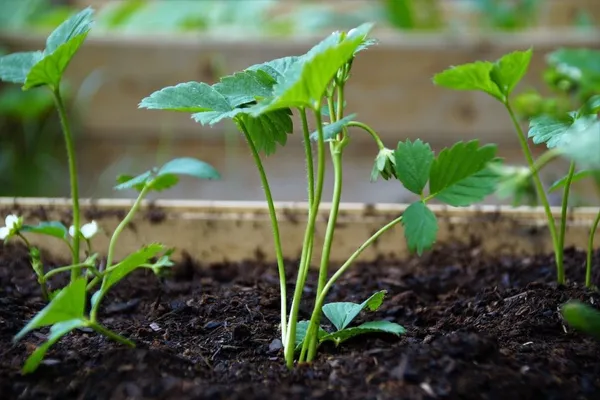
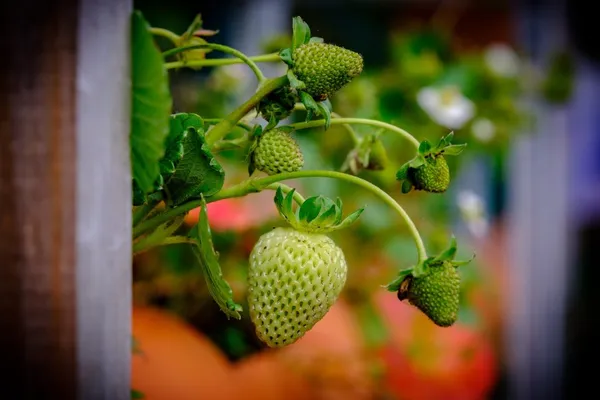
Growing Strawberries in a Planter
Pay attention to the weight
A balcony or rooftop terrace has a maximum weight capacity. This means you shouldn’t make them too heavy. Make no mistake: placing containers with plants and soil (or water) adds quite a bit of weight! So always choose lightweight materials. Think of plastic pots and containers, lightweight plant bags, or containers with thin walls. Fill only the top layer with soil. Use a filler material for the bottom layer (such as hydro granules or lightweight filler), or leave the space empty (this can be done using a “container-within-a-container” system).
Keep some space free
Leave enough space to walk around and sit down. Your balcony, patio, or rooftop terrace is usually also a place to relax. You should be able to sit comfortably there, eat, and/or drink. It’s also nice if you can easily get to all areas without tripping over pots, planters, cuttings, watering cans, tools, etc. Keep at least one (narrow) path clear. This also helps reduce the total weight.
View of Your Vegetable Garden
A balcony or patio often offers a direct view from your home. A vegetable garden isn’t always the most attractive sight. By paying a little attention to the materials you use and adding some structure to your vegetable garden—or combining it with a few ornamental plants—you can make the view of your little garden so much more beautiful. That way, you can enjoy both beautiful plants AND the harvest! And don’t forget the view outside your balcony!
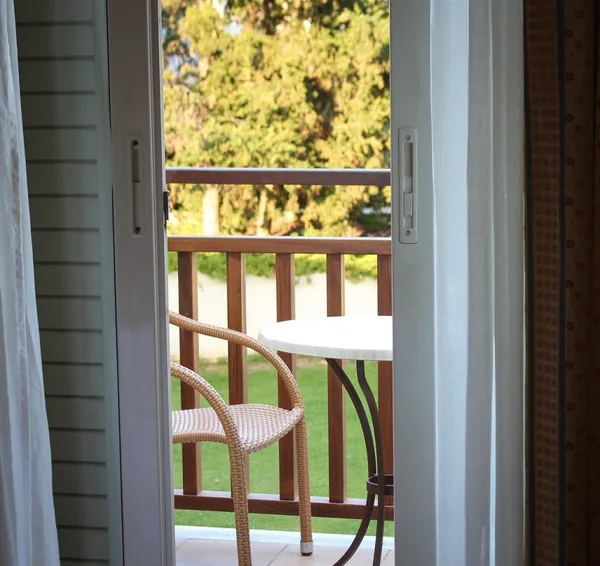
Which vegetables and herbs are suitable for a balcony or patio?
They should be vegetables and herbs that are easy to grow in a pot or container. Choose fast-growing crops so they don’t take up space in your containers and pots for an unnecessarily long time without producing a harvest. Go for easy-to-grow, edible plants that yield a bountiful harvest, and choose vegetables and herbs that you enjoy eating and using yourself. There’s little tastier than vegetables you’ve grown yourself. They often have so much more flavor than the ones from the supermarket!
Take into account the orientation of your balcony, rooftop terrace, or patio. How much light does it get? Does the balcony face north, south, west, or east? Is it very sheltered? The choice of plants depends on these factors. Research the vegetables and herbs you’d like to grow and check the label to see if your balcony meets the requirements.
Vegetables and herbs suitable for pots and containers:
- Potatoes (in a planting bag)
- Chives
- Beets
- Zucchini (min. 40 cm pot)
- Green peas (vertical)
- Climbing Zucchini
- Garlic
- Spring onion
- Coin
- Nasturtium
- Oregano
- Bell pepper
- Peppers
- Snow peas (vertical)
- Lettuce for picking
- Radishes
- Rosemary
- Swiss chard
- String beans (vertical)
- Sugar snap peas (vertical)
- Thyme
- Tomato (vertical)
- Broad beans (vertical)
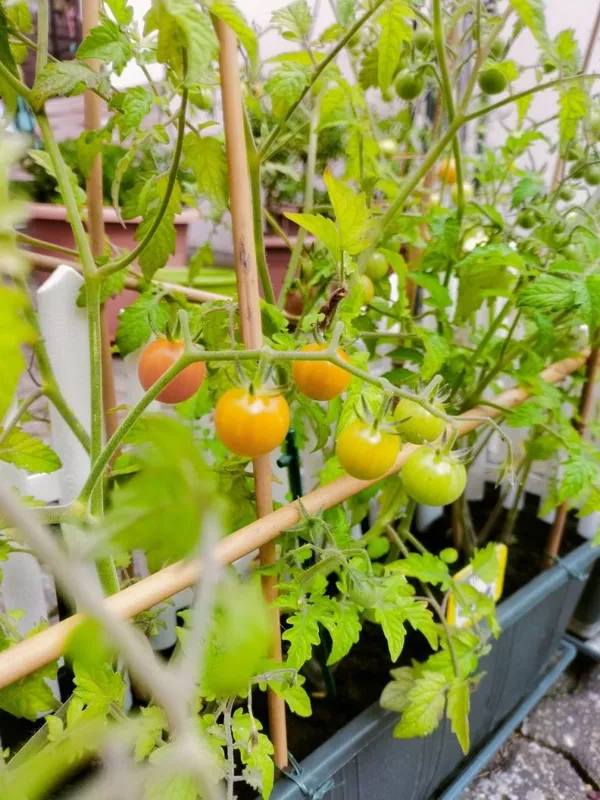
tomatoes
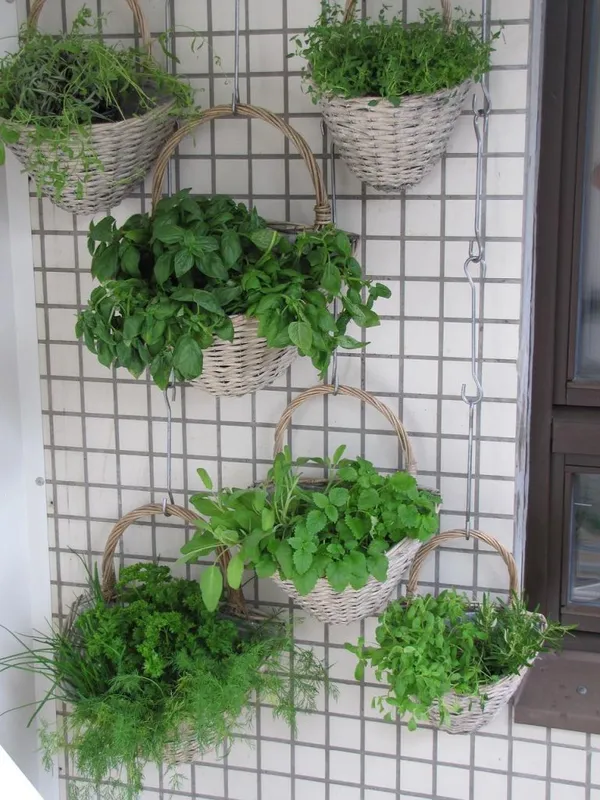
herbs
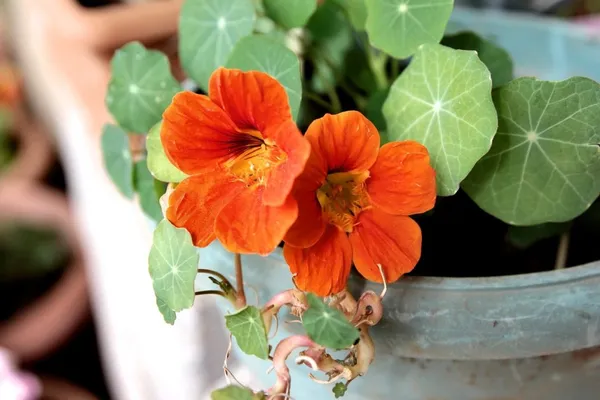
nasturtium
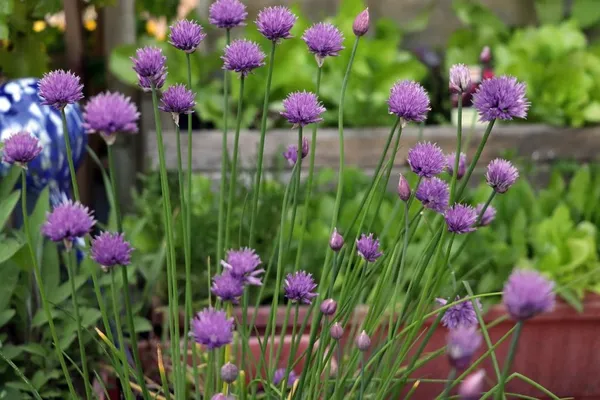
chives
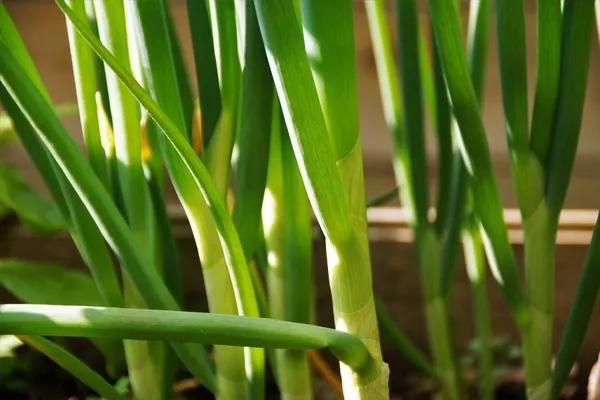
spring onion
What fruits are suitable for growing on a balcony or patio?
Fruit usually takes up a bit more space, and it also takes a while before you get any fruit. Still, many fruits are a joy to look at (with beautiful blossoms, the fruit as it grows, and sometimes even lovely fall colors). For example, you could consider placing a pot or planter with your favorite small fruits in the corner of your balcony or rooftop terrace. Think strawberries, berries, blackberries, and raspberries, or a mini fruit tree. Climbing fruits can also be interesting. For example, you could let a grapevine or kiwi vine climb up a wall. A trellis or rack above your balcony or terrace is also a good way to grow climbing fruit.
Fruit suitable for jars and containers:
- Strawberry
- Blueberry
- Blackberry
- Blackberry Bush
- Grape
- Raspberry
- Honeyberry
- Japanese wineberry
- Jostabes
- Kiwi and kiwi fruit
- Gooseberry
- Mini fruit tree
- Red berry
- White currant
- Black currant
Learn more about storing fruit in a jar or container
How can you make the most of your limited space?
On a balcony or rooftop terrace (and often on a regular terrace or patio as well), space is limited. Garden furniture or a seating area often takes up a large portion of the space. So that leaves even less room for your small vegetable garden. Here are some tips for making the most of a small space:
- Use space-saving furniture and accessories, such as a folding table and folding chairs.
- Give items a dual function: For example, a built-in bench that also serves as a planter and storage unit.
- Grow upward: With vertical gardening, you need very little space. It’s ideal for herbs or strawberries, for example.
- Place the bins on legs so you still have storage space underneath them.
- Make use of the outside of your balcony railing.
- Train a climbing plant to grow up the wall.
- Create a small roof with climbing plants on a trellis, beams, wire mesh, or a rack.
- Create a long, narrow (shallow) planter, as if you were adding a raised border to your balcony or (rooftop) terrace.
- A container on wheels is easy to move, so you can easily move it out of the way.
Are you planning to start a vegetable garden on your balcony or patio, too?
Let us know and share the results!