
A Little House, a Little Tree, a Little Bee – On Nynde's Bee Balcony
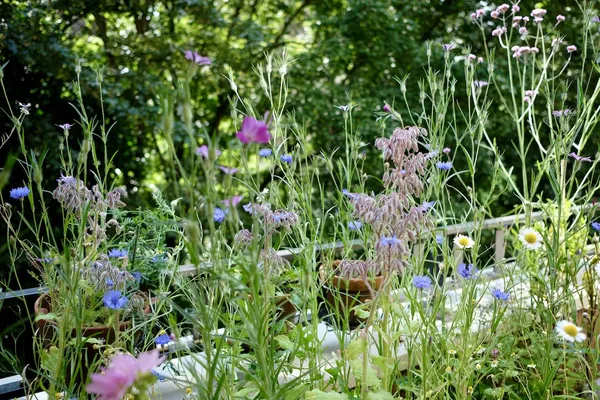
Nynde has transformed her bare 17m² city balcony into a vibrant haven for wild bees, butterflies, and other animals. You may already know Nynde from her Instagram account, “Bijenbalkon,” and her blogs for the Bijenstichting. From now on, you can also read her tips and fun blog posts here about biodiverse balcony gardening and greening even the smallest balconies.
A bee hotel on your balcony
It’s May! The ultimate month of blooming, when nature shows off its most beautiful side. Cow parsley shoots up from the ground, roadside verges burst into an explosion of color, and birds fill the air with their cheerful songs as they busily build their nests. Solitary bees are also very active, busy finding nesting spots and laying eggs. Although most bees nest underground, we can turn our balcony into a valuable refuge for the small number that breed above ground by installing a bee hotel. This way, we can turn our balcony into a real “Bed & Breakfast” for bees.
From a Tin Can to a Bee Hotel
Of course, you can buy one, but not all hotels are equally suitable. They’re often poorly made, with holes that are too big, rough passages, or an open back—and no bee would want to raise her offspring in such a place. Bees are quite picky, and a simple way to meet their needs is to make one yourself. With just a few simple materials, you can create a welcoming home, so on a beautiful spring day, I decided to make my own bee hotel out of an old can I had lying around. Below, I’ll explain how I did it and how you can get started yourself.
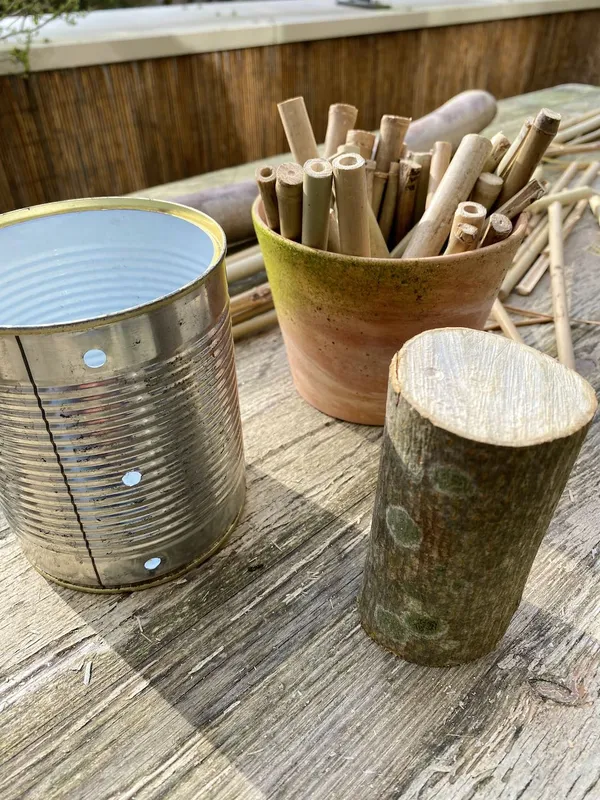
from a can…
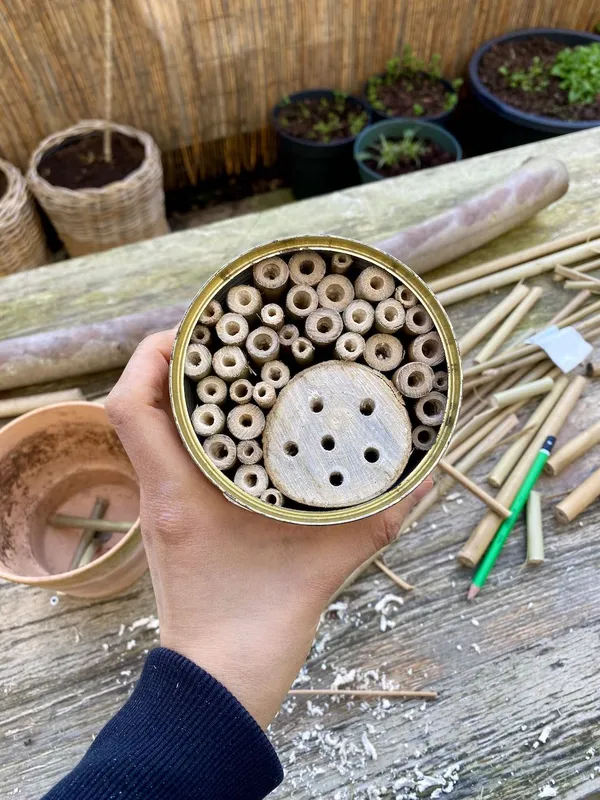
…to the bee hotel
What do you need?
To start, find a sunny and sheltered spot for your hotel. Bees love warmth, so make sure the hotel gets at least half a day of sun. Use a tin can that’s between 10 and 20 centimeters deep. Bees like to lay several eggs in a row inside a tube, so the deeper the tin, the more brood cells they can build. Alternatively, you can also use a zinc bucket or a wine crate.
Next, gather some hollow stems, such as bamboo or reed. I used bamboo myself because it’s nice and sturdy and comes in various diameters. Each bee species has a different preference for the size of the tunnels, so by varying the thicknesses, you can make your hotel attractive to a variety of bee species. Most bees prefer tunnels between 3 and 8 millimeters. Wider tubes are rarely used.
You can fill your jar as creatively as you like. For example, I also found a small piece of driftwood in the park behind my house and drilled a few holes in it to the size I wanted. This can be a fun addition to mix things up.
Getting Started
Now carefully drill a row of holes on one side of the tin. You’ll position this side facing down later, which will allow any rainwater that gets in to drain away easily. Next, saw the bamboo or cut the reeds about 1 centimeter shorter than the tin. This creates a small roof, which helps keep moisture from reaching the stems as quickly and makes your hotel last longer.
It’s important that the joints at the back are closed and that there are no cracks running lengthwise. Many plants naturally form “nodes” where the stem is closed, which is clearly visible in reeds and bamboo, for example. You can saw or cut just behind these points so that the stem ends in a closed space. Do you have open stems? You can seal these with a small wad of cotton.
Even small splinters can quickly cause tears in the bees’ delicate wings. Therefore, sand or file the ends of the tubes as smooth as possible. You can give the bees an extra helping hand by piercing the pith inside the bamboo with wire or a skewer. This makes it easier for them to access the cavities.
Now fill your tin with all the stems and twigs. To prevent the material from blowing out of the tin or being taken by birds as nesting material, you can stuff some natural clay into the back of the tin if you like. But if you pack it in tightly, it will definitely stay put. Are there any woodpeckers around? They love a tasty larva and can empty all the tubes in no time. In that case, it’s a good idea to stretch some wire mesh around your bee hotel.
Ta-da! All done. Before filling it, secure the tin to a wall with a screw through the bottom, or attach it to a stick and place it in a large planter. Now all you have to do is wait for your first guests!
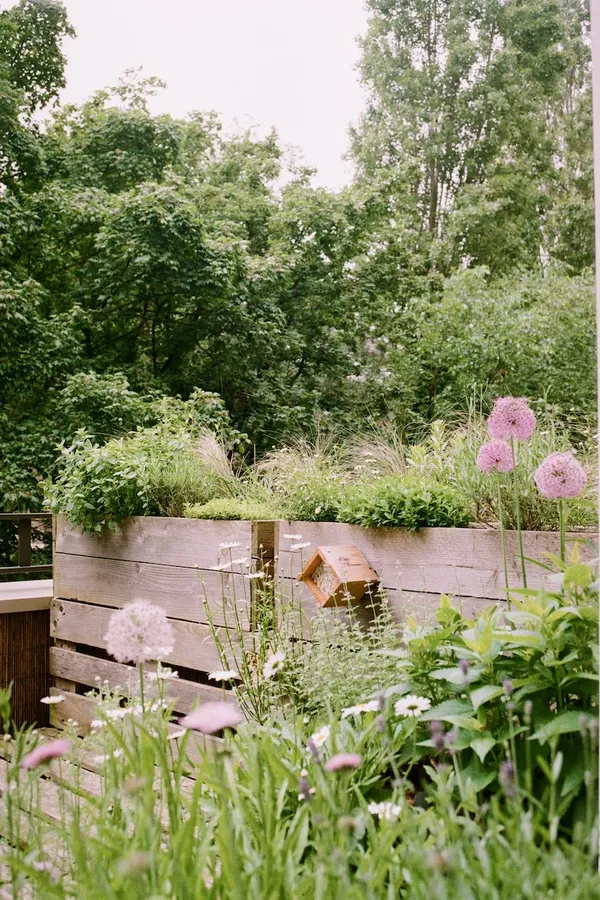
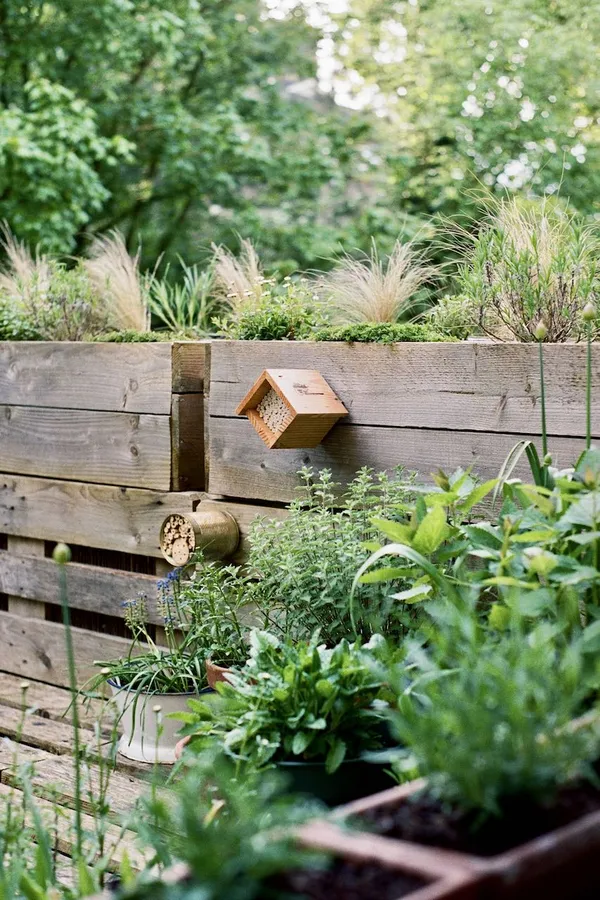
Tip: Would you rather buy a bee hotel? In the Bijenstichting online store, you'll find a variety of bee houses that meet all the requirements.
A lavishly set table
Just like people, bees like to have their food close to home. Most wild bees, for example, fly only a few hundred meters from their nest to forage for food. Some species fly as little as a few dozen meters. Offering a “hotel” without a “restaurant,” so to speak, makes little sense. Therefore, always provide a bountiful spread of organic, open-flowered, and preferably native plants that bloom from early spring through late summer.
Some nutrient-rich species that thrive in a pot on your balcony include grape hyacinths, spotted lungwort, currants, viper’s bugloss, tall speedwell, tansy, bellflower, wild marjoram, and cowslip. With these flowers nearby, bees will quickly find their way to your bee hotel, while your plants will be delighted by all that buzzing.
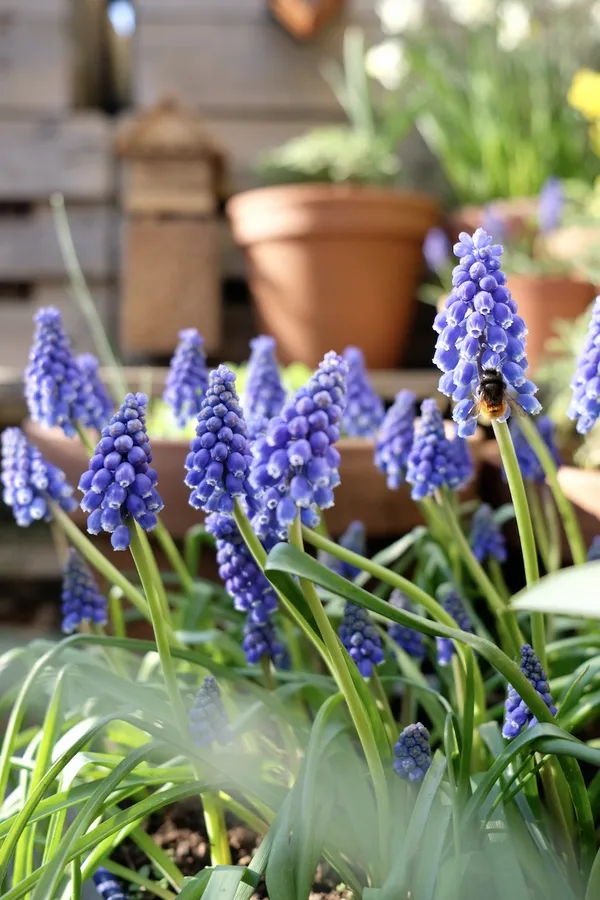
horned mason bee
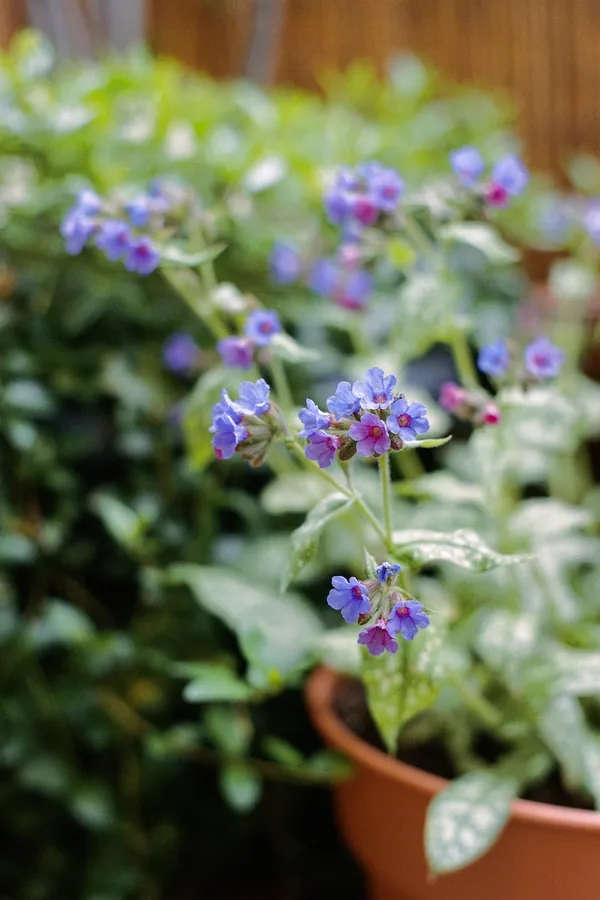
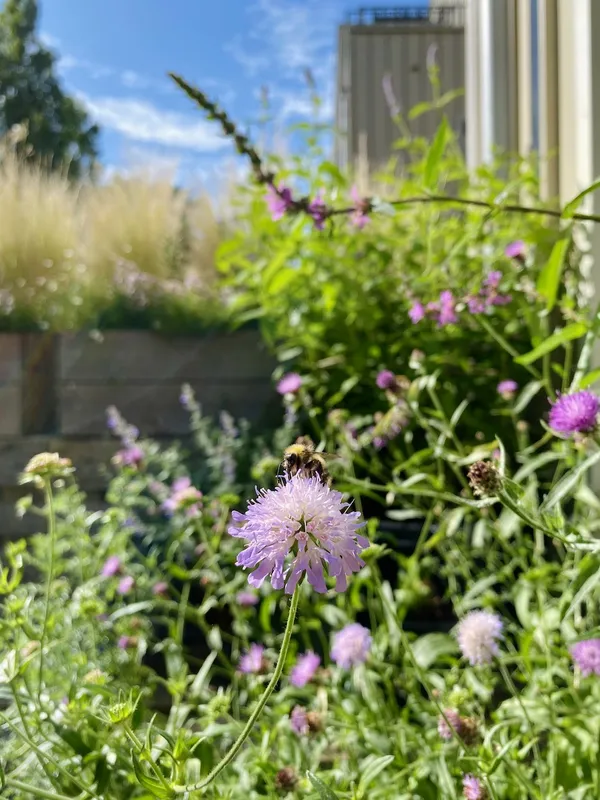
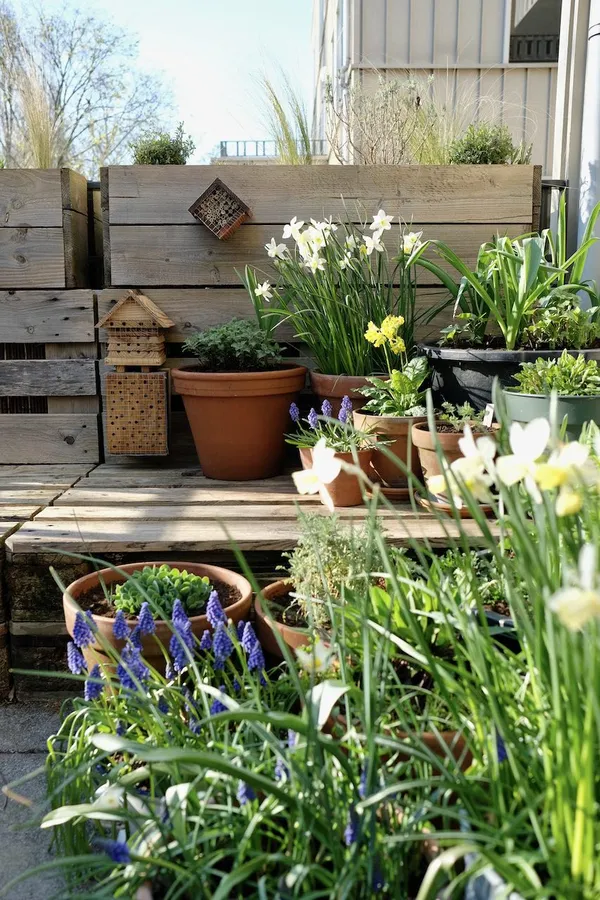
a lavishly set table
Tip: Overwhelmed by the selection of plants? At Cruydt-Hoeck and Sprinklr, you’ll find ready-to-go bee kits put together by the Bijenstichting. With these, you can transform your balcony into a five-star Bee & Bee in no time!
Grateful Guests
Some bee species that like to make use of your hotel include mason bees, paper wasps, bell bees, and log bees. They appear between March and September, and each builds its nest in a unique way. For example, a mason bee skillfully “bricks up” its nest cells with pieces of clay or small stones mixed with mud, while a paper wasp precisely “cuts” pieces of leaves or petals to line its nest cells.
One type of wallflower bee you might encounter this month is the garden leafcutter. This bee loves borage, an edible annual with beautiful blue flowers that you can sow on your balcony. Add knotweed and St. John’s wort to the menu, and there’s a good chance this bee will book a room at your hotel.
By the way, don't worry about them stinging you. Solitary bees devote their entire short lives to building, gathering food, and sealing their brood cells. They're far too busy to pay any attention to us. And even if they did sting, they couldn't even pierce our skin.
Will you see filled-in holes in your hotel soon? If so, you might be wondering when the bees will be fully grown and leave the nest. Just be patient a little longer. The egg first becomes a larva, feeds on pollen until it’s full, and then pupates. Many species then overwinter as pupae. It’s not until the following spring or summer that the new generation of bees emerges, and the cycle begins all over again. A fun and exciting prospect!