
7 Unique Trees for a Small Garden
A tree is a must-have for every garden! Trees add height to the garden, provide shade and shelter, and offer food for animals. With the right tree in your garden, you can enjoy its ornamental value throughout multiple seasons—or even all year round. You can easily plant a tree even in a small garden. Consider popular trees such as the serviceberry (Amelanchier), crabapple (Malus), Japanese flowering cherry (Prunus serrulata), rowan (Sorbus), and Judas tree (Cercis). Don’t forget the Japanese maple (Acer palmatum) either. But what if you’re looking for something a little different—a unique tree for your small(er) garden? Check out our favorites below.
Still looking for more common varieties? Check out the blog post 9 Trees for a Small Garden
Large-flowered or Japanese dogwood (Cornus kousa)
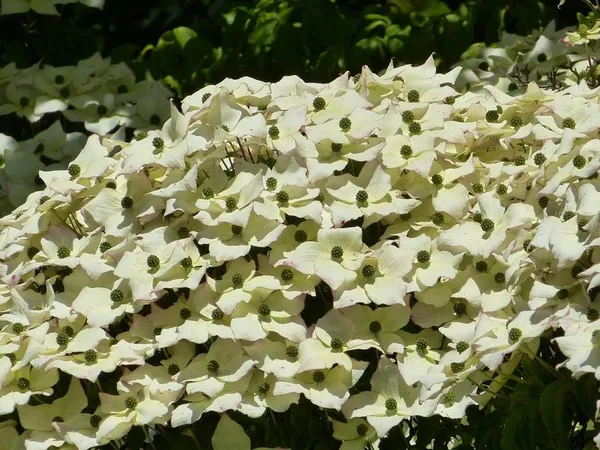
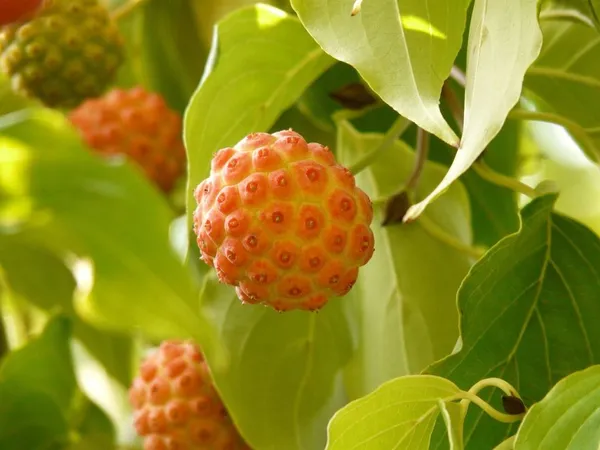
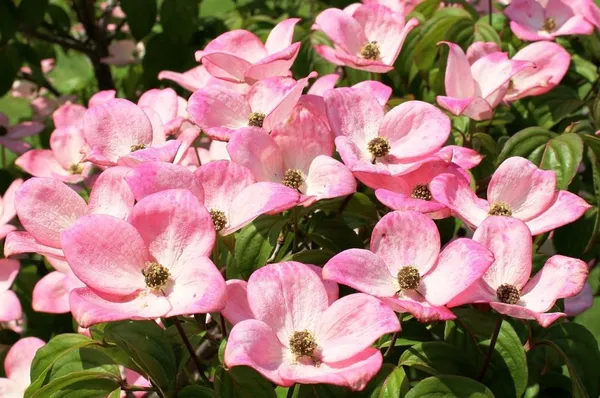
Cornus kousa is a fairly slow-growing shrub or multi-stemmed tree that reaches a height of about 3 to 5 meters. Cornus kousa is worth admiring throughout the seasons: Striking white star-shaped flowers (or, more accurately, bracts) in the spring (around May–June), followed by red strawberry- or raspberry-like fruits and a beautiful orange-red to purplish-red fall color. There are also cultivars with pink bracts instead of (cream) white ones. Many varieties grow fairly upright at first and only later develop a broader crown. It makes a beautiful multi-stemmed tree in a small garden!
Location and care: Full sun or partial shade. Slightly moist, humus-rich soil that is not too wet. Preferably sheltered from cold winds.
Species and cultivars: Well-known cultivars include Cornus kousa ‘China Girl’ (white), ‘Milky Way’ (creamy white), ‘Miss Satomi’ (pink), ‘Moonbeam’ (white, extra large), ‘Teutonia’ (pure white, most beautiful fall color), ‘Weisse Fontaine’ (white), ‘Schmetterling’ (green-white), and Cornus kousa ‘Wolf Eyes’ (variegated white foliage).
Seven-Sons Tree (Heptacodium)
Heptacodium miconioides is a large shrub or small tree (up to about 4–6 m) with a vase-shaped growth habit. The ornamental value of the seven-sons tree lies both in its beautiful flowers and in its bark. Older bark changes color from gray to yellow-brown-orange and peels off. The dark green, elliptical leaves are also attractive. In the fall, the leaves turn yellow-orange, sometimes orange-purple. In late summer, around August–September, Heptacodium blooms with small white flowers arranged in whorls on red stems. The flowers have a sweet fragrance and attract many bees and butterflies. Over time, the calyxes turn pinkish-red to red. Small red fruits then develop. The seven-sons tree has long-lasting ornamental value and is also attractive in winter, thanks to its striking trunk.
Location and Care: Suitable for a sunny location (flowering is reduced in the shade) and well-drained soil. The early-emerging foliage may occasionally suffer some frost damage. Tolerates pruning well.
Cultivars: One cultivar that remains slightly smaller and blooms at a young age is Heptacodium miconioides ‘Tianshan’ (or ‘Minhep’).
Bee Tree (Tetradium)
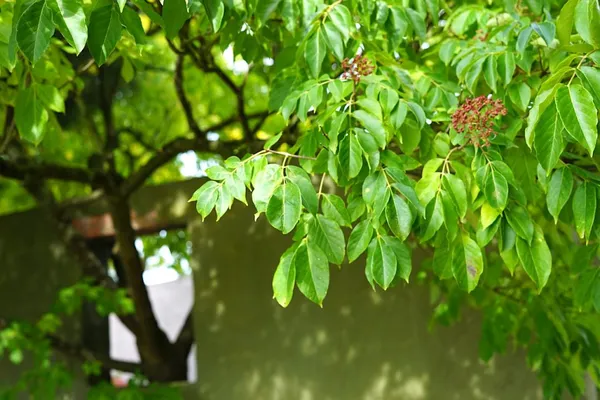
Tetradium daniellii is a sturdy shrub or medium-sized tree that blooms late in the season. Around August–September, the bee tree blooms with small yellowish-white flowers in loose panicles on reddish-brown stems. The flowers have a delightful fragrance and attract many bees (hence the name). After flowering, purplish-red fruits develop. The upper surface of the oval leaves is dark green, and the underside is gray-green to light green. The trunk is gray, and young twigs are olive green. Its former name is Euodia. The bee tree grows fairly quickly and can reach a considerable height (about 8–12 meters), though there are also cultivars that remain smaller.
Location and care: Full sun or partial shade and well-drained, not overly wet soil. Pruning is generally not necessary, but the plant tolerates it well.
Cultivars: One cultivar that remains smaller is Tetradium daniellii ‘Moonlight’. It grows to about 3 meters tall.
Opportunity Tree or Peanut Butter Tree (Clerodendrum)
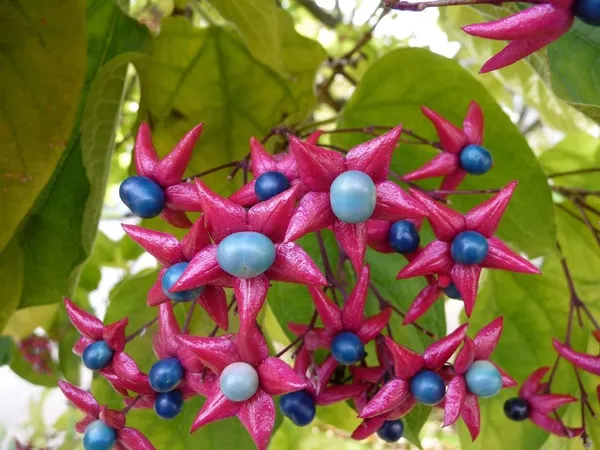
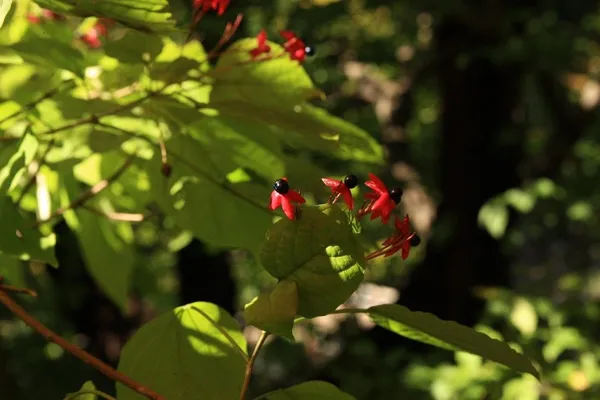
Clerodendrum trichotomum is a multi-stemmed shrub that can also be grown as a tree. Around August–September, clusters of white flowers with dark red calyxes appear. These are followed by dark blue berries that contrast beautifully with the red calyxes, giving the plant a somewhat exotic appearance. The calyxes have a strong (sweet) scent and therefore attract many bees and butterflies. The dull, dark-green leaves are pointed and somewhat resemble those of the Catalpa. The leaves give off a spicy, peanut butter-like scent when crushed. The chance tree grows to a height of about 4–6 meters.
Location: Sunny, warm, and sheltered, with well-drained soil. Young plants may suffer frost damage during harsh winters.
Species and cultivars: Well-known species of Clerodendrum include: Clerodendrum trichotomum var. fargesii (white flowers with green calyxes) and Clerodendrium bungei (pink, spherical flowers).
Yellow Soapberry Tree or Chinese Lacquer Tree (Koelreuteria)
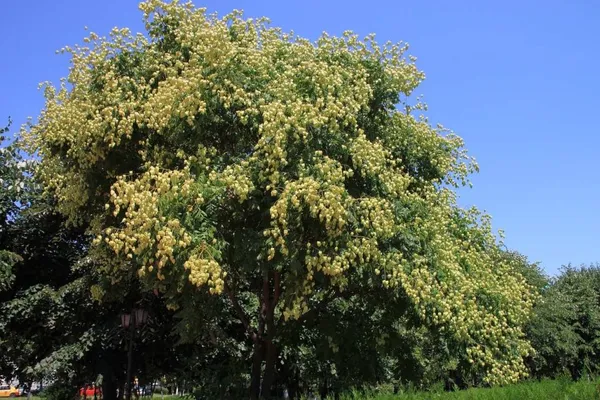
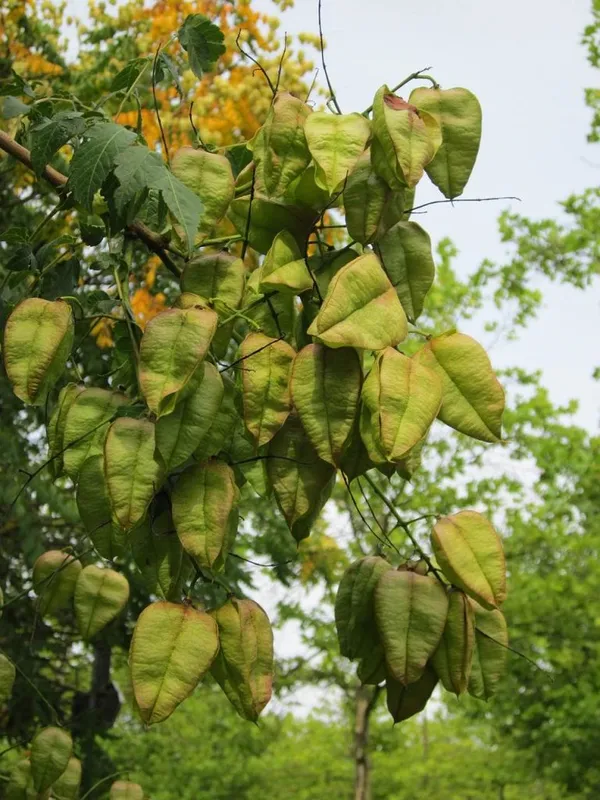
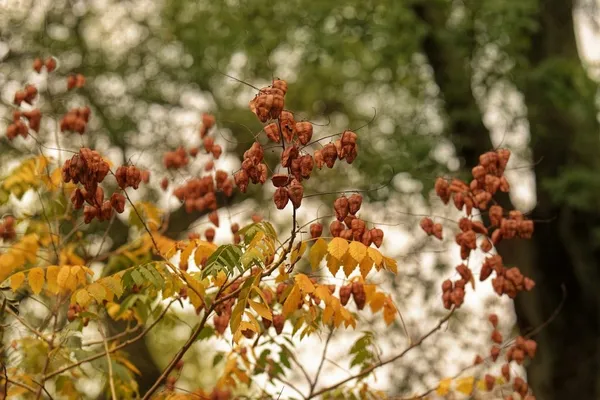
Koelreuteria paniculata is a sturdy shrub or multi-stemmed tree that grows into a medium-sized tree, with a somewhat irregular crown. Around July and August, the tree produces large panicles of small yellow flowers. After flowering, it produces balloon-shaped, lantern-like, bronze-colored fruits that remain on the tree for a long time. The odd-pinnate, serrated leaves emerge greenish-red in the spring and turn a beautiful yellow-orange in the fall. In addition to “yellow soap tree” and “Chinese lacquer tree,” this tree is known by many names: bubble tree, goldenrain tree, yellow lacquer tree, lantern tree, and “koelruit” in Dutch. The tree grows to a height of about 6–8 meters.
Location and care: Full sun, sheltered from cold winds, and in well-drained soil. Young plants may be damaged by severe frost.
Species and cultivars: Koelreuteria paniculata ‘Beachmaster’ grows to about 3 meters, making it much shorter, and has a flattened crown. Its leaves and flowers are also smaller than those of the species. It blooms profusely, but slightly earlier, around July–August. Koelreuteria paniculata ‘Coral Sun’ grows slightly taller and larger, and its young twigs are an intense orange-red. The foliage emerges with a bronze hue. It may bloom slightly less profusely. ‘Fastigiata’ is a slow-growing variety with a columnar growth habit. It does not spread wider than one meter but still reaches a height of about 7–9 meters. Flowering is significantly less abundant.
More Beautiful and Unique Trees
Other beautiful and unique trees for smaller gardens include the silk tree, the Indian lilac, and the handkerchief tree:
Silk Tree or Persian Sleep Tree (Albizia)
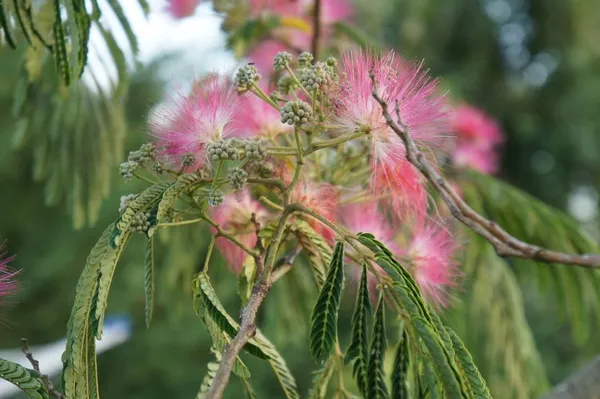
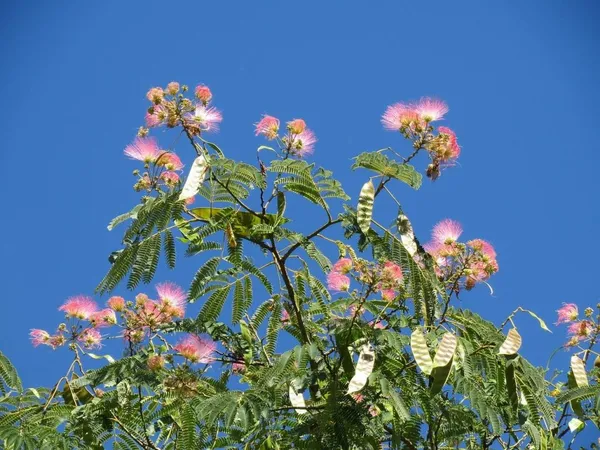
Albizia julibrissin is a tree (or shrub) with exotic-looking pink flowers and beautiful pinnate leaves. As soon as it gets dark, the leaves fold up. Keep in mind that the tree doesn't come into leaf until late in the season.
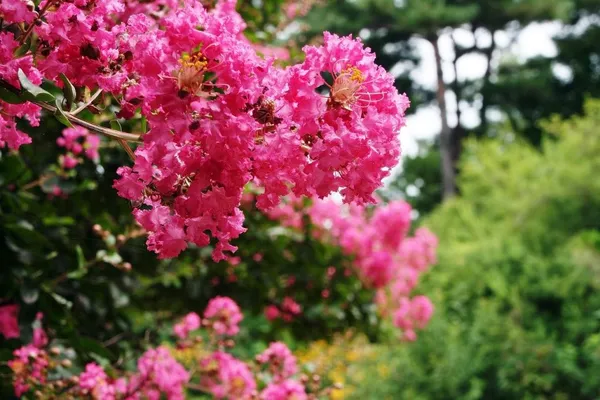
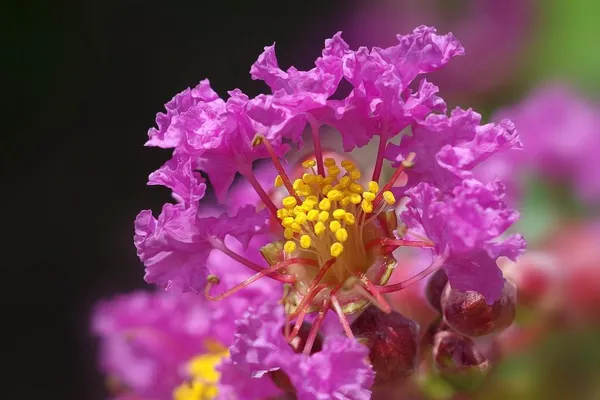
Elf Tree or Indian Lilac (Lagerstroemia)
Lagerstroemia indica has exotic and striking blooms, beautiful fall colors, and sometimes its leaves emerge in an unusual color. Choose an early-blooming variety (such as Hopi, Tuskegee, Tuscarora, or Acoma) so you can enjoy the beautiful blooms even during cooler summers.
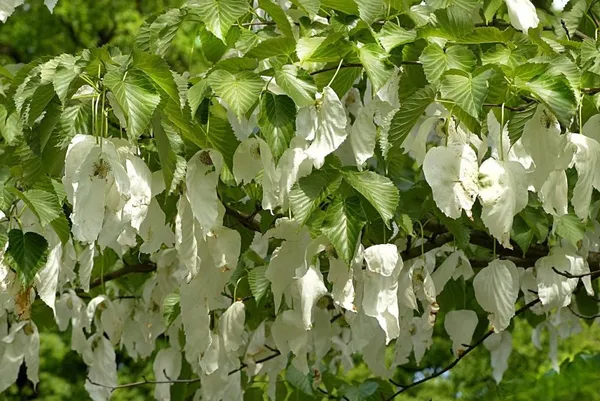
Handkerchief or Pennant Tree (Davidia)
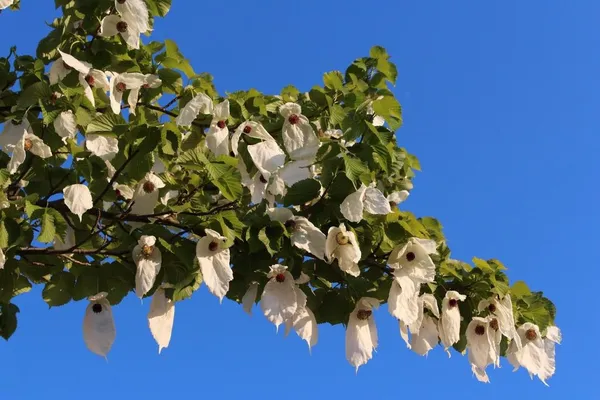
Davidia involucrata blooms with beautiful white bracts and has yellow-orange fall foliage. It grows quite large, but the ‘Moonlight’ variety remains smaller, reaching about 3 meters.
Do you have (or would you like to have) a special tree in your small garden? Which one?
Leave a comment below—we'd love to hear from you!