
7 Stunning ornamental apple trees for a small garden
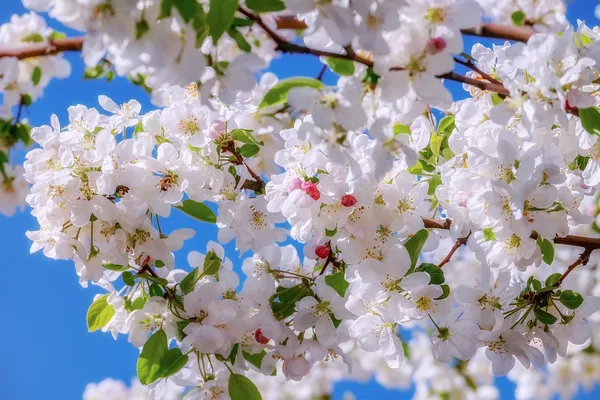
Ornamental apple trees are perfect for your garden: beautiful blossoms in the spring and colorful ornamental apples in the fall and winter. They often remain on the tree for a long time, eventually being eaten by birds. Some varieties even develop beautiful fall colors! And these trees don’t grow very large, so you can easily plant them in a smaller garden.
Ornamental apple trees are very hardy and easy to grow trees that aren't picky about soil type. They bloom most profusely in full sun, but you can also plant an ornamental apple tree in partial shade. Pruning is hardly necessary, except for crossing, damaged, or dead branches. Remove these in the summer.
We love crabapples… do you?
Beautiful all year round!
An ornamental apple tree is beautiful in every season: from spring through fall and winter!
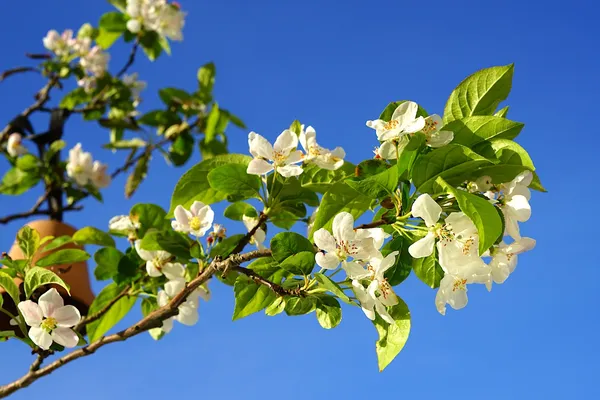
Spring
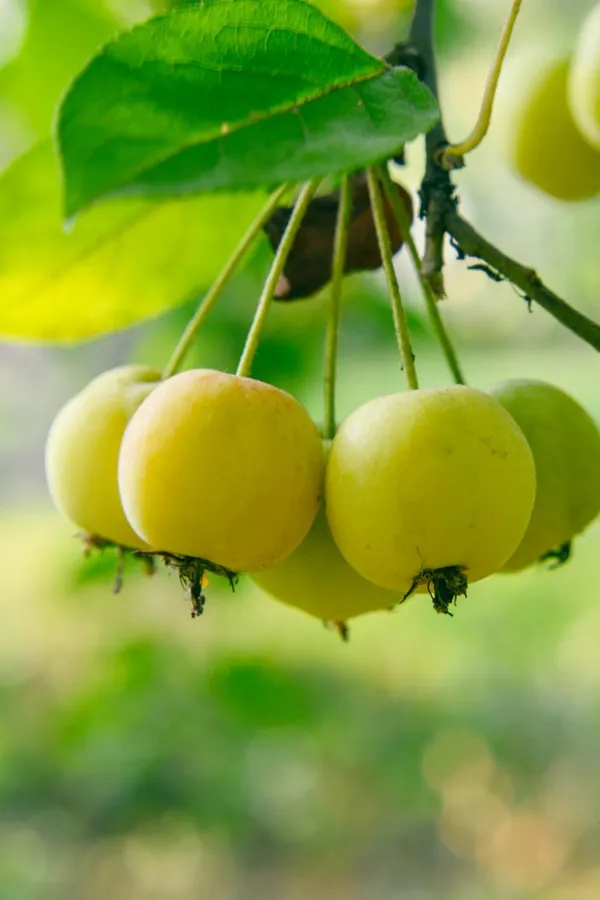
summer
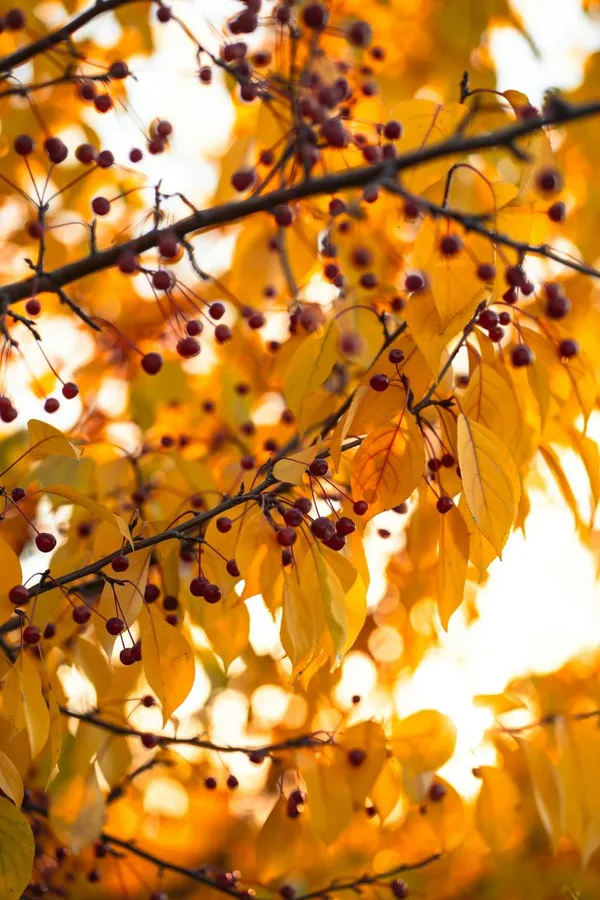
fall
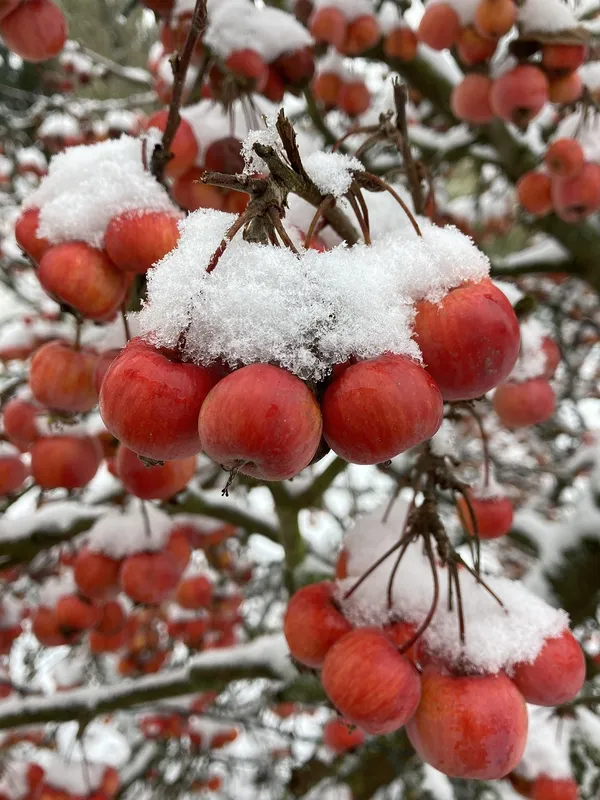
winter
Blossoms in the spring
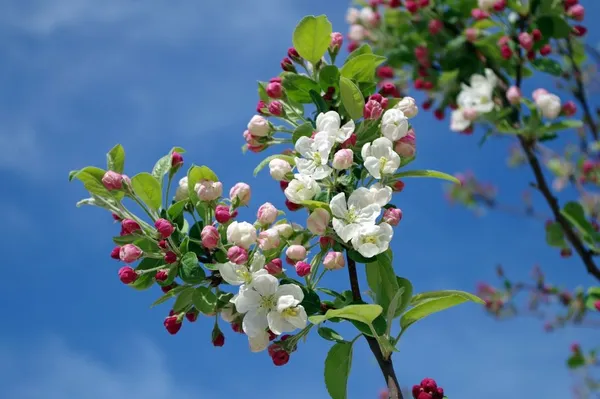
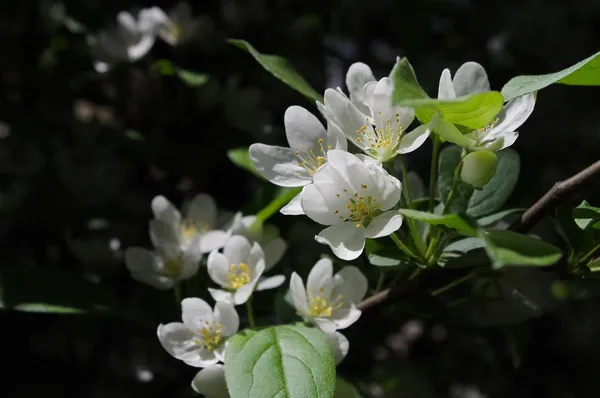
In the spring, around April or May, the ornamental apple tree blooms with white or white-pink flowers. The buds are often pink. The tree blooms profusely and attracts many bees. There are also ornamental apple trees that bloom with pink flowers.
Fresh green foliage in the summer
When the blossoms are nearly gone, the leaves begin to sprout. The summer foliage is a fresh green, and there are a few varieties with red leaves. During the summer, you can see the fruits growing.
Fall colors and ornamental apples starting in the fall
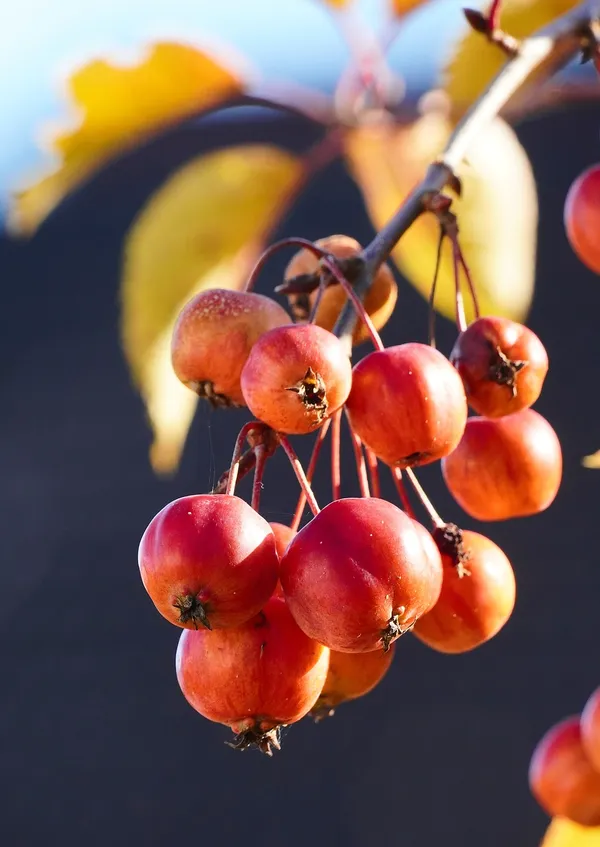
Late summer and fall are the times when ornamental crabapples really develop their shape and color. Many ornamental crabapple varieties produce beautiful orange or red fruit, but there are also varieties with yellow ornamental crabapples. Although many varieties do not develop spectacular fall foliage, there are ornamental crabapples with beautiful yellow-orange fall colors.
Beautiful winter silhouette
Eventually, the leaves fall off, leaving a graceful tree covered with colorful apples. The fruit of many ornamental apple trees remains on the tree until around December. With some ornamental apple varieties, such as Red Sentinel, the fruit stays on the tree almost all winter long.
The most beautiful ornamental apple trees for small(er) gardens
There are many different ornamental apple trees, but as far as we're concerned, these are truly the most beautiful:
1. Malus Evereste
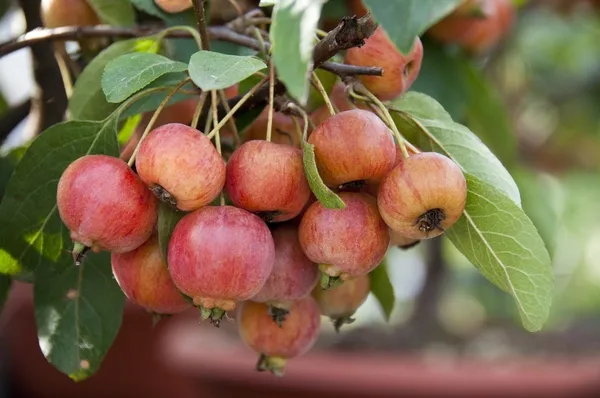
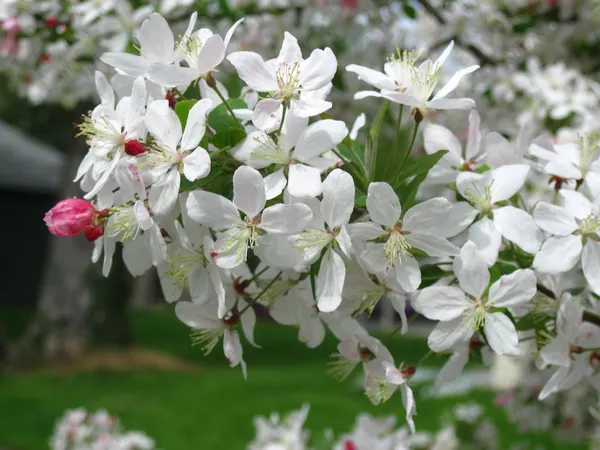
The ornamental apple Malus ‘Evereste’ is a profusely flowering variety with beautiful white flowers in April and May. In the spring, this tree resembles a white cloud of blossoms. After flowering, the fresh green foliage emerges and the orange-red ornamental apples develop. The fruits remain on the tree for quite a long time but are eventually eaten by birds. The foliage also takes on a beautiful yellow-orange fall color. This is one of the most popular ornamental apple trees in our country.
2. Malus Red Sentinel
Malus ‘Red Sentinel’ is also a popular ornamental apple tree. This ornamental apple tree produces the most beautiful bright-red fruits, which remain on the tree (almost) all winter long! It blooms profusely in the spring, with white flowers emerging from pink buds. The leaves are a slightly darker green and have a slight sheen. In the fall, the foliage turns yellow to yellow-brown. This creates a beautiful contrast between the countless bright red fruits and the autumn foliage. Under the weight of the many small apples, the branches may bend. It grows primarily upright at first, then spreads out later.
3. Malus Rudolph
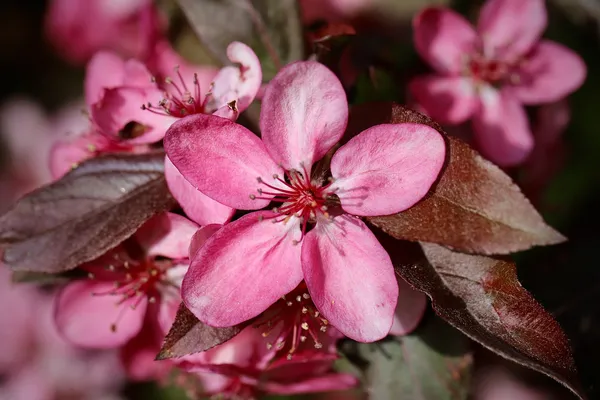
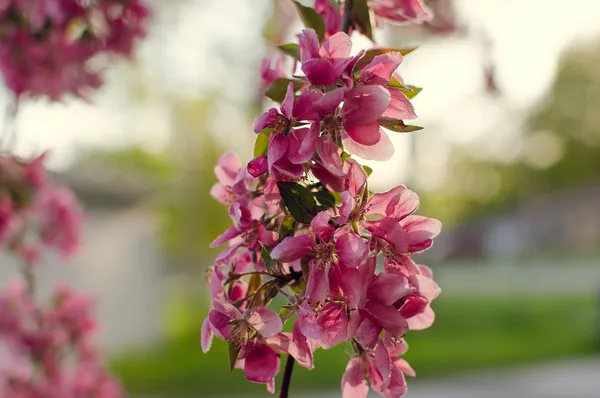
“Rudolph” (sometimes also spelled “Rudolf”) is a unique ornamental apple tree with reddish-green foliage and pinkish-red flowers. This makes it quite different from many other ornamental apple trees, which have white flowers. The fruits are orange-red and remain on the tree for quite some time. In the fall, the foliage turns yellow-orange. It is a somewhat compact grower, making it ideal for a small garden. Malus ‘Royalty’ is similar, but has slightly darker pink (double) flowers and redder foliage. Royalty also grows wider.
4. Malus Butterball
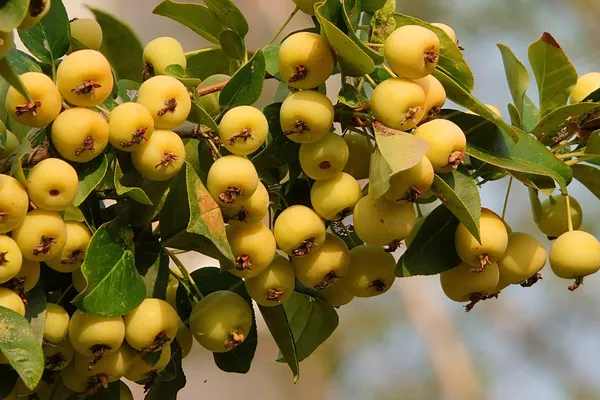
An ornamental apple tree with yellow fruit. Malus ‘Butterball’ blooms with white flowers around April–May. The leaves then emerge in a fresh green, and the small, bright yellow fruits develop—sometimes with a red blush. Butterball has a compact growth habit and remains considerably smaller than, for example, ‘Golden Hornet’: about 3–4 meters tall.
5. Malus Sugar Tyme
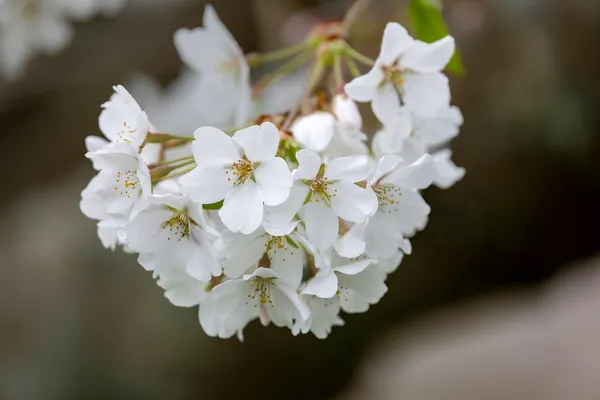
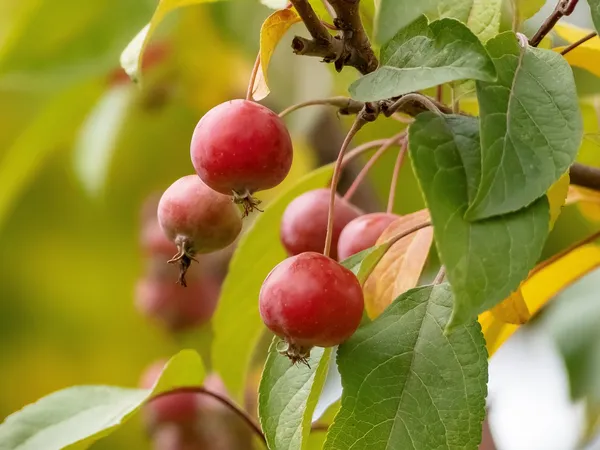
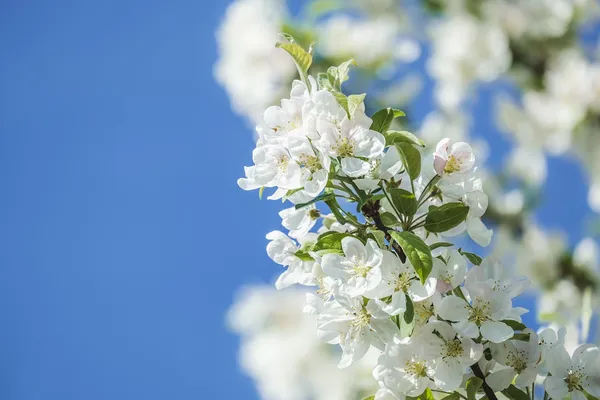
The relatively new variety “Sugar Tyme” is known for its incredibly abundant blooms. In the spring, it truly forms a white cloud of blossoms, making it almost impossible to see the tree itself. After flowering, the tree develops (dark green) foliage and produces red ornamental apples. This ornamental apple has a compact growth habit and grows to a height of about 3–5 meters.
6. Malus Adirondack
‘Adirondack’ has a narrow, columnar growth habit, making it ideal for small gardens. Yet this ornamental apple tree still impresses with its abundant blooms. The flowers are white, but the buds open pink. It produces small, dark red fruits that remain on the tree for a while during the winter. It grows to a maximum height of about 3–4 meters.
7. Malus toringo
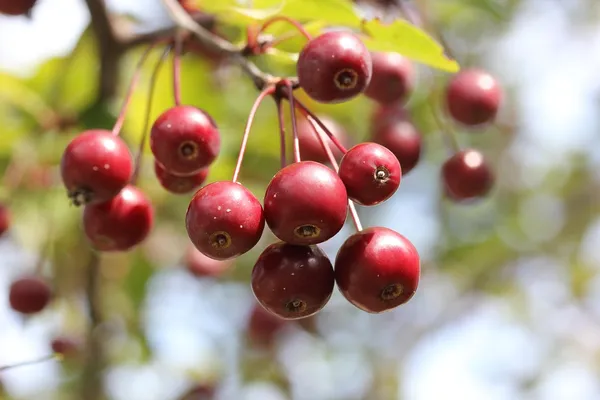
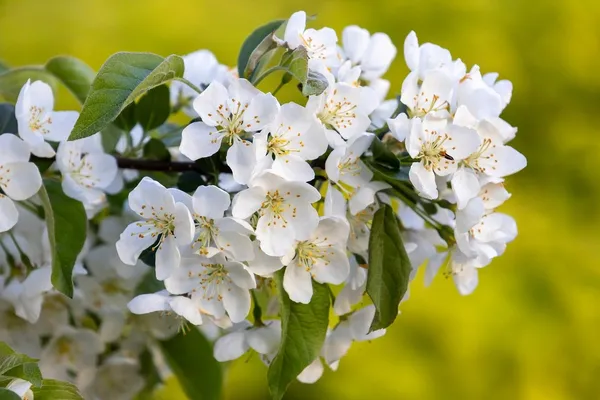
The Toringo apple is a beautifully branched ornamental apple tree with abundant white blossoms. Its leaves are slightly smaller than those of many other ornamental apple trees. In the fall, the red ornamental apples appear, often alongside some yellow autumn foliage. It looks especially beautiful as a multi-stemmed tree, thanks to its lovely (open) growth habit.
Even more beautiful ornamental apples
- Malus Golden Hornet (white blossoms, golden-yellow fruit)
- Malus Mokum (pink flowers, red fruit)
- Malus Royalty (red leaves, reddish-purple flowers, and red fruit)
- Malus toringo ‘Brouwers Beauty’ (light pink flowers, yellow fruit)
An ornamental apple tree trained as an espalier
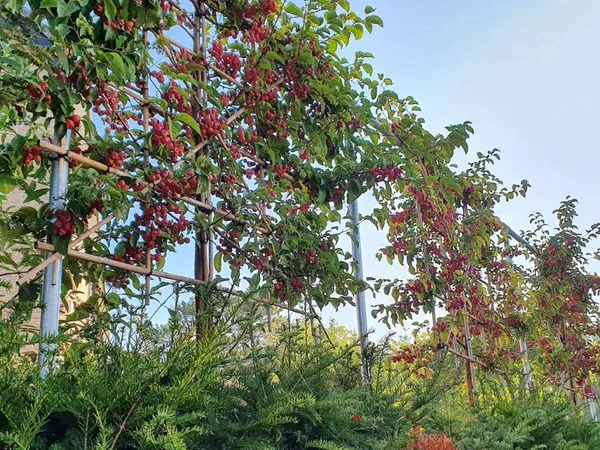
Do you have a narrow flower bed? Or do you want more privacy in your garden? An ornamental apple tree also works well as an espalier! An ornamental apple tree grown as an espalier is a beautiful sight even in winter, when the bare tree is laden with brightly colored fruit.
An espalier tree does require a bit more maintenance, since you have to keep it in shape. Prune back side branches and any branches outside the trellis in early spring.
Learn more about espalier trees
ornamental apple tree as an espalier