
7 Easy Plants: Shrubs
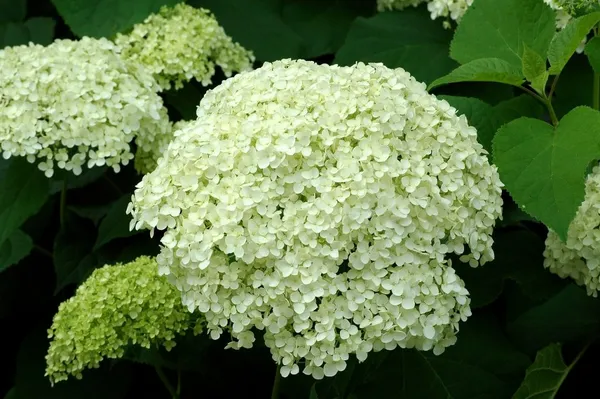
Everyone wants beautiful plants in their garden. But many people are still worried that beautiful plants require a lot of maintenance. It’s true: Some plants do require quite a bit of maintenance, and caring for them can sometimes be very specific. But fortunately, there are also plenty of plants that are actually very easy to care for and not difficult at all! That’s why we’re listing 7 easy-care plants for you each time: low-maintenance plants that take root easily and grow well, are simple to care for and prune, and aren’t picky about their location. In this blog, we’ll take a look at perhaps the easiest group of plants of all: shrubs.
7 Easy-to-Grow Shrubs for Your Garden
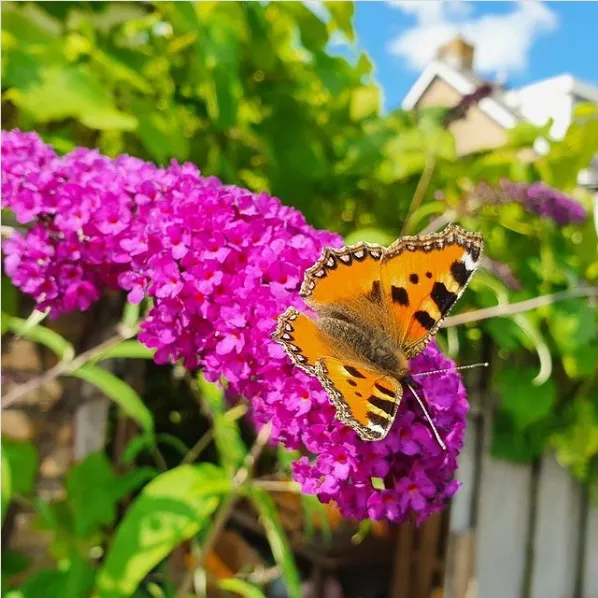
Butterfly Bush (Buddleja davidii)
Butterfly bushes (Buddleja) are not only very easy to care for, but also very beautiful. They are fast-growing plants with a very long blooming period. Butterfly bushes aren’t very picky about their location, though they do prefer a sunny spot for the most beautiful blooms. However, a butterfly bush can also thrive in partial shade. They tolerate drought and dry soil well. You can’t really go wrong with pruning. Every year in March–April, prune the butterfly bush back to about 30–50 cm above the ground. Rest assured, your butterfly bush will grow back to its full height and bloom beautifully again this year! If you regularly remove the spent flowers, your butterfly bush will bloom even longer (though this isn’t necessary). Butterfly bushes come in purple, pink, white, and even yellow. They bloom from July through September or October.
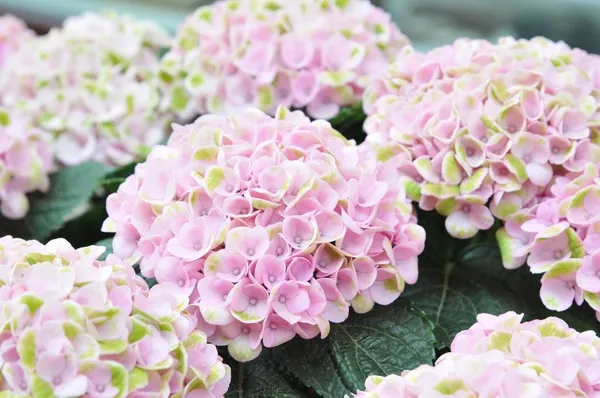
Hydrangea (Hydrangea)
One of the best-known (and still one of the most popular) shrubs is the garden hydrangea or ball hydrangea. And for good reason, of course, because its blooms and blooming season are unmatched. Hydrangeas (Hydrangea macrophylla and Hydrangea arborescens) bloom from late spring and early summer through October. They produce striking, large flowers (which are actually made up of many tiny florets). Although it’s best not to plant hydrangeas in full sun, they aren’t picky about location or soil type. If you have a choice, partial shade is perfect. Keep in mind that pink hydrangeas turn blue in acidic soil, and blue hydrangeas turn pink in calcareous soil. However, this does nothing to detract from their beauty. Hydrangeas do like plenty of water. That way, you can enjoy their beautiful blooms for a very long time. Even after your hydrangea has finished blooming, it retains its ornamental value for a long time because it keeps its shape well. Pruning isn’t strictly necessary, but you can cut off the spent blooms in the spring.
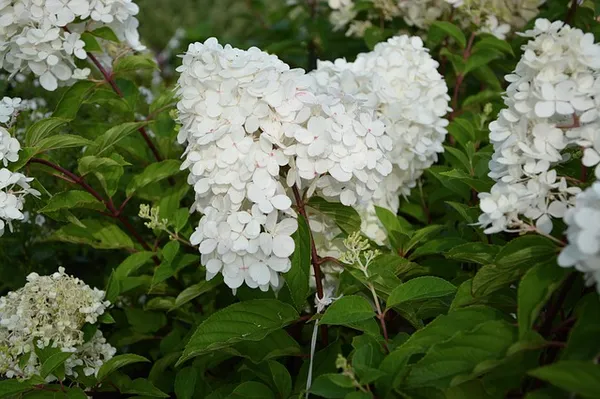
Panicle hydrangea (Hydrangea paniculata)
Even easier to care for than the “common” or garden hydrangea is the panicle hydrangea (Hydrangea paniculata). This hydrangea tolerates the sun a bit better and is less susceptible to drying out. However, you’ll enjoy its beautiful, large, panicle-shaped flowers the longest if you water them regularly. In early spring, you can prune panicle hydrangeas back to about 30–50 cm above the ground. Your panicle hydrangea will grow back beautifully that same year and reward you with gorgeous, large flowers! Another advantage of the panicle hydrangea, compared to the well-known Annabelle hydrangea, for example, is that its stems don’t bend under the weight of heavy rain.
Evergreen snowball (Viburnum tinus)
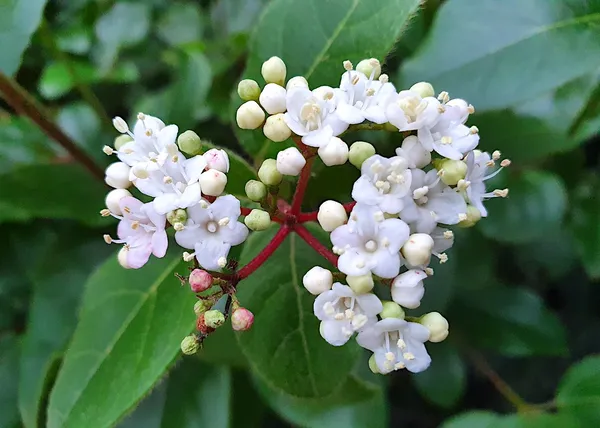
Viburnum tinus, also known as the evergreen snowball (or laurel snowball), is a beautiful evergreen shrub that can grow into a small tree. Viburnum tinus has a remarkably long blooming period, from September–October through March–April. This Viburnum therefore blooms in the fall and winter, producing lovely small white flowers. After flowering, blue-black berries form, and even before flowering, the brown to pink buds are already noticeable. Viburnum tinus grows in most soils and locations, though some shelter from cold east winds is ideal. The evergreen snowball bush does not really require pruning (though topiary pruning is possible) and can also be used as an attractive evergreen hedge.
Rose (Rosa)
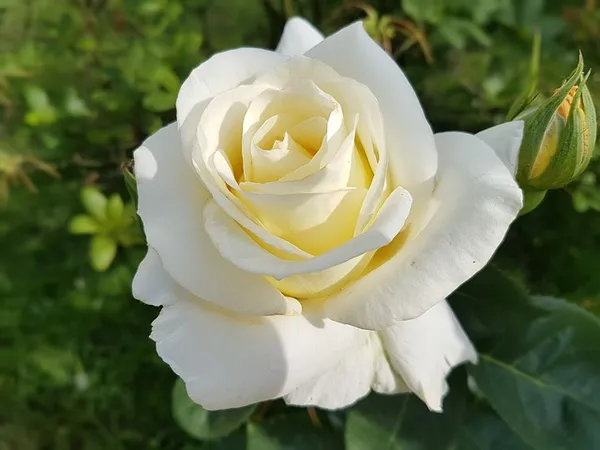
Many people think that roses are difficult to grow. Perhaps this is because of their beautiful and sometimes delicate blooms. Yet roses (Rosa) are actually very hardy and easy-to-grow plants. Both climbing roses and shrub roses are surprisingly easy to care for and can even tolerate some neglect. If you want to keep shrub roses in good condition, an annual pruning in March is sufficient to keep the rose in good shape. The best spot for most roses is in full sun, though they often tolerate (partial) shade well. Roses bloom between May and October. You don’t have to remove spent blooms, but doing so significantly extends the blooming period. If you have the opportunity, it’s recommended to apply some fertilizer in the spring for even better growth. But don’t worry: we’ve forgotten to do this often enough and have still always been able to enjoy beautifully blooming roses!
Hedge plants such as cherry laurel, Portuguese laurel, olive willow, and yew hedges
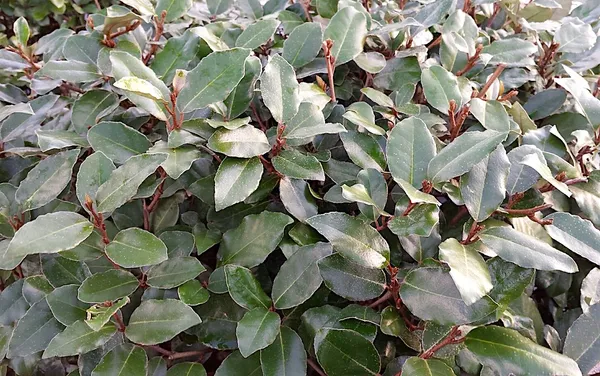
Hedge plants are often very easy to grow and also look beautiful as freestanding (solitary) shrubs in the garden. Many hedge plants are evergreen, so they provide shape and structure to the garden year-round. Some easy hedge plants to grow as shrubs include cherry laurel (Prunus laurocerasus), Portuguese laurel (Prunus lusitanica), Elaeagnus (Elaeagnus ebbingei), spindle tree (Euonymus), and yew hedge. These shrubs require little to no pruning (though you can, of course, keep them smaller by pruning them).
Guelder Rose (Viburnum opulus)
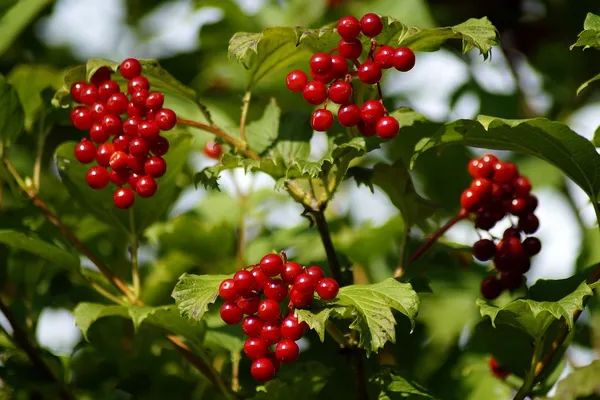
The guelder rose (Viburnum opulus) is a beautiful (native) plant, with white flowers in the spring, berries in late summer, and lovely fall colors. The striking red berries remain on the plant well into winter. Once the frost has passed, birds know where to find them. The guelder rose has few requirements in terms of soil and location and grows very easily. However, Viburnum opulus prefers not to be too dry. It eventually reaches a height of about 2–4 meters. If the shrub does grow too large, you can easily prune it back, but this isn’t necessary.
Are you looking for beautiful, low-maintenance plants? Then check out the suggestions above for easy-to-care-for plants for your garden.