
5×5 Tough Plants for Father's Day
Hardy plants are plants with a robust appearance that can withstand rough handling. So, no plants with delicate flowers or those that require a lot of extra care: No, these plants require very little maintenance! Hardy plants include, for example, strong and beautiful foliage plants, plants with an exotic touch, and plants with gnarled trunks. Think of figs, olives, grapevines, bamboo, thistles, rosemary, and mint. Below is our selection of garden plants we’d love to receive for Father’s Day!
5 Hardy and Low-Maintenance Shrubs or Small Trees
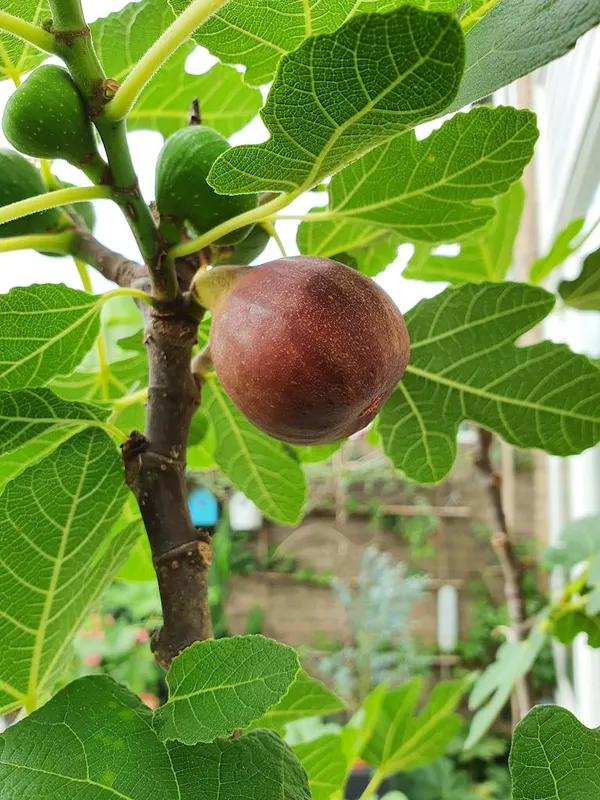
Fig Tree (Ficus carica)
A beautiful yet sturdy tree or shrub with strikingly large leaves and unique fruit. Over the years, the trunk of a fig tree takes on a lovely grayish, sometimes almost white appearance. Fig trees are easy to care for and tolerate drought without any problems. A fig tree can grow quickly and become quite large. You can keep the tree small with timely pruning.
Olive tree (Olea europaea)
Who doesn't love an olive? This beautiful Mediterranean tree has lovely small leaves that remain on the plant even in winter, and a beautifully irregular growth habit. In a sunny spot, small olives often form (though, unfortunately, they taste very bitter in our climate).
Hardy palm (Trachycarpus fortunei)
Here’s another plant with an exotic touch: the palm tree. Trachycarpus fortunei is quite hardy in our climate, so you won’t have to worry about it here. Plus, it’s an evergreen plant with a beautiful, distinctive trunk.
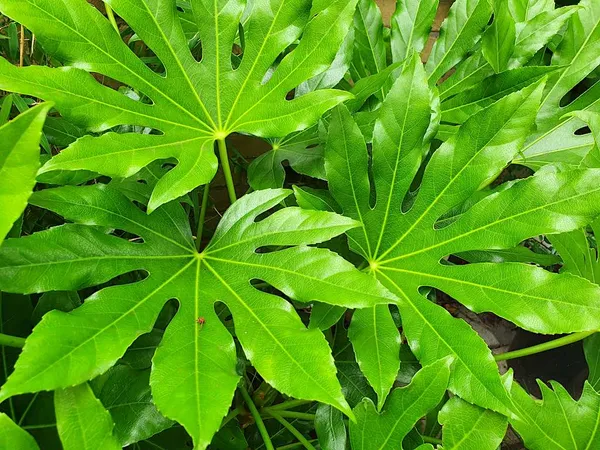
Finger Plant (Fatsia japonica)
The fatsia is often kept indoors, but it also thrives outdoors in the garden. Even frost is no problem. This shrub is characterized by its strikingly large, palm-shaped leaves. It may bloom in the fall, with flowers that closely resemble those of ivy. Fatsia tolerates shade well.
Garden Hibiscus (Hibiscus syriacus)
Would you still like a flowering plant? Then hibiscus is ideal. It’s an easy-to-care-for shrub, and hibiscus has a long blooming season. Hibiscus grows fairly upright, so it doesn’t take up much space. Once established, Hibiscus can also tolerate drought quite well, though this may result in leaf drop (even while the Hibiscus continues to bloom).
5 Hardy and Easy-to-Grow Climbing Plants
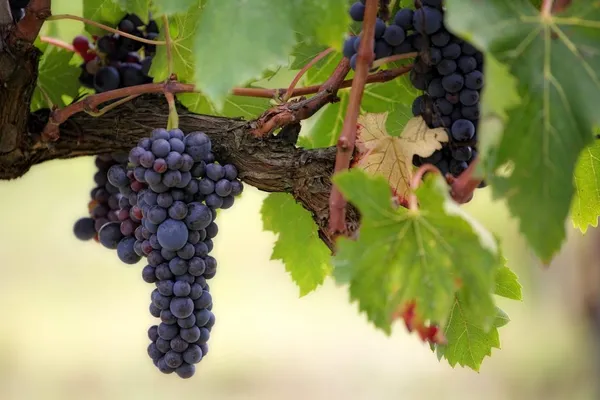
Grape (Vitis vinifera)
A grapevine is a beautiful sight. Its lovely, large leaves, the way the grapes form, and a gnarled trunk (over the years). And of course, in the summer you get to enjoy all the grapes! Keep in mind, though, that grapevines grow quickly and vigorously. By pruning back the longest shoot(s), you’ll slow down the rapid growth, allowing all the plant’s energy to go toward ripening the grapes.
Hops (Humulus lupulus)
Hops are a vigorously growing climbing plant that produce graceful hop cones. You’ll need both a male and a female plant for this. Hops are used to brew beer. Don’t be alarmed—in winter, the hops (above ground) disappear completely. In the spring, hops sprout again (very quickly).
Evergreen honeysuckle (Lonicera henryii)
Many honeysuckle species have a somewhat feminine appearance, with delicate (and often pink) flowers and a sweet fragrance. Honeysuckle is usually deciduous. However, this does not apply to evergreen honeysuckle. This plant also lacks the sweet scent, and the flowers of, for example, Lonicera henryii ‘Copper Beauty’ are yellow.
Kiwi (Actinidia deliciosa or arguta)
Kiwi is a very fast-growing vine. Kiwi plants have large, somewhat hairy or fuzzy leaves. If you have a self-pollinating variety—or have planted multiple varieties—you can harvest kiwis in the fall. Unfortunately, our summers aren’t always long enough for a good harvest.
Evergreen clematis (Clematis armandii)
Most clematis lose their leaves in the winter. However, there are a few exceptions, including Clematis armandii. This evergreen clematis has fairly large leaves and blooms white in the spring.
5 Hardy and Low-Maintenance Ornamental Grasses
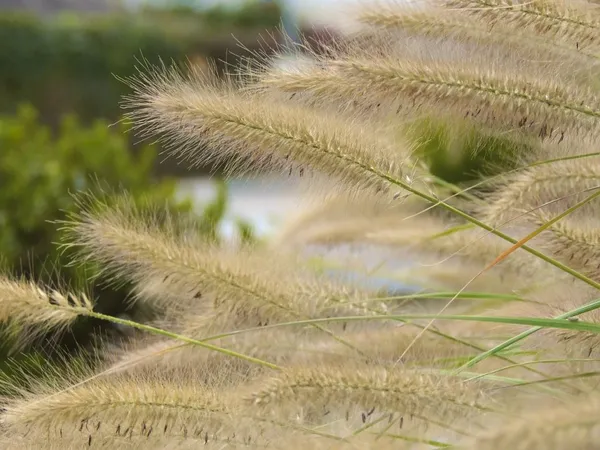
Foxtail Grass (Pennisetum alopecuroides)
A beautiful yet extremely hardy ornamental grass that requires very little maintenance is the lamp cleaner grass. In the summer, it produces graceful plumes and retains its shape well—even until the end of winter.
Chinese silver grass (Miscanthus sinensis)
Would you like an ornamental grass that’s a bit taller with larger plumes? Then choose Chinese silver grass, also known as ornamental silver grass. Miscanthus grows much taller. Many varieties do tend to bend over, though. It grows just as easily as lamp-cleaner grass.
Sedge (Carex)
Some people find Carex a bit boring: its appearance changes very little throughout the year. But because Carex is evergreen, it provides a nice green fill for your border, pot, or planter even in winter. Plus, Carex stays fairly low to the ground, which many people appreciate.
Fingergrass (Panicum virginatum)
Panicum is planted much less frequently than the ornamental grasses mentioned above. Still, it is a very beautiful ornamental grass. Panicum grows quite vigorously, and most cultivars are upright. Its blooms are airy, and it often tolerates shade and clay soil well. With names like “Heavy Metal,” there’s certainly no doubt about just how tough finger grass is.
Non-invasive bamboo (Fargesia)
Ornamental grass or not? It depends on how you look at it, but bamboo is indeed a type of grass. Bamboo is a very easy-to-grow plant with a robust appearance. In a small garden, it’s best to choose non-invasive bamboo (Fargesia), otherwise the plant will often spread uncontrollably. You can let the bamboo look very natural by leaving all the foliage intact, or give it a more styled look by stripping the lower leaves from the stems. Older stems often have beautiful colors.
5 Hardy and Easy-to-Grow Perennials
Stonecrop (Sedum)
Sedum is a very easy-to-grow garden plant. Forgot to water it? No problem—sedum isn't bothered by this. It also retains its shape for a long time and blooms for a very long time.
Black-eyed Susan (Rudbeckia)
Another easy-to-grow perennial is Rudbeckia, also known as black-eyed Susan. It pairs beautifully with ornamental grasses. It requires virtually no maintenance.
Sage (Salvia)
One of the first flowering perennials of the year is sage. Easy-to-grow varieties such as ornamental sage, woodland sage, and wreath sage bloom profusely and for a long time, and they require little maintenance. If you like, you can simply cut off the spent flowers; this will ensure they bloom again.
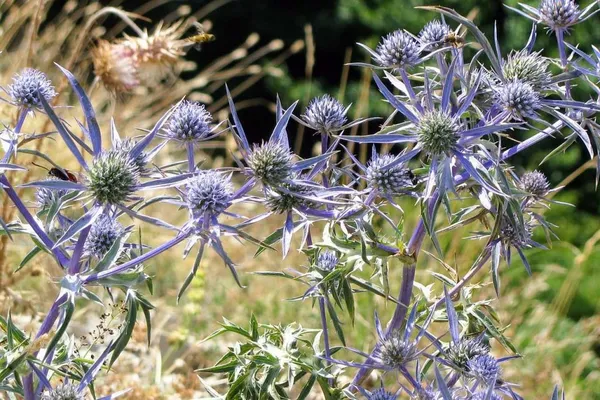
Sea holly or globe thistle (Eryngium or Echinops)
The sea holly (Eryngium) is undoubtedly a hardy plant. They are drought-tolerant and require virtually no maintenance. Bees love them. If you’d prefer a slightly less erratic flowering and growth habit, opt for the globe thistle (Echinops), with its distinctive round blooms. Thistles also add a lot of ornamental value in winter with their shape.
Giant lavender or Russian sage (Perovskia)
Giant lavender is a herbaceous plant with striking purple-blue flowers. It has a long blooming season, and these plants are very hardy. They do grow quite a bit taller than their namesakes, lavender and sage—though, of course, the Dutch name “Giant Lavender” already suggested as much.
5 Bold and Easy Herbs
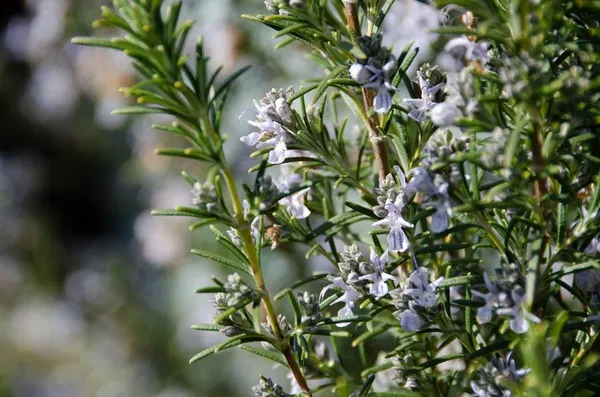
Rosemary (Rosmarinus officinalis)
Rosemary is a great addition to the garden, both for its ornamental value and as a herb. This evergreen plant is ideal for a sunny spot in well-drained soil.
Thyme (Thymus)
There are countless varieties of thyme, each with its own (flower) color, scent, and flavor. Thyme is wonderful for barbecues. Try planting creeping thyme along the edge of a flower bed or between stepping stones. As you walk by, the delightful scent of thyme will waft through the air.
Lavender (Lavandula)
Why wouldn’t lavender be tough? Lavender is evergreen (or rather, gray), can bloom several times a year if you prune it back in time, and grows in very poor soil, in full sun. Lavender also looks lovely along a path, next to stepping stones, or at the edge of a flower bed, so that its wonderful scent is released as you walk by.
Sage (Salvia officinalis)
In addition to ornamental sage, there is also sage used as a herb (Salvia officinalis). Sage is a very easy plant to grow and comes back every year. Sage is used as a seasoning in cooking.
Mint (Mentha)
Of course, we can’t do without mint. Mint is delicious in cold and hot drinks, with desserts, and in cocktails. There are many different types of mint, each with its own distinct flavor. The best-known are peppermint, Moroccan mint, and water mint. It’s best not to plant mint in a flower bed, because there’s a good chance it will take over the bed. It’s also best not to plant different types of mint next to each other, since they can absorb each other’s flavors.