5 Unique Hedge Plants with Red Foliage
A beautiful hedge is a must-have in any garden.
Hedges provide privacy, shelter, and a natural boundary for your garden. A hedge is a living thing: Birds, insects, and other animals find shelter, food, or a place to nest there.
There are an incredible number of hedge plants. Often, the same plants are used for hedges, such as European beech, yew, or cherry laurel…
Would you like a special or unique hedge? Then consider a red hedge!
By “red hedge,” we of course mean hedge plants with red foliage. This is how you create a unique hedge that stands out among the greenery and provides a beautiful, contrasting backdrop for your plants!
Our Favorite Red Hedge Plants for a Unique Hedge
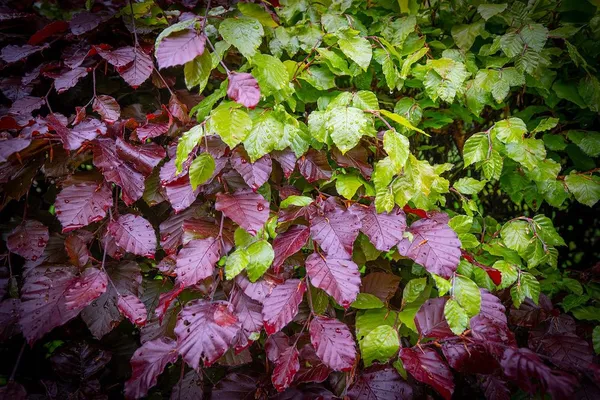
Red beech (Fagus sylvatica ‘Atropunicea’)
Of course, everyone knows the green one beech. It is one of the most commonly planted hedge plants in our country. Entire new residential developments are completed with this hedge plant. Although it is actually a forest plant, the beech is now used in a wide variety of situations.
The red beech hedge is much less popular, but as far as we're concerned, it's just as beautiful!
The red beech has all the desirable characteristics of the green beech. In the spring, the leaves emerge a fresh red and turn a deep red to purplish red in the summer. In the fall, the leaves turn orange-brown. Although beeches are actually deciduous, the withered leaves remain on the tree well into spring.
Beech trees are ideal for a somewhat narrower hedge. For a wider or denser hedge, plant beech trees in a double (staggered) row. It also looks nice to alternate red beech with green beech. Beech hedges are less suitable for heavy clay soil and prefer not to be too wet in the winter. The bare trunks are susceptible to sunburn in a location with full sun.
Evergreen: Evergreen
Red barberry (Berberis thunbergii ‘Atropurpurea’)
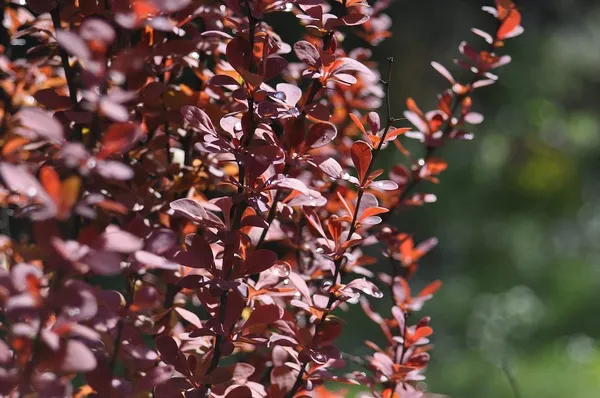
You used to see these hardy plants in almost every front and back yard. If you drive through a 1970s neighborhood, you’ll often still see them. Red barberry has small red leaves that form a dense hedge. This shrub is easy to prune into any shape you want. Be sure to wear thick gloves, though, because the thorns are really sharp! That’s probably why birds love them so much. Red barberry is also ideal as an impenetrable hedge.
The leaves begin to sprout early in the spring and remain on the plant well into the fall. Nevertheless, they are deciduous hedge plants. The barberry is an easy-to-grow and hardy hedge plant that requires very little maintenance.
Evergreen: No
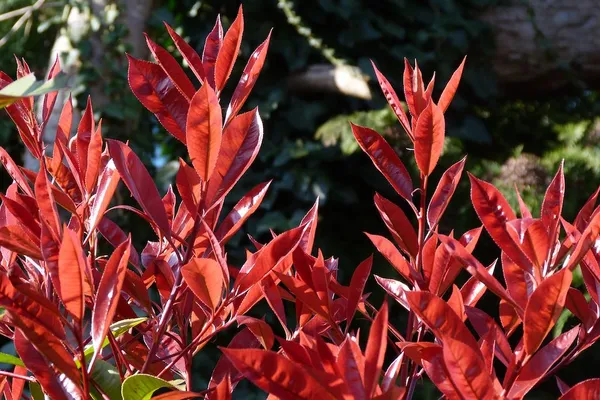
Photinia (Photinia fraseri ‘Red Robin’)
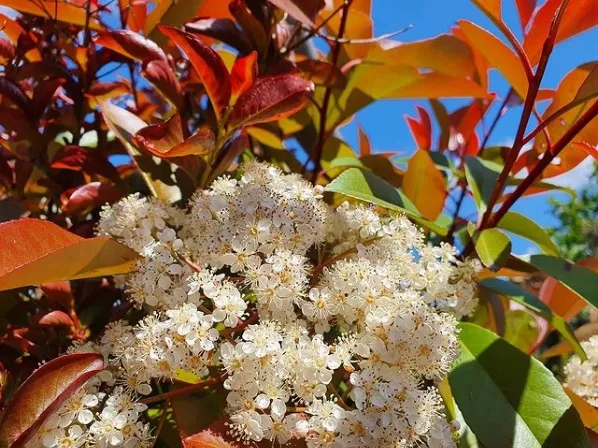
Glossy privets are beautiful hedge plants with glossy, sturdy dark green foliage. New growth starts out bright red. The leaves then turn dark red to brownish-red before eventually turning dark green.
By Photinia fraseri 'Red Robin' Even with regular pruning, red foliage remains visible at all times. In the spring, it produces airy white blooms. Its entire appearance changes for a few weeks, after which it continues to grow, once again displaying its beautiful red and dark green colors.
Although Photinia is becoming increasingly popular, we still don’t see nearly enough of it used as a hedge plant. You do see it more and more often as a freestanding shrub or as a (spherical) tree. The ideal location is sunny and slightly sheltered. Well-drained soil is preferred.
Evergreen: Yes
Red Cherry Plum (Prunus cerasifera ‘Nigra’)
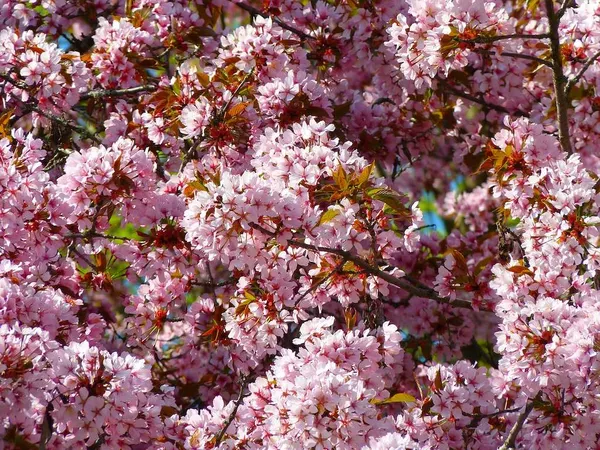
This ornamental cherry is attractive throughout the seasons and is usually planted as a tree (for a small garden). However, the red cherry plum is also well-suited as a unique hedge plant.
The oval leaves are dark red to reddish-brown well into the fall. Prunus cerasifera blooms beautifully in the spring with small pink flowers. The cherry plum is often one of the first ornamental cherries to bloom. As flowering ends, new foliage begins to emerge. Occasionally, small fruits develop. This shrub remains attractive even in winter, with its glossy dark brown to purplish-brown trunks and dark red young twigs.
The best location is in full sun, but partial shade is also fine. Well-drained, fertile soil is preferred.
Evergreen: No
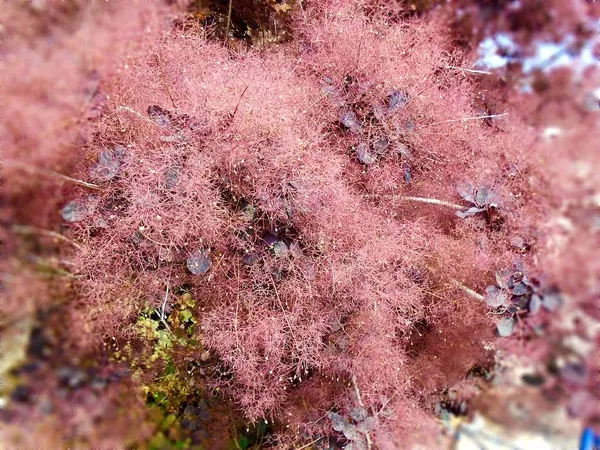
Smoke tree (Cotinus coggygria ‘Royal Purple’)
One plant you rarely see used as a hedge is the smoke tree. Yet this shrub is certainly suitable for use as a hedge. Smoke trees have a bushy (densely branched) growth habit and can grow quite wide. However, with regular pruning, Cotinus can also be maintained as a compact hedge.
The oval-round leaves emerge brownish-red in the spring and turn wine-red to purplish-red in the summer. In the fall, the foliage turns bright red. In the spring, Cotinus blooms with striking pink, woolly panicles (which resemble wigs). The actual flowers are small and inconspicuous due to their yellow-green color.
The cultivar Cotinus ‘Grace’ first develops light red leaves, which later turn wine red and, in the fall, range in color from yellow to orange and red. However, the ‘Grace’ grows slightly larger than the ‘Royal Purple’ and requires more pruning to maintain its hedge shape. This comes at the expense of the flower panicles.
A spot in full sun produces the most beautiful foliage color, but partial shade is also suitable. Cotinus isn't picky about soil, though it does need well-drained soil.
Evergreen: No