
5 Fruit Trees for Shade
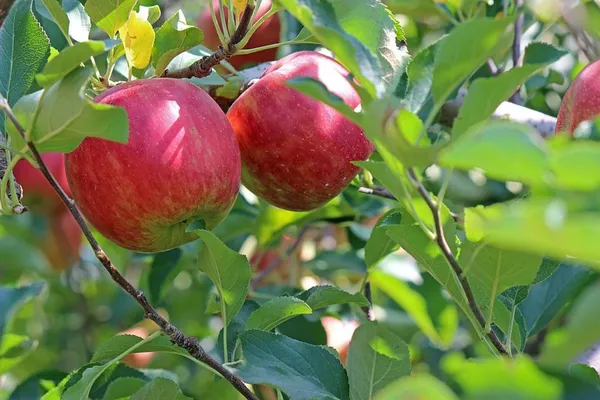
Many people have a small garden or a garden with a lot of shade. In (deep) shade, the fruit of fruit trees does not ripen, or ripens less well, or the yield suffers as a result. However, there are fruit trees and fruit varieties that are suitable for growing in the shade.
5 Fruit Trees That Provide Shade (and Suitable Varieties)
Here are our tips for fruit trees in the shade. Even in a small garden or one with plenty of shade, you can still plant a fruit tree and enjoy delicious fresh fruit from your own garden and beautiful blossoms in the spring!
Sour cherry (Prunus cerasus)
A well-known fruit tree for shaded areas is the sour cherry (also called a "kriek"). As the name suggests, the fruits are quite sour and are therefore often used for processing. It’s usually necessary to cover the tree with a net, because birds love the fruits.
Cherry trees produce exceptionally lush and beautiful white blossoms. Many varieties also display beautiful fall colors, with orange-red leaves.
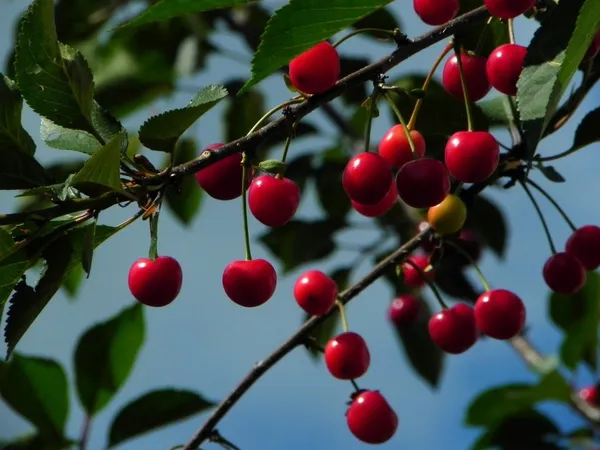
Suitable cherry varieties (Prunus cerasus):
Morel, Noordkriek, Saphir, Schaarbeekse kriek
Pear Tree in the Shade (Pyrus communis)
Pear trees can also grow in the shade and still produce a good harvest. Early-ripening pear varieties, such as Clapps Favorite, are particularly well-suited. Pear trees produce beautiful white blossoms in the spring.
Are the pears not quite ripe yet? No problem—it’s best to let pears continue ripening. An espalier also allows extra light to reach the fruit even in the shade, helping it ripen faster.
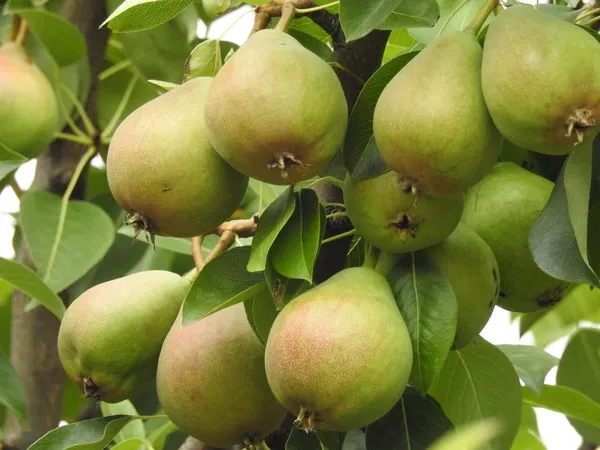
Suitable pear varieties (Pyrus):
Beurre Hardy, Bonne Louise d’Avranches, Clapp’s Favorite, Concorde, Docteur Jules Guyot, Durondeau, Legipont, Precoce de Trevoux, Triomphe de Vienne, and Conference (which ripens a bit later but is self-pollinating).
Quince (Cydonia oblonga)
Quinces can grow in full sun, partial shade, or full shade. In deep shade, the blossoms often appear a little later, and the fruit takes a little longer to ripen. However, quinces require post-harvest ripening and are really only suitable for cooking. When eaten raw, they remain very hard.
The white-and-pink blossoms are strikingly large for a fruit tree. The yellow-green fruits ripening on the tree create a beautiful sight, and then there’s also the lovely, striking yellow color of the leaves in the fall.
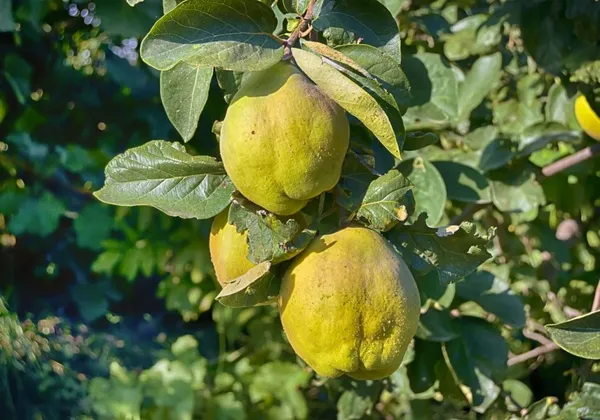
Suitable quince varieties (Cydonia):
Champion, Leskovacz, Ludovic, Portugal, Rea’s Mammoth, Ronda, Vranja
Medlar (Mespilus germanica)
A fruit tree that is often overlooked is the medlar. It is a fruit tree with an irregular growth habit and unusually shaped fruit. Although many people do not find the fruit very appealing, the medlar does have beautiful blossoms, with large creamy-white flowers. In the fall, the foliage turns colors (depending on the soil and growing conditions) ranging from yellow and rust-brown to orange-red.
Medlars must first ferment before they develop their characteristic flavor. This can be achieved by storing the fruit in a cool, dry place for a while, or by placing them in the freezer for a few days. Even for fruits still hanging on the tree, it helps if they’ve been exposed to frost a few times.
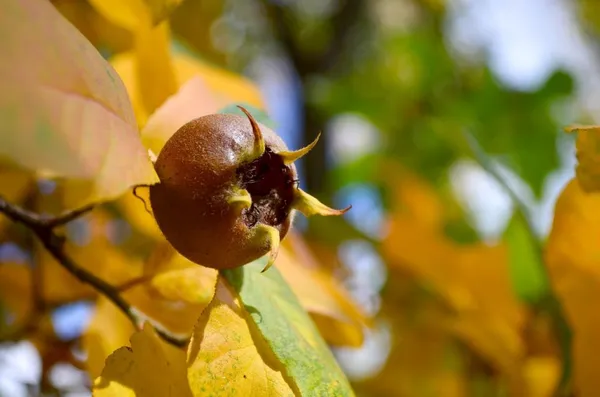
Suitable medlar varieties (Mespilus):
Breda Giant, Nottingham, Westerveld
An apple in the shade?
People often ask whether an apple tree can grow in the shade. Although an apple tree prefers full sun, it can also grow in (partial) shade. In that case, blooming may start a little later, and the fruit may take a little longer to ripen. Early-ripening apple varieties are therefore the most suitable. If you don’t have room for a second variety of apple tree, choose a self-pollinating variety. An espalier is also ideal for an apple tree in the shade, because it allows more light to reach the tree.
With an apple tree, you not only get to enjoy delicious apples in late summer or fall, but in the spring, of course, there are also the beautiful white-and-pink blossoms!
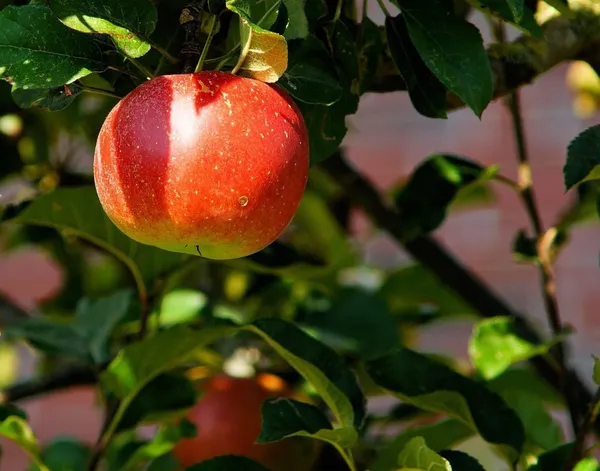
Suitable apple varieties (Malus):
Alkmene, Delcorf, Discovery, Grenadier, James Grieve, Lena, Rekia