
17 Tips for a Better Planting Plan
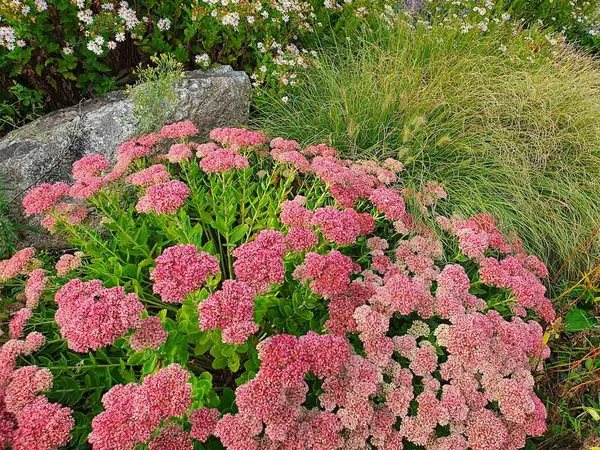
Are you planning to breathe new life into an existing border? Or perhaps you’re going to create an entirely new border? If so, make a good planting plan. That way, you can design a well-thought-out border that will look beautiful for as long as possible and form a cohesive whole of attractive, healthy plants.
1. Think in layers. Look at your garden (or flower bed) as if it were a forest or jungle. There’s the canopy, the upper layer, a middle layer, and the ground. Try to include plants in each of these layers to create a beautiful, cohesive whole.
2. Start with the largest elements, such as a tree or a large shrub. Next, move on to taller shrubs and hedges, followed by medium-sized shrubs. Only then should you add perennials, ornamental grasses, and small shrubs or groundcovers. Finally, you might consider adding flower bulbs and annuals.
3. Take the existing plants into account. Decide which ones you want to keep and adjust your plan accordingly. It’s usually a good idea to keep larger plants and trees, especially if they’re already thriving.
4. Evergreen shrubs help you create shape and structure. They provide points of calm in your planting scheme during the summer and a green framework in the winter. This way, your garden stays beautiful year-round.
5. Essentially, you design a border from low to high (with shorter plants in the front and taller plants toward the back), so that you can see all the plants clearly. If desired, you can add taller plants with a translucent quality to the front, such as verbena, Thalictrum, Stipa gigantea, etc.
6. Start by sketching large elements—such as a tree, a multi-trunked tree, or a shrub—into the plan. Determine how large they should be and what shape and characteristics are desired for that location in the planting plan. Only then should you choose the specific tree or shrub.
7. Assess the planting site and choose your plants accordingly. Is the site in full sun, partial shade, or full shade? Are the plants sheltered, or is it an open area? Take the plants’ soil requirements into account. Is the soil neutral, alkaline, or (slightly) acidic? Is the soil dry, moist, or even wet? Choose the right plant for the right spot!
8. Learn about each plant’s growth habits: How tall will it grow, and how wide will it eventually become? Plan your planting based on the plant’s mature size—or its size after 3–5 years. Be sure to leave enough space for that same plant after 5–10 years, though! You can fill in any gaps that arise because plants haven’t yet reached their mature size with annuals and potted plants.
9. Choose plants that remain attractive for a long time. For example, those with a long blooming period, color changes throughout the season, or plants that produce attractive fruits or seeds. Plants that remain beautiful or unique over several seasons are ideal!
10. Take into account how plants change in appearance throughout the seasons. Make the most of these changes and ensure that your border evolves with the seasons. This will prevent the garden from looking too static and allow you to see something different every season.
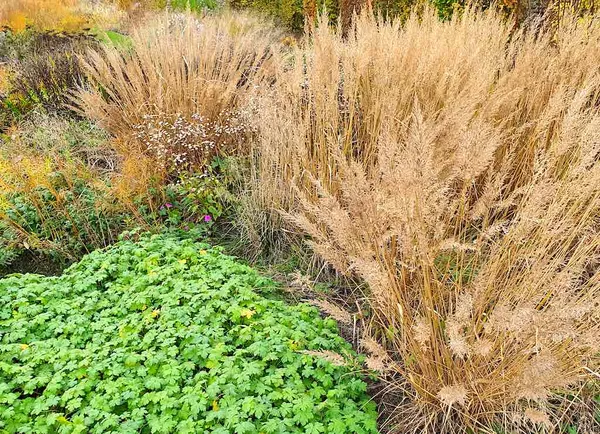
11. Don’t use too many different types of plants in a border. This prevents the border from looking chaotic and sometimes even cluttered. It’s also best not to choose just one plant of each species. Unless it’s a specimen plant, group several plants of the same species together to create beautiful, full clusters. This creates a calmer look, and each species also makes a stronger impact.
12. Connect your border to the rest of the garden or to other areas and borders. Repeat certain elements or plants and let them recur. In doing so, think of your design as extending beyond the borders.
13. Hedges are suitable for use as a boundary for the garden or a section of the garden (garden room). However, they can also be used effectively as the edge of a planting bed, as a backdrop for a beautiful border, or to accentuate a path.
14. Break the mold. A common way to plant is from low to high. This involves placing groundcover or other low-growing plants in the foreground, with the plants getting progressively taller toward the back. This creates a rather one-dimensional look. Instead, take advantage of the fact that a border can be viewed from multiple angles and vantage points. For example, try planting a taller plant at the front, avoid planting in strict rows, and dare to choose an odd number of plants per group.
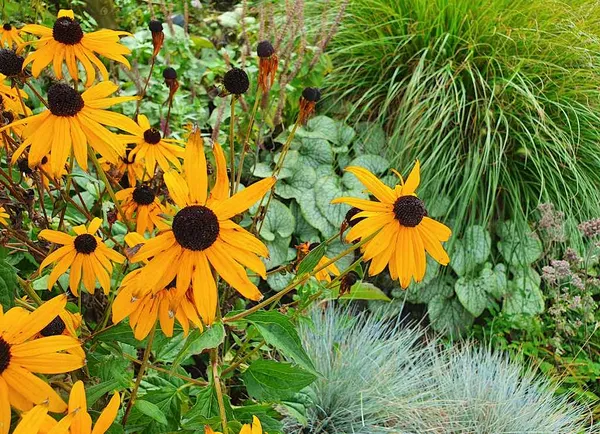
15. Don’t be afraid to go for contrasts! Contrasting colors enhance each other. But contrasts in shape and structure (or texture) also add more visual interest to the overall design and make it more intriguing. A border featuring beautiful combinations of leaf shapes and colors can be truly stunning!
16. Take advantage of changes in elevation! This will help you avoid creating a boring—or even flat—image.
17. Don’t forget the climbing plants. Climbing plants can serve as a beautiful backdrop for your border, or they can hide an unattractive feature, such as an ugly fence. The blooms of climbing plants can be a lovely addition to your border.