
15 Tips for Attracting More Bees to Your Garden
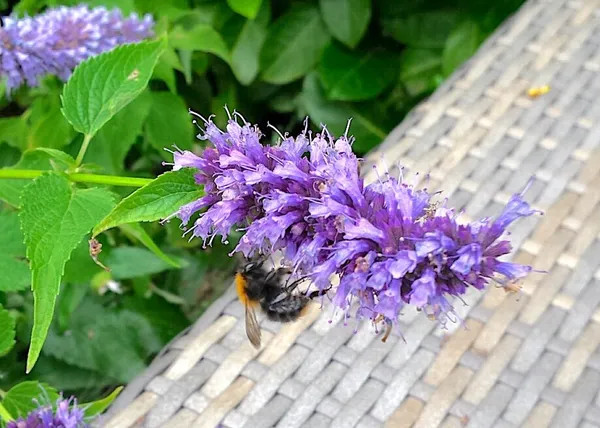
Bees are indispensable in the garden. And not just because they’re beautiful to look at and their buzzing is such a wonderfully soothing summer sound…
They are highly effective pollinators and play an important role in the growth of fruits, crops, and flowers.
For as long as anyone can remember, every gardening enthusiast has loved seeing lots of butterflies in their garden. But in recent years, bees have also been gaining popularity. That’s great, because you read everywhere that bees aren’t doing so well. This doesn’t apply to all species of (wild) bees, mind you, but it does apply to a significant portion of them.
So it's high time to make sure your garden is suitable for (wild) bees, too.
Here's how to attract more bees to your garden
- Make sure the bees have enough food (nectar) throughout the year. You can do this by extending the blooming season as long as possible. In the winter, for example, you can plant winter heather, and in late fall, flowering ivy.
- Do not use pesticides in the garden.
- Only buy new plants that you are certain are free of any chemical residues.
- Many native flowers are ideal for bees. Consider planting native plants in your garden.
- Just leave the plants that have finished blooming where they are. Don't prune them until spring.
- Single-flowered plants are more accessible to bees than, for example, double-flowered ones.
- Many garden centers now also carry special seed mixes that include plants that are good for bees. This is a very affordable way to get bee-friendly plants.
- A bee hotel, a little nook, etc., also provide nesting sites for bees in your garden.
- Place a bee hotel in a sunny spot in your garden. It’s best to orient the opening toward the south.
- Many herbs also attract bees. Just think of marjoram, sage, thyme, or lavender.
- Many flowering trees (blossoms) provide plenty of nectar early in the season. Native species are particularly well-suited for this purpose.
- Willow catkins also provide plenty of food for bees early in the year. Therefore, don’t prune all the willows every year, so you don’t prune away the blooms.
- A wildflower meadow attracts many (different kinds of) bees. If you have the space, don’t mow the grass everywhere—leave it long in some areas. Various flowers will naturally start to grow there. Of course, you can also speed up this process by sowing a (meadow) flower seed mix.
Plants for bees in the spring:
Winter heath, crocus, snowdrop, hellebore, winter aconite, zenegroen, lavender, foxglove, comfrey, elder, willow, and fruit or flowering trees.
Plants for bees in the summer:
Roses, speedwell, sage, sweet pea, geranium, dove's foot, bee balm, goldenrod, eyebright, and bellflower, licorice, borage, and hollyhock.
Plants for bees in the fall:
Heavenly Key, fall aster, coneflower, yarrow, fall anemone, fall crocus, fennel, and heather.
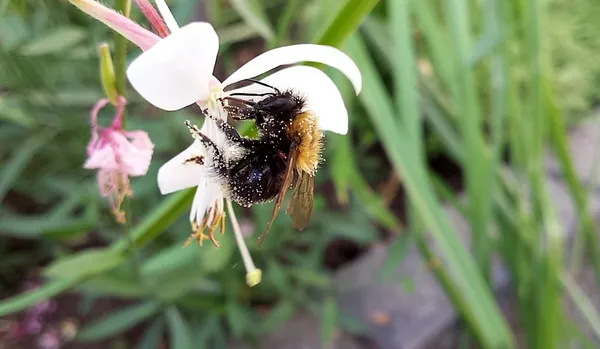
Do you already have a lot of bees visiting your garden?
There are actually always bees in our small garden.
It’s always a beautiful sight to see plants like Agastache or lavender teeming with bees. The buzzing of the bees is a wonderfully soothing sound.