
15 Flowering Native Perennials
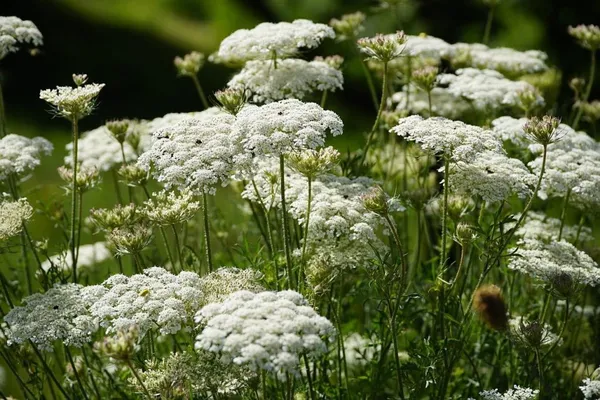
These days, there is a growing focus on sustainable gardening. Biodiversity—that is, sufficient variety in species, varieties, and ecosystems—is a key aspect of this. We’re also seeing more and more people embracing native plants: species that are naturally found in our country or region. For example, you can use native plants as a valuable addition to your existing garden, or even plant your garden exclusively with native plants.
It’s often thought that native plants are less attractive or don’t bloom as much. That’s not true! There are countless native perennials with interesting shapes and beautiful blooms. Below are our favorite native perennials with beautiful blooms.
15 Flowering Native Perennials
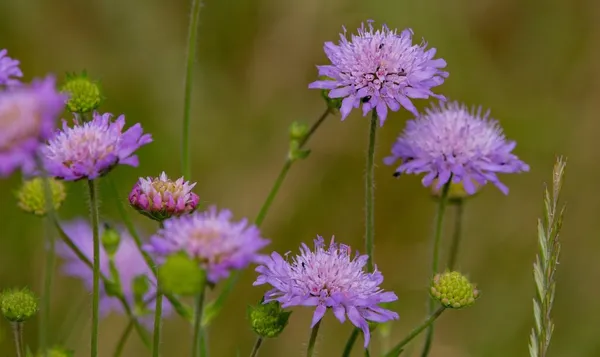
Field Scabious (Knautia arvensis)
Knautia arvensis (meadow crown) is a beautiful plant that butterflies, bees, and other insects love. It blooms starting around June and works well as a filler plant in a border. It prefers full sun. Unlike the well-known Knautia macedonica, field scabious blooms in soft pastel shades. Its flowering is often slightly less abundant than that of macedonica and its cultivars.
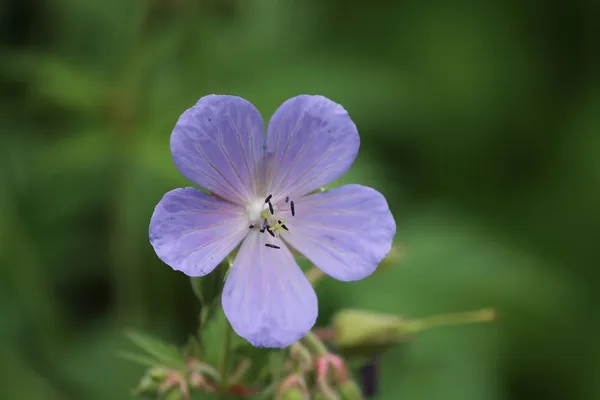
Meadow Cranesbill (Geranium pratense)
Geranium pratense (meadow cranesbill) is a beautiful native geranium that blooms with purple-blue flowers. The flowers have a white center. It grows fairly compactly and blooms from June through August. It prefers full sun or partial shade. It can self-seed profusely. Pruning back the spent flowers in a timely manner can prevent this.
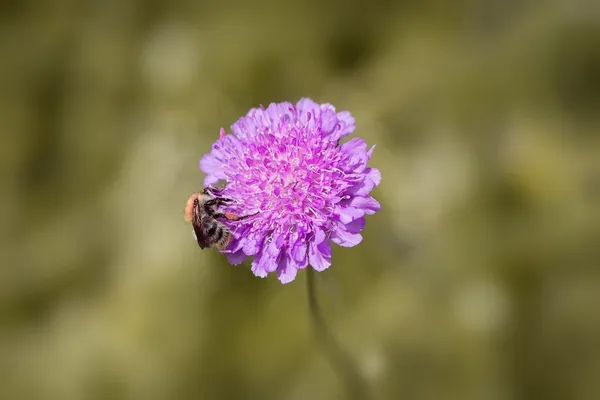
Pigeon Scabious (Scabiosa columbaria)
Scabiosa columbaria (dove’s-foot) is a true insect-attracting plant. Bees and butterflies flit back and forth when this native plant is in bloom. It blooms with lilac-pink to lilac-purple flowers from June through September. The flower heads grow on round stems emerging from the leaf rosette. The leaves on a plant can vary slightly in shape. It prefers full sun and well-drained soil.
Yarrow (Achillea millefolium)
Achillea millefolium (yarrow) is a beautiful umbellifer. The wild variety typically has white flowers, which appear starting in May. It is a true insect-attracting plant, drawing in large numbers of hoverflies, bees, and butterflies in particular. If you look closely, the pinnate leaves appear to consist of many tiny leaflets, hence the name “yarrow.” The actual flowers themselves are also very small, but together they form a broad umbel. Achillea has a characteristic scent reminiscent of chamomile.
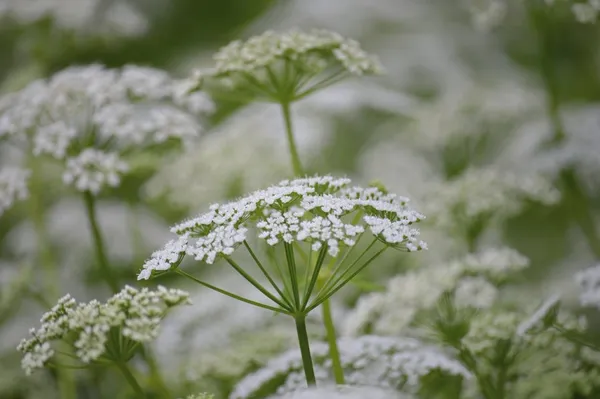
Yellow iris (Iris pseudacorus)
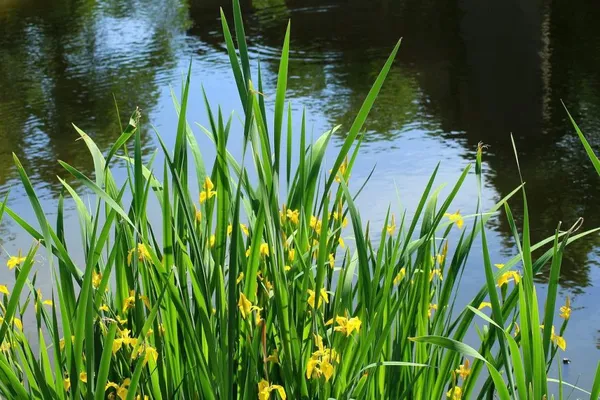
Iris pseudacorus (yellow iris) is perhaps the best-known aquatic plant (or, more accurately, a riparian plant) in our country. You’ll find yellow irises everywhere along the edges of ditches and water features. This upright plant has sword-shaped leaves and blooms from May through July with striking yellow flowers. After flowering, the seeds remain on the plant for quite some time. Keep in mind, however, that this plant can grow quite large quickly. Especially in and around small ponds, it’s a good idea to divide them regularly.
Common daisy (Leucanthemum vulgare)
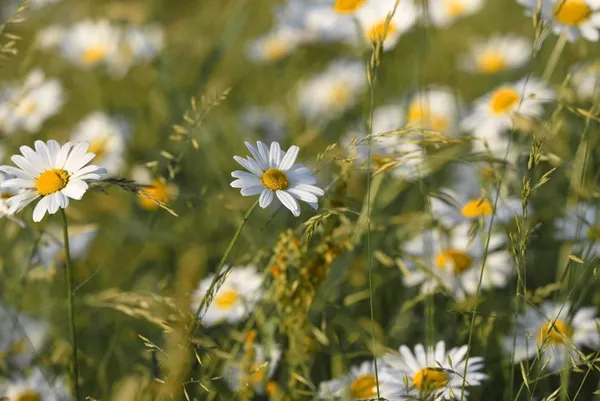
Leucanthemum vulgare (common daisy) has a flower just like the one any child would draw. You see (or rather, used to see) them everywhere. The daisy produces fairly large flowers with white petals and a yellow center. Each flower grows on a single stem. It has a long blooming period, roughly from May to August. It attracts numerous insects.
Common Mallow (Malva sylvestris)
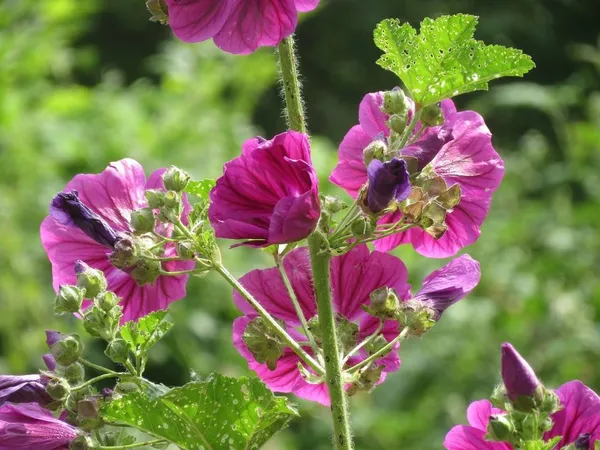
Malva sylvestris (common mallow) is often found along roadsides. It blooms in summer and fall with striking dark pink to lilac-purple flowers. A linear pattern is visible on the petals. It grows to about 120 cm tall. It is an easy-to-grow plant that is not very particular about its location (although the common mallow is actually a grassland species by origin). It is a good nectar plant for many butterflies, bees, and other insects.
Greater knapweed (Centaurea scabiosa)
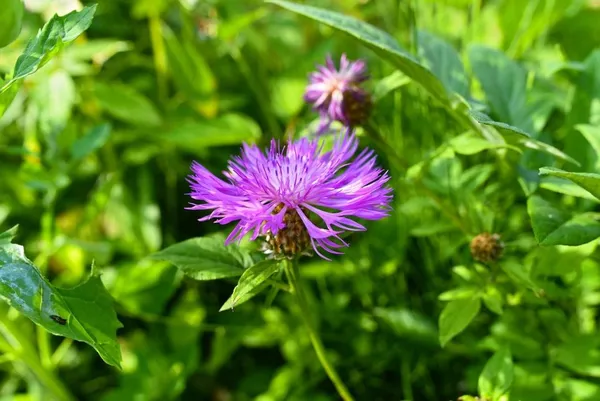
Centaurea scabiosa (greater knapweed) blooms with purple to purplish-pink flower heads containing tubular flowers. The flowers grow on fairly sturdy stems and reach a height of about 120 cm. It blooms from June through October. It prefers calcareous soil. Greater knapweed attracts many bumblebees, as well as honeybees and butterflies.
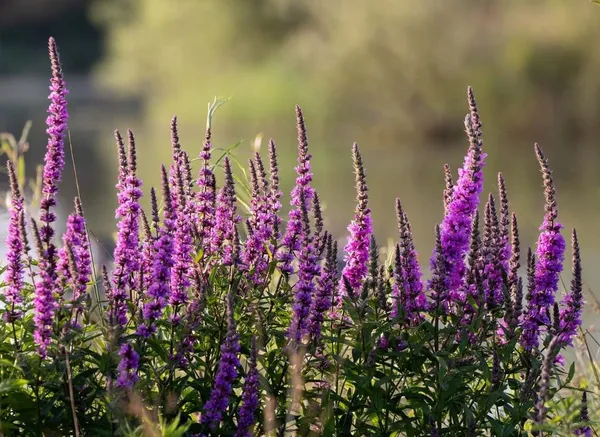
Purple loosestrife (Lythrum salicaria)
Lythrum salicaria (purple loosestrife) produces striking reddish-purple to purple-pink flowers in large, upright clusters. It is a fast-growing plant that reaches a considerable height (up to about 120 cm) starting in the spring, after which it produces spike-like flower clusters. The upright stems may branch at the top. It often displays beautiful fall foliage. It occurs naturally along water’s edges and in moist soil. Nevertheless, it is a hardy and versatile plant that often grows without difficulty in drier soil as well.
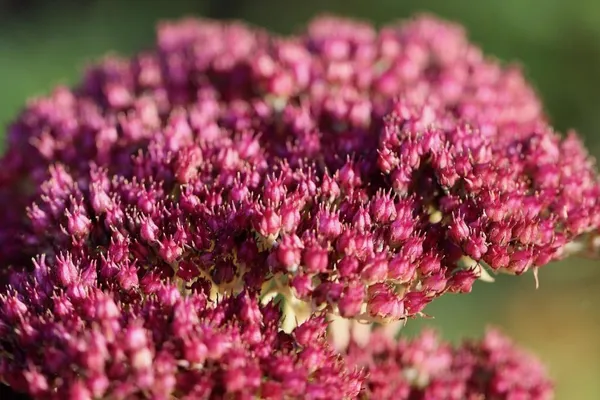
Stonecrop (Hylotelephium telephium)
Hylotelephium telephium, formerly known as Sedum telephium (stonecrop), is a succulent with pink flowers. Succulents are easily recognizable by their thick, fleshy leaves. The flowers are white when in bud and turn pink to dark pink when they bloom. It blooms from July through September. The many small flowers together form a broad umbel. It grows to a height of about 50–60 cm. The leaf margins can vary from coarsely serrated to toothed or even smooth. It occurs naturally in sandy soils that retain some moisture.
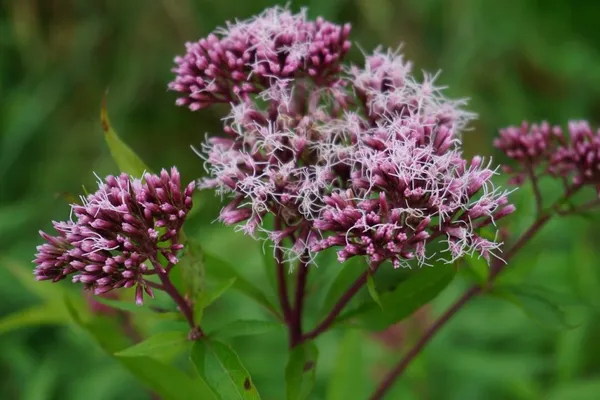
Queen's Herb (Eupatorium cannabinum)
Eupatorium cannabinum (queen’s herb or liverwort) is a true insect-attracting plant. During flowering, insects, bees, and butterflies flit back and forth. The striking (and somewhat fuzzy-looking) flowers consist of densely packed flower heads with white-pink to rose-red tubular flowers. Queen’s herb can grow quite tall, reaching about 150 cm. It has striking red stems and leaves resembling those of cannabis, hence its name. It is an easy-to-grow plant that thrives even in poor soil.
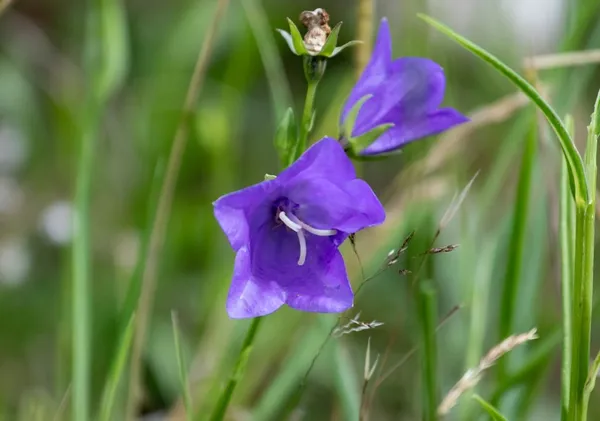
Peach-leaved Bellflower (Campanula persicifolia)
Campanula persicifolia (Peach-leaved Bellflower) is a beautiful and hardy native plant. Its upright stems bear long, loose clusters of open, bell-shaped flowers. The flowers are purple-blue. It blooms from June through July and grows to about 80 cm tall. The narrow, lance-shaped leaves resemble those of a peach tree. It prefers full sun to partial shade.
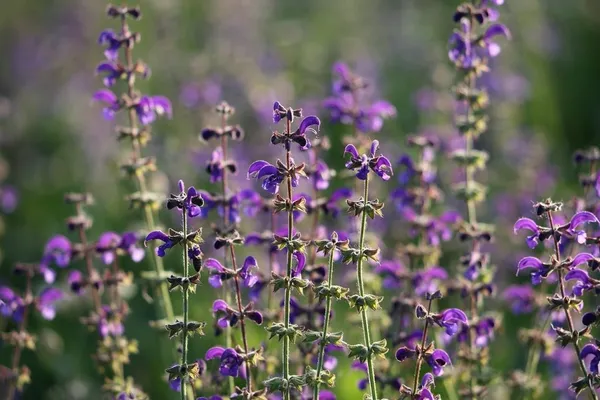
Meadow Sage (Salvia pratensis)
Salvia pratensis (field sage) has beautiful sickle-shaped flowers in a blue-purple hue. You might think it’s an exotic flower, but it’s actually a native sage. It attracts many bees and bumblebees and remains attractive long after flowering. Field sage has square stems and elongated, triangular leaves with serrated or jagged edges. Salvia verticillata is also native (though rare in the wild). This sage is distinguished by its clearly recognizable whorls.
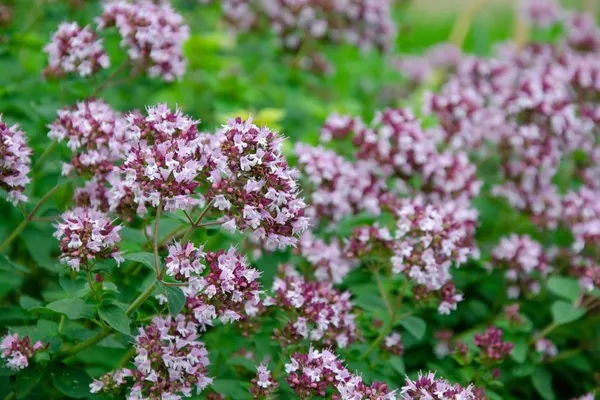
Wild marjoram (Origanum vulgare)
Origanum vulgare (wild marjoram) is the wild variety of the well-known culinary herb oregano or marjoram. This aromatic plant is also a fantastic choice for the ornamental garden, with its upright stems bearing numerous white-pink to rose-red flowers in dense umbels. It blooms from July through September and grows to about 30–50 cm tall. It prefers calcareous soil and a sunny location. It attracts lots of insects, butterflies, and bees!
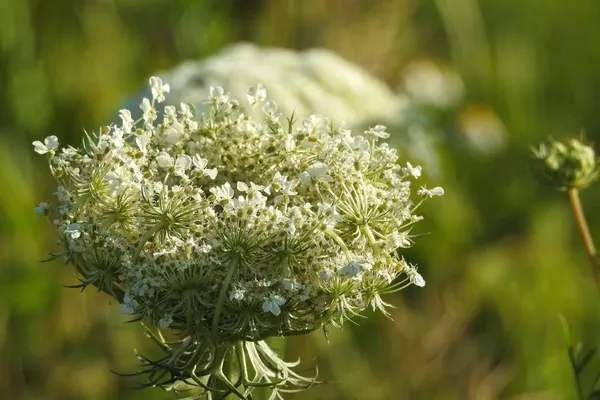
Wild carrot (Daucus carota)
Daucus carota (wild carrot) produces beautiful and striking white umbels in the summer. The flowers remain ornamental well into the fall. Once the flowers have finished blooming, they bend gracefully inward. This is the wild form of the edible carrot. It grows to about 90 cm tall. Wild carrot occurs naturally in dry grasslands, roadsides, dikes, and dunes.
What is your favorite native perennial?
These were our favorite flowering native plants. Do you already have any native plants in your garden? Which native plants are your favorites?